Burning Ash vs Chipped Biomass: What an Arborist Would Pick
An ISA Master Arborist breaks down the real tradeoffs between burning wood ash and chipping tree debris into biomass mulch.
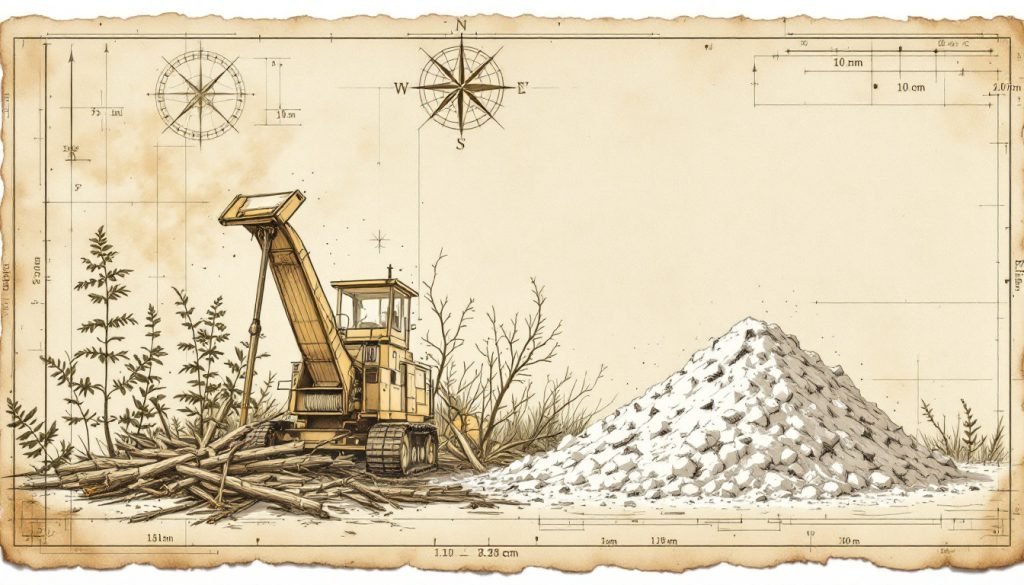
- Burning destroys nitrogen and carbon but produces calcium-rich ash that corrects acidic soil pH. Chipped biomass preserves organic matter, feeds soil fungi, and suppresses weeds at 3–4 inch depth. Disease-infected wood should always be burned or removed — never chipped back into the landscape. Chipper knife condition directly affects chip quality and the biological value of the mulch produced. Run a soil test before choosing: alkaline soils need chips, acidic soils may benefit from targeted ash application.
Every time a tree comes down on a residential property, the same question surfaces within about twenty minutes: what do we do with all of this material? Homeowners who heat with wood often want to stack the logs and burn them. Municipalities and landscapers increasingly push toward chipping everything on-site. Neither answer is wrong by default, but the right choice depends on species, site conditions, equipment, and what you actually want to accomplish for the soil and surrounding landscape. I have been making this call on job sites across Texas for more than two decades, and the answer is rarely as simple as either camp makes it sound.
The debate between burning ash and chipped biomass is really a debate about nutrient cycling, carbon storage, equipment capability, and long-term soil biology. When you burn wood, you collapse a complex organic structure into a small volume of mineral ash and release most of the carbon as CO2. When you chip it, you preserve that carbon in a form that feeds soil fungi, suppresses weeds, and moderates soil temperature for years. Both outputs have genuine value. The question is which one serves your specific site better, and whether your equipment — particularly your chipper — is matched to the job at hand.
By the end of this article, you will understand the chemistry behind both outputs, how chipper technology including drum and disc designs affects chip quality, where the Morbark Tritucap system fits into professional biomass production, and the practical decision framework I use as an ISA Board Certified Master Arborist to recommend one path over the other. Michael Hartman, TX-0198B, has evaluated both approaches across sandy loam Hill Country soils and heavy black clay in the Dallas-Fort Worth corridor, and the data from those sites informs every recommendation here.
The Chemistry of Wood Ash: What You Actually Get When You Burn
Wood ash is not a uniform product. Its composition shifts dramatically based on species, moisture content at the time of burning, and combustion temperature. Hardwoods like post oak (Quercus stellata) and pecan (Carya illinoinensis) produce ash with higher calcium carbonate concentrations — often 25 to 45 percent by dry weight — compared to softwoods like eastern red cedar (Juniperus virginiana), which burns hotter but yields ash with lower calcium content and higher silica. That calcium carbonate is the primary reason gardeners have used wood ash as a soil amendment for centuries. It raises pH, which matters enormously in acidic East Texas soils but can cause real problems in alkaline soils west of I-35.
Potassium is the other headline nutrient in wood ash, typically running 3 to 7 percent by dry weight in hardwood ash. Phosphorus is present but modest, usually under 2 percent. What ash does not contain in meaningful quantities is nitrogen. The combustion process volatilizes virtually all of the nitrogen that was bound in the wood’s cellular structure. This is the critical limitation that most homeowners overlook when they choose burning over chipping: you are trading the nitrogen cycle for a liming and potassium amendment. On a site where pH correction is the priority, that trade can make sense. On a site where you need to rebuild organic matter and nitrogen availability — say, a newly graded lot where topsoil was scraped — ash is the wrong tool entirely.
Ash also has a very high surface area and is water-soluble, meaning its nutrients leach quickly. A single heavy rain event can move a significant portion of the potassium and calcium out of the application zone before plants can access it. For this reason, ash is best incorporated into the top few inches of soil rather than left on the surface, and it should never be applied in quantities exceeding about 20 pounds per 1,000 square feet per year without a soil test confirming the need.
Wood Ash Liming Equivalent: The neutralizing value of wood ash relative to agricultural limestone, typically expressed as a percentage of calcium carbonate equivalent (CCE). Hardwood ash commonly runs 40–70% CCE, meaning it raises soil pH faster than most bagged lime products but also depletes more quickly.
The Biology of Chipped Biomass: What Happens Below the Surface
Fresh wood chips from a drum or disc chipper are a fundamentally different product than the composted wood mulch sold in bags at garden centers. Fresh chips contain high concentrations of lignin and cellulose, a carbon-to-nitrogen ratio that can exceed 400:1 in some hardwoods, and a physical structure that creates air pockets in the mulch layer. That high C:N ratio is the source of the most persistent myth in residential tree care: that wood chips rob nitrogen from the soil. Research consistently shows that nitrogen immobilization from fresh chips occurs primarily within the chip layer itself, not in the mineral soil below. When chips are applied at the correct depth — 3 to 4 inches for landscape beds, never mounded against the trunk — they do not deplete nitrogen from plant root zones.
What chips do provide is a sustained food source for mycorrhizal fungi and saprotrophic organisms that are the foundation of healthy soil biology. As chips break down over 18 to 36 months, they release humic acids, improve aggregate stability, and gradually lower the C:N ratio to a range where nitrogen becomes available to plants. Studies on urban soil restoration have documented measurable improvements in soil organic matter content within two growing seasons of chip application at 4-inch depths. For compacted urban soils — which describes the majority of residential landscapes in Texas — this biological reset is often more valuable than any single nutrient amendment.
The quality of the chip itself matters here. A well-maintained disc chipper with sharp knives produces a relatively uniform chip with clean cut surfaces that colonize with fungi quickly. A dull drum chipper tears wood fibers rather than cutting them, producing a stringy, matted product that sheds water and compacts into an anaerobic layer. This is why chipper maintenance is not a peripheral concern — it directly affects the biological value of the end product.
Pro Tip: When evaluating chip quality in the field, grab a handful and squeeze it. A good chip releases moisture but springs back when you open your hand. A chip that stays compressed and smells sour has already begun anaerobic decomposition — usually a sign of dull knives or material that was chipped too wet and piled too deep. Spread it thin or compost it separately before applying to landscape beds.
How Chipper Technology Shapes the Biomass Output
The machine doing the chipping has a direct bearing on whether your biomass is a high-value soil amendment or a problematic waste product. Disc chippers, which use a rotating steel disc with mounted knives to slice material, produce a more consistent chip size and cleaner cut face. They are the standard for arborist crews processing brush and small-diameter limbs up to about 6 inches. Drum chippers use a rotating drum with replaceable cutting elements and handle larger material more efficiently, but they are more sensitive to knife condition — a worn drum chipper produces significantly more fines and torn fiber than a worn disc chipper.
The Morbark Tritucap system represents a specific advancement in drum chipper cutting technology. The Tritucap is a three-sided, indexable carbide cutting tip that replaces traditional flat knives on compatible Morbark drum chippers. Because the tip has three usable cutting edges, operators can rotate to a fresh edge in the field without removing the entire knife assembly, which extends the interval between full knife changes and maintains cutting geometry more consistently across a work shift. For biomass production specifically, this matters because consistent knife geometry produces more uniform chip sizing, which translates directly to more predictable decomposition rates when the chips are used as mulch.
From a practical standpoint, crews running Tritucap-equipped machines report less downtime for knife changes during high-volume removal jobs, which is a real operational advantage when processing a large oak or a stand of ash trees affected by emerald ash borer. The carbide tips also hold an edge longer than standard high-speed steel knives when processing hardwoods with embedded grit or minor soil contamination — a common condition on trees that have been growing in urban environments for decades.
| Factor | Burning to Ash | Chipped Biomass |
|---|---|---|
| Nitrogen retention | Near zero — volatilized in combustion | High — preserved in organic matter |
| Carbon storage | Minimal — most released as CO2 | Significant — sequestered in chips for 2–3 years |
| Soil pH effect | Raises pH (useful in acidic soils) | Slight acidification over time |
| Weed suppression | None | Strong at 3–4 inch depth |
| Moisture retention | None | Reduces evaporation by 25–35% |
| Equipment required | Fire pit or burn barrel; open burning permit | Disc or drum chipper, properly maintained |
| Best use case | pH correction in acidic soils; potassium supplement | Soil biology restoration; mulching tree root zones |
Species Considerations: Not All Wood Is Equal
The species being processed changes the calculus on both sides of this comparison. Black walnut (Juglans nigra) is the clearest example: the wood chips contain juglone, an allelopathic compound that suppresses germination and growth in a wide range of plants including tomatoes, peppers, and many ornamental species. Chipping black walnut and applying it directly to landscape beds is a mistake that can set back a planting by a full growing season. The same material burned to ash loses its juglone entirely — combustion destroys the compound — making ash from black walnut safe to use as a soil amendment where the chips would be harmful.
Ash trees (Fraxinus spp.) affected by emerald ash borer present a different concern. The USDA has historically regulated the movement of ash wood and wood products from quarantine zones to prevent spreading the beetle. Chipping ash material on-site and using it as mulch within the same property generally satisfies quarantine requirements, while hauling whole logs off-site for burning elsewhere may not. Always verify current state and county quarantine boundaries before moving ash material, regardless of whether you intend to burn or chip it.
Eastern red cedar, which is technically a juniper, produces chips with natural oils that have mild antifungal properties. In some applications this is useful — cedar chips around rose beds can reduce certain fungal pressure. In others, particularly around newly planted trees where you want to encourage mycorrhizal colonization, those same oils slow the fungal establishment you are trying to promote. Burning cedar produces a pleasant-smelling ash that is lower in calcium than hardwood ash but still useful as a minor soil amendment in acidic soils.
When Burning Makes More Sense Than Chipping
There are genuine scenarios where burning is the better agronomic choice. Diseased wood is the most important one. Material infected with oak wilt (Bretziella fagacearum), hypoxylon canker, or certain root rot pathogens should not be chipped and returned to the landscape. The chips can harbor viable fungal structures that reinfect nearby trees. Burning destroys those pathogens completely. If you are removing a tree that died from a soilborne pathogen like Armillaria root rot, chipping the stump grindings and spreading them around the base of adjacent trees is an active vector for spreading the disease. Burn that material or haul it off-site.
Soil pH correction is the second legitimate case for ash application. In East Texas piney woods soils, where pH can drop below 5.5 under mature pine canopy, a measured application of hardwood ash can bring pH into the 6.0 to 6.5 range where most landscape plants perform best. This is a targeted amendment decision, not a default disposal method. Get a soil test first, calculate the liming equivalent you need, and apply ash accordingly. Using ash as a lazy alternative to a soil test is how people end up with pH 8.0 beds where nothing will grow.
Common Mistakes to Avoid
- Mounding chips against the trunk: Volcano mulching traps moisture against the bark, promotes fungal disease, and can girdle the tree over several seasons. Keep chips 4–6 inches clear of the root flare.
- Applying ash without a soil test: In alkaline soils common across central and west Texas, adding wood ash can push pH above 8.0, locking out iron and manganese and causing widespread chlorosis in landscape plants.
- Chipping diseased material back into the landscape: Wood infected with oak wilt, Armillaria, or hypoxylon canker should be burned or removed from the site — not recycled as mulch near susceptible trees.
- Using dull chipper knives: Torn, matted chips from dull cutting elements compact into anaerobic layers that shed water and produce hydrogen sulfide rather than supporting healthy soil biology.
The Arborist’s Decision Framework: How I Actually Choose
On any removal job, I run through four questions before the first log hits the ground. First: is the material diseased? If yes, burning or off-site disposal is the default. Chipping diseased wood back onto the property is a liability I will not accept. Second: what is the soil pH? If I am working in an acidic soil environment and the client has a vegetable garden or acid-sensitive ornamentals that need pH correction, I will set aside clean hardwood logs for burning and save the ash. Third: does the client have an active mulching need? A freshly planted tree, a struggling root zone, or a new landscape bed is almost always better served by 4 inches of fresh chips than by any amount of ash. Fourth: what equipment is on-site and what is its condition?
That fourth question matters more than most people realize. A chipper with dull knives producing poor-quality chips is not delivering the soil biology benefit I described earlier. On jobs where I know the equipment is not performing well, I would rather burn clean material and apply the ash selectively than spread low-quality chips across a landscape and call it mulching. The Tritucap system on Morbark drum chippers addresses this directly by making it easier to maintain cutting edge quality throughout a long production day, which is why I consider knife condition a legitimate factor in the burn-versus-chip decision.
What to Do Next: Making the Right Call for Your Site
If you are a homeowner facing a pile of tree debris after a storm or removal, start with a soil test before you commit to either path. A basic pH and nutrient panel from your county extension service costs under twenty dollars and tells you whether ash application makes agronomic sense on your specific soil. If your pH is already above 7.0, skip the ash entirely and chip everything you can. If you are in an acidic soil region and have clean hardwood material from a non-diseased tree, burning a portion and applying the ash to vegetable beds or lawn areas that need pH correction is a legitimate use of the resource.
For tree professionals, the chip quality question is worth taking seriously. Evaluate your cutting elements at the start of every major job. If you are running a Morbark drum chipper with Tritucap capability, rotating to a fresh cutting edge before processing a large hardwood load costs you five minutes and meaningfully improves the product your client receives. That product — uniform, biologically active wood chips — is one of the most valuable soil amendments available in urban arboriculture, and it is generated as a byproduct of work you are already doing. Treat it accordingly.
When in doubt, chip the bulk of the material for mulch and reserve a small quantity of clean hardwood for burning if the client has a specific amendment need. The two approaches are not mutually exclusive, and a site-informed combination often delivers better outcomes than a rigid commitment to either method. For additional guidance on using chips for erosion control or understanding USDA technical standards, consult the linked resources.