Tritucap vs Mulcher Soil Finish: Which Is Right for You
Expert guide to tree mulching equipment, from skid-steer heads to purpose-built masticators, with sizing, slope limits, and safety considerations.
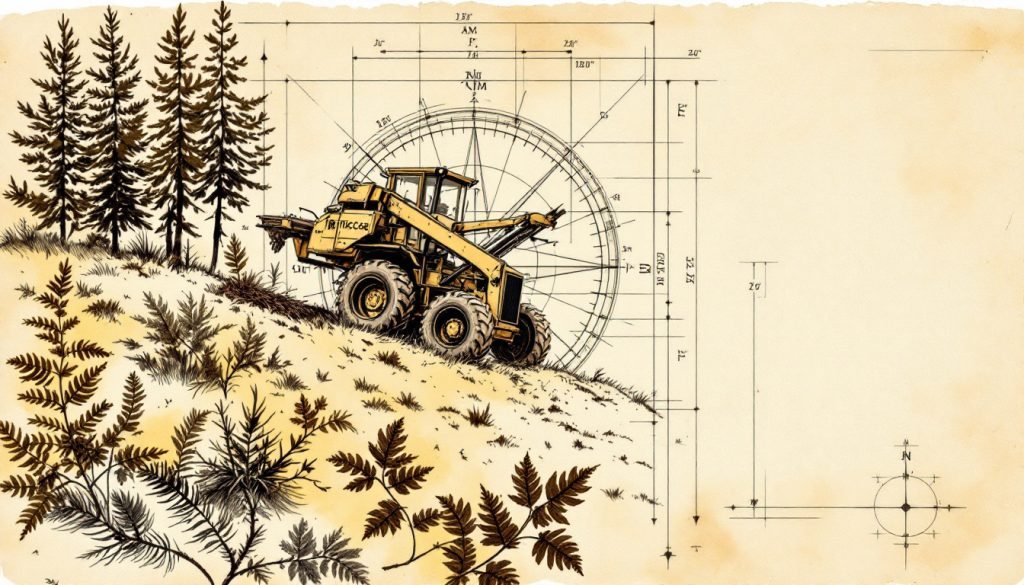
- Mulchers shred stems into mulch instead of hauling away debris. Vertical heads handle 6–8" wood; horizontal drums up to 30". Slope limits follow carrier type: skid steers 35%, crawlers 50%. Verify daily tooth allowance, insurance, and 300-ft safety zone. For slopes >45% or stems >8", hire a certified arborist.
You are staring at a slope choked with yaupon holly and cedar elm saplings, wondering how to turn that fire-hazard tangle into a neat carpet of mulch without hauling every limb away. The contractor’s proposal lists a “masticator,” the neighbor swears by a skid-steer mulcher, and the salesman keeps talking about horizontal versus vertical shafts. Before you sign a contract or rent a machine, you need to know what each mulcher type can—and cannot—do on your terrain.
By the time you finish this article you will understand exactly how mulching machines work, how to match the attachment to the size and slope of the job, and what questions will separate a competent operator from a weekend warrior. I am Michael Hartman, ISA Board Certified Master Arborist, and I have spent three decades specifying, supervising, and occasionally rescuing mulching projects from Houston’s coastal flats to Austin’s limestone hills. Let’s get the chips flying.
The Biology Behind Mulching: Why Shredding Beats Removal
Running a mulching head through brush is not just mechanical cleanup—it is accelerated decomposition. A drum spinning at 2,000–3,000 rpm fractures stems into 10- to 100-hour fuel particles, increasing surface area and inoculating the material with soil microbes. Within weeks the shredded layer begins forming a humus-rich mat that retains soil moisture and suppresses germination of new brush.
From a forest-ecology standpoint, the process mimics a low-intensity surface fire without the flame. Nutrients—especially potassium and magnesium—remain on-site instead of being trucked away. The resulting mulch layer also moderates soil temperature swings, reducing root stress on retained overstory trees. In short, mulching converts an ecological liability into a soil-building asset.
Mastication: Mechanical shredding of standing or downed vegetation into particles small enough to remain on-site as mulch, typically performed by rotary drum or disc heads.
Machine Configurations: From Skid Steers to Purpose-Built Crawlers
Mulchers attach to six common carriers: skid steers, compact track loaders (CTLs), excavators, farm tractors, four-wheel-drive loaders, and dedicated crawler carriers. Each configuration changes the way the head engages the material. Skid steers and CTLs push the head into standing brush; the stems fall forward and are re-shredded as the machine drives over them. Excavator-mounted heads, by contrast, reach out and grind standing vegetation vertically, allowing the operator to avoid driving over stumps and rocks.
Horizontal-shaft mulchers resemble large chipping drums; they excel at volume reduction and can accept material up to 30 inches in diameter. Vertical-shaft heads look like oversize brush hogs and are limited to roughly 6–8 inch stems, but they leave a finer, more uniform mulch layer. Purpose-built carriers—think Fecon or Rayco tracked machines—add high-flow hydraulics (45–60 gpm) and guarding packages that tolerate rock strikes better than converted farm tractors.
Pro Tip: Ask the contractor what hydraulic flow the carrier produces. A 30-gpm tractor will stall a head rated for 45 gpm, leaving you with half-processed brush and a burned pump.
Matching Machine to Terrain: Slope, Soil, and Access
Slope limits follow the carrier, not the head. Rubber-tired skid steers lose traction on slopes above 35 percent (roughly 19°), while steel-tracked CTLs can usually work up to 45 percent (24°). Purpose-built crawler mulchers with dedicated forestry tracks handle 50–55 percent grades but still cannot defy gravity—wet clay or loose scree will slide a 20,000-lb machine downslope regardless of tracks.
Access width matters, too. A standard Bobcat T770 CTL needs 8 ft of gate clearance; a Rayco C120R forestry crawler needs 11 ft. If your lot has a 6-ft fence gate, you will need a smaller skid steer or the expense of removing fencing. Soil compaction is another variable: a 12,000-lb CTL exerts about 4.5 psi ground pressure—less than a human foot—while a farm tractor with loaded tires can exceed 25 psi and rut soft soils.
Site Access Checklist
- Measure gate openings and overhead wires—add 1 ft buffer for mirrors
- Grade the slope with an inclinometer app; anything over 35% calls for tracks
- Probe soil moisture to 6 in; if the probe sinks easily, delay until soils dry
- Identify buried utilities within 10 ft of the mulching zone
Understanding Size Limits: What a Mulcher Can—and Cannot—Cut
Vertical-shaft heads cut cleanly up to 6–8 inches diameter; beyond that you risk stalling the motor or shearing drive belts. Horizontal-shaft units, built like mini-whole-tree chippers, can nibble away 20- to 30-inch trunks, but the process is slow and hammers dull quickly. Above 30 inches, chainsaw felling is faster and safer for both operator and machine.
Height matters as well. An excavator with a 20-ft stick can mulch a 40-ft cedar elm from the ground, but the operator must reach overhead where the head loses hydraulic power. Skid-steer mulchers are limited to about 12 ft above grade unless the operator builds a ramp of previously shredded material—practical on flat ground, lethal on slopes.
Warning Signs You Have Oversized Material
- Single stem >8 in diameter with vertical shaft head: Time to switch to horizontal shaft or fell manually
- Overhead limbs >12 ft above grade: Excavator or bucket truck required for safe reach
- Rock embedded in trunk >6 in diameter: Stop and hand-remove—striking rock destroys hammers and throws debris
Cost vs. Value: Rental Rates, Production Averages, and Hidden Fees
A 74-hp skid steer with 6-ft mulching head rents for roughly $900 per day in central Texas. Production rates run 0.5–1.5 acres per 8-hour day, depending on stem density and operator skill. Add $120 per day for high-flow hydraulics and another $150 for delivery. By contrast, a purpose-built Fecon FTX128L with 120 hp and 8-ft head rents for $1,800 per day but triples production on heavy cedar infestations.
Hidden costs creep in fast. Dull hammer teeth reduce productivity by 40 percent; replacement sets run $2,000. Contaminated hydraulic oil (from dust ingestion) can destroy a $15,000 pump—always ask if the rental rate includes daily oil sampling. Finally, most yards charge $400 to remove embedded wire or fence posts that wrap around the drum. Walk the site beforehand with a metal detector; five minutes of prep saves hours of downtime.
Safety and Liability: What Homeowners Must Verify
Mulching heads eject material at 200 mph in a 360-degree arc. OSHA requires a 300-ft safety zone for unprotected individuals; in residential neighborhoods that means full job-site fencing or scheduling work when neighbors are absent. Check the contractor’s insurance certificate for specific coverage limits—standard $1 million general liability may not cover fire spread if a spark hits dry mulch.
Personal protective equipment (PPE) is non-negotiable: the operator needs a forestry helmet with face shield, cut-resistant chaps, and steel-toed boots. Spotters must wear full PPE and maintain visual contact with the operator. If the operator shows up without chaps, politely send them home; the same goes for a rental yard that hands over a machine lacking a FOPS/ROPS cab guard.
Common Mistakes to Avoid
- Underestimating debris throw: Windows 200 ft away can still be shattered—cover or remove them
- Ignoring soil moisture: Wet clay will rut and compact, ruining lawn recovery for years
- Skipping pre-work metal sweep: One strand of barbed wire can destroy a $15,000 drum
Professional vs. DIY: When to Call a Certified Arborist
Renting a 74-hp skid steer and mulching head for a weekend costs roughly $1,100 with delivery. Add teeth, fuel, and a Saturday you will never get back; if you have never operated tracked equipment, expect a 50 percent learning-curve penalty. On a quarter-acre lot with -cedar under 6 inches, a homeowner with skid-steer experience can achieve good results in one focused day.
Call a certified arborist when the job involves retaining desirable trees, slopes over 45 percent, or any tree larger than 8 inches. An arborist can also coordinate follow-up treatments—prescribed fire, herbicide, or supplemental planting—that turn mulch into long-term fuel reduction rather than expensive landscaping. The cost difference narrows quickly when you factor in avoided mistakes and faster completion.
What to Do Next: Questions to Ask Your Contractor
Before any machine crosses your property line, get the following in writing: carrier type and hydraulic flow rating, maximum slope the operator considers safe, daily production rate on similar terrain, and a per-day tooth-replacement allowance. Ask for proof of insurance and a walk-through of the safety zone plan. Confirm that final cleanup includes hand raking around structures and that any chips left on lawn areas will be spread, not piled.
Reserve 15 minutes to walk the site with the operator and point out irrigation heads, septic lines, and specimen trees to protect. A reputable contractor will welcome the input; if they brush you off, find another crew. Your trees, your terrain, and your wallet will thank you.
Still unsure whether a Tritucap beats a traditional mulcher for your specific soil finish needs? Review the comparisons above and match the machine to your terrain, budget, and timeline.