Tritucap Limits on Rocky Ground: What Property Owners Should Know
Tree mulchers grind entire trees into wood chips in minutes. Learn the machine types, limitations, and when to use them for safe land clearing.
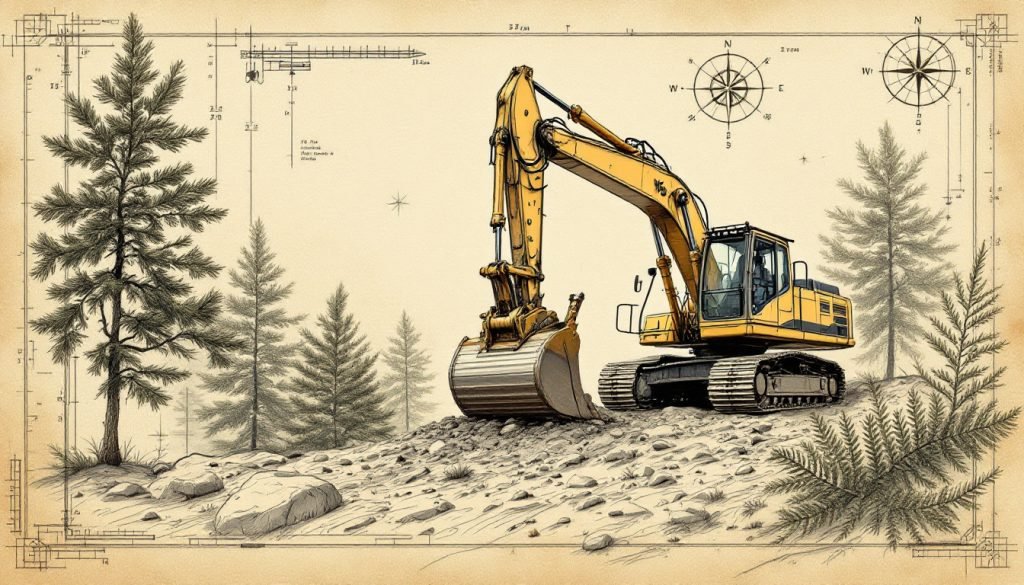
- Tree mulchers grind standing trees into wood chips in a single pass. Horizontal shaft units handle up to 30-inch trunks, vertical only 6-8 inches. Best timing is late winter to early spring for cleaner cuts and delayed regrowth. Cost-effective under 8-inch material; larger stems need specialist equipment. Always flag utilities and check slope limits before firing up the head.
You’re staring at a back-yard thicket of 6-inch hackberry and cedar that sprouted while you were busy with life. The chainsaw-and-chipper route will take two weekends, six dump runs, and probably an aching shoulder. Then a neighbor mentions “just mulch the whole mess”—and you wonder what a tree mulcher actually does, whether it can handle 8-inch trunks, and if it leaves your soil looking like a bomb crater.
As an ISA Board-Certified Master Arborist who has specified mulchers for 30 years of fuel-break and right-of-way work across Texas, I can tell you exactly how these machines chew through standing timber, what they can (and cannot) grind, and how to decide whether mulching is the right prescription for your trees or your client’s site.
The Basic Definition: From Tree to Chips in One Pass
A tree mulcher—also called a masticator or brushcutter—is a powered head that cuts, shreds, and pulverizes vegetation into particles small enough to remain on-site as mulch. Unlike a chipper that requires pre-felling and feeding, a mulcher attacks standing trees, shrubs, and vines, turning them into a uniform layer of wood fiber without hauling debris away.
Mulcher: A rotating drum or disc fitted with hardened steel teeth that reduces whole trees to sub-2-inch chips in a single pass, leaving the material in place forprotect soil and suppress regrowth.
Everything larger than about 2 inches becomes splintered and frayed; leaves and small branches are reduced to dust. The result is an immediate reduction in vertical fuel height and a soft, walkable surface that resists erosion and weeds for two to three seasons.
Two Mechanical Designs: Horizontal vs. Vertical Shaft
Mulchers come in two fundamental configurations, and the choice determines maximum tree size, maneuverability, and surface finish. Horizontal shaft units resemble giant chipping drums; vertical shaft units look like beefed-up brush-hog decks.
| Horizontal Shaft | Vertical Shaft |
|---|---|
| Handles 6–30 inch diameter material | Limited to 6–8 inch maximum trunks |
| Continuous cut while machine advances | Mower-style passes, slower on large stems |
| Produces stringier, coarser mulch | Finer, more uniform particle size |
| Mounted on skid-steers, dozers, purpose-built carriers | Mounted on skid-steers, mini-excavators, tractors |
Horizontal shaft mulchers dominate utility right-of-way jobs where cottonwoods and 20-inch pines must disappear. Vertical shaft units are the go-to for residential firebreaks and cedar removal on rocky ground because the deck can “float” and avoid scalping soil.
What Can (and Cannot) Be Mulched
Machine specifications set the absolute ceiling, but site biology and structure dictate practical limits. A 30-inch carbide-tooth drum can physically chew a 20-inch live oak—yet doing so batters the carrier, increases tip-over risk, and leaves softball-sized chunks rather than true mulch.
Warning Signs You’ve Hit the Limit
- Stall-outs: Engine rpm drops and head stops—material is oversize or dull teeth
- Chunking: Pieces larger than 4 inches indicate you’re beyond rated diameter
- Soil plumes: Gray dust means the head is digging, not cutting, risking utility strikes
Keep the target stems under 8 inches for vertical shaft units and under 12 inches for horizontal shaft units unless the carrier is purpose-built. Dead trees are harder on teeth than live ones; if the wood snaps like chalk, expect faster dulling and more frequent tooth replacement.
Carrier Options: Skid-Steer, Excavator, Tractor, or Dedicated
The same mulcher head can be bolted to half a dozen different chassis, and each pairing changes the reach, slope capability, and price tag. Skid-steers dominate residential jobs because they fit through 6-foot gates, but they tip on slopes over 2:1. Excavator-mounted heads reach 25 feet horizontally—perfect for mulching junipers on a ravine wall without operators leaving solid ground.
Tools You Will Need
- Fecon or Denis Cimaf head: Match carrier hydraulic flow (gpm) and psi exactly
- Lexan cab guarding: OSHA requirement for flying debris
- Fire suppression tank: 50-gallon minimum for cedar or pine in fire season
- Site prep bar: Push bar or rake to pre-fold brush away from operator
Tractor PTO mulchers cost less per hour but crawl at 0.5 mph; dedicated purpose-built mulchers such as a FTX600 can cruise at 2 mph and mulch 4 acres per day, but the rental alone tops $2,400 daily.
Site Prep and Timing for Best Results
Mulchers hate surprises. A single fist-sized limestone rock can shatter a $40 carbide tooth; a forgotten T-post becomes a lethal projectile. Walk the site the day before, flag utilities, and drop any fence wire to ground level.
When to Act
Best window: late winter through early spring. Dormant stems cut cleaner and regrowth is delayed until late summer, giving you a full growing season of bare soil for follow-up seeding or planting.
Soil moisture matters: too dry and dust chokes the operator; too wet and clay packs the drum housing. Aim for conditions that leave footprints but don’t squish. If ice or snow is present, reschedule—carbide teeth become brittle below 20 °F.
After the Mulch: Regrowth, Soil Health, and Aesthetics
Expect a 3- to 6-inch layer of fresh chips that blankets the ground. This mat suppresses annual weeds for roughly 18 months, then decomposes into fertile duff. Cedar and mesquite chips are allelopathic; hardwood mulch is not. If you plan to seed wildflowers or pasture, wait 60 days for the initial nitrogen tie-up to subside, then broadcast seed directly into the mulch layer.
Pro Tip: For instant visual appeal, run a landscape rake over the masticated area once at 90 degrees; it levels the humps and reveals mineral soil for follow-up planting without extra grading cost.
Monitor stump sprouts monthly. A single-pass mulcher cuts stems flush but does not kill roots. Any live oak, elm, or locust will sucker back from the crown; spot-spray the sprouts with triclopyr before they exceed 12 inches to prevent re-establishment.
Professional vs. DIY: When to Rent, Hire, or Walk Away
Renting a skid-steer with 6-inch vertical shaft head runs $900 to $1,200 per day in Texas markets, plus $150 delivery and $50 per carbide tooth you destroy. That pencils out for 1-acre jobs with material under 6 inches. Above that acreage—or if the site contains 8-inch cedar on 3:1 slopes—hire a dedicated mulching contractor who arrives with 250 hp and insurance that covers both machine and wildfire liability.
Common Mistakes to Avoid
- Underestimating stumps: Roots thicker than 4 inches can stall smaller heads—flag and chain-saw these first
- Running dull teeth: Carbide edges round off after 20–30 hours on cedar; dull teeth double job time and overheat hydraulics
- No fire watch: A single spark in dry cedar chips can smolder for 12 hours—assign a spotter with water backpack for the day
Do not attempt mulching within a utility easement unless you have positive locates and spotters. A gas line strike by carbide teeth is catastrophic; the utility will back-charge you for the entire repair plus lost service revenue.
Conclusion: Deciding if Mulching Fits Your Project
If your target trees are under 8 inches, the site is relatively rock-free, and you need the material left on-site for erosion control, mulching is almost always faster and cheaper than cut-and-haul. For single specimen removals, ornamental beds, or areas where you want zero chips, stick to chainsaw work and off-site disposal. When in doubt, invite a certified arborist to walk the ground with you; a 15-minute site review can save thousands in tooth replacement or slope remediation.
Once the mulcher leaves, you gain a clean slate—no piles, no burn scars, just a soft, dark layer of organic armor ready for whatever you plant next. Manage regrowth early, and that freshly masticated site can become meadow, orchard, or simply safer defensible space around your home. Always check equipment safety specs before starting any job.