How to Remove Tree Roots from Drain Pipe
ISA Master Arborist explains why roots invade drain pipes, how to diagnose blockages, and proven removal methods that protect your plumbing and your tree.
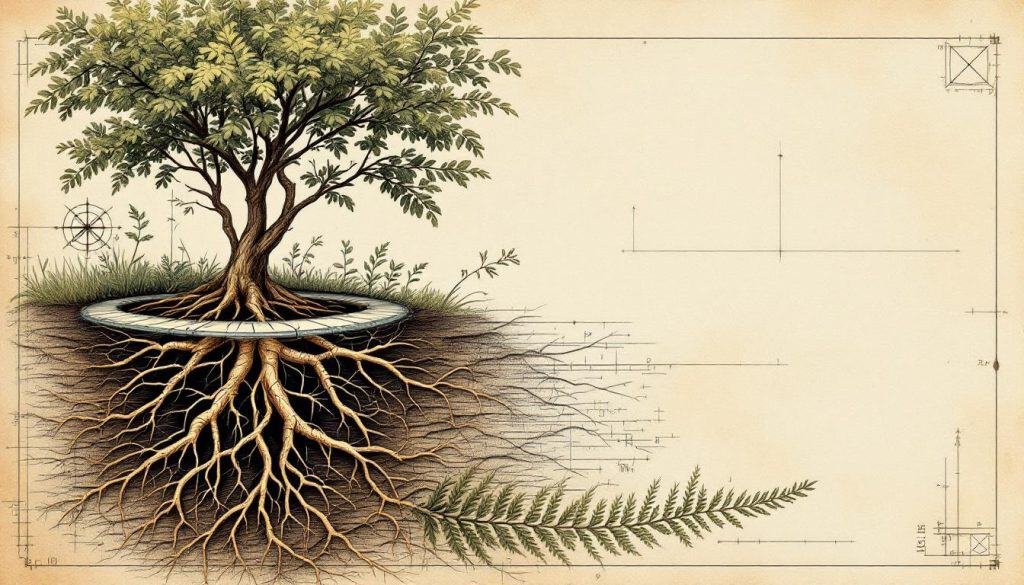
- Tree roots enter drain pipes through hairline cracks and joints, driven by moisture and nutrient gradients in soil. Species like willow, silver maple, and cottonwood are most aggressive but any tree within 20 feet of a sewer line poses risk. Mechanical cutting clears blockages but roots regrow within months without chemical follow-up treatment. Camera inspection before any treatment is essential — pressure clearing a cracked pipe can cause catastrophic collapse. For pipes with structural damage, cured-in-place lining eliminates entry points permanently and is the only long-term fix.
You flush the toilet and notice the water draining slower than usual. A few weeks later, the kitchen sink backs up. Then the basement floor drain starts gurgling. These are the classic warning signs that tree roots have found their way into your drain pipe — and once they are in, they do not leave on their own. This is one of the most common and most underestimated problems homeowners face when mature trees grow near sewer or stormwater lines.
Tree roots are not malicious. They are simply doing what roots do: seeking water, oxygen, and nutrients. A drain pipe — even a well-sealed one — emits trace moisture vapor that roots detect from several feet <a href=”https://treecarelabs.com/resources/trees/trunk/what-happens-notching-trunk”>away. Hairline cracks, loose joints, or aging clay tile sections become entry points. Once a fine feeder root threads through a gap, it proliferates inside the pipe where conditions are ideal, eventually forming a dense mass that blocks flow entirely. Michael Hartman, ISA Board Certified Master Arborist (TX-0198B), has assessed hundreds of properties where root intrusion caused thousands of dollars in plumbing damage that could have been addressed far earlier with the right knowledge.
By the end of this article, you will understand exactly why roots invade pipes, how to confirm the diagnosis, which removal methods work and which cause more harm than good, and when the situation demands a licensed plumber or arborist rather than a weekend DIY project.
Why Tree Roots Target Drain Pipes
The relationship between roots and pipes is driven by basic plant physiology. Roots grow toward resources — water, oxygen, and dissolved minerals — through a process called hydrotropism and chemotropism. A drain pipe carrying household wastewater is, from a root’s perspective, a concentrated nutrient stream. Even a pipe in good condition releases small amounts of water vapor through joints and micro-fissures, and roots detect that gradient from distances of three feet or more in dry soil.
The species most frequently responsible for drain intrusion include willow (Salix spp.), silver maple (Acer saccharinum), cottonwood (Populus deltoides), and American elm (Ulmus americana). These trees share aggressive, wide-spreading root systems and a high demand for water. That said, virtually any tree planted within 20 feet of a sewer line is a candidate for intrusion given enough time. A 30-year-old oak with a trunk diameter of 14 inches may have roots extending 40 feet or more from the base.
Hydrotropism: The directional growth of plant roots toward water sources, driven by moisture gradients in the soil. This is the primary mechanism that draws roots toward leaking or sweating drain pipes.
Clay tile pipes installed before 1980 are especially vulnerable because they use bell-and-spigot joints every few feet — each joint is a potential entry point. PVC and ABS pipes with properly glued joints resist intrusion far better, but root pressure can still exploit any imperfection over decades. Once inside, roots encounter warm, nutrient-rich water and essentially never stop growing. A root mass that starts as a few hair-thin strands can fill a 4-inch diameter pipe completely within two to three growing seasons.
Diagnosing Root Intrusion Before You Act
Slow drains and backups have multiple causes — grease buildup, foreign objects, pipe collapse — and treating root intrusion with the wrong method wastes time and money. Accurate diagnosis comes first. The gold standard is a sewer camera inspection, also called a CCTV pipe inspection. A licensed plumber or drain specialist threads a waterproof camera through a cleanout access point and views the pipe interior in real time. This confirms root presence, shows the extent of the mass, and reveals the pipe material and condition.
Warning Signs of Root Intrusion in Drain Pipes
- Multiple slow drains simultaneously: When more than one fixture drains slowly, the blockage is likely in the main line rather than a branch line, which points toward root intrusion near the street connection.
- Gurgling sounds after flushing: Air displacement caused by a partial blockage creates audible gurgling in nearby fixtures — a reliable early indicator before a full backup occurs.
- Sewage odor in yard or basement: Root intrusion that cracks a pipe allows sewage to seep into surrounding soil, producing sulfur odors at ground level or near floor drains.
- Recurring blockages after snaking: If a plumber clears a clog and it returns within six to twelve months, roots are almost certainly the cause — mechanical clearing without root treatment is only a temporary fix.
- Lush, unusually green grass strip: A line of exceptionally green turf running from the house toward the street often traces a leaking sewer line fertilizing the soil above it.
Once camera inspection confirms root intrusion, note the pipe material, the distance from the house, and the severity of the blockage. A pipe that is 25 percent occluded by roots is a very different situation from one that is 90 percent blocked or structurally cracked. That distinction drives every decision that follows.
Mechanical Root Cutting: The Drain Auger and Rotary Cutter
Mechanical cutting is the most immediate solution for active blockages. A drain auger — commonly called a plumber’s snake — uses a rotating cable with a cutting head to break up and extract root masses. For root intrusion specifically, a root-cutting auger with a spinning blade head is far more effective than a standard corkscrew tip. These cutters come in 3-inch and 4-inch head sizes to match standard residential drain pipe diameters.
Tools You Will Need for Mechanical Root Removal
- Electric drain auger with root-cutting head: Rental units from equipment suppliers handle most residential jobs; choose a cable length of at least 75 feet to reach the main line.
- Sewer camera or inspection scope: Confirms root location before and verifies clearance after cutting — skipping this step means working blind.
- Heavy rubber gloves and eye protection: Rotating cables and root debris create serious injury risk; this is non-negotiable PPE.
- Bucket and drain rods: For capturing extracted root material and manually clearing loosened debris from the cleanout access point.
- Pipe thread sealant or cleanout plug: To reseal the cleanout access after work is complete and prevent odor or pest entry.
The mechanical process involves feeding the cutting head into the cleanout access, advancing the cable slowly while rotating, and making multiple passes until resistance drops and water flow resumes. The extracted root material should be removed from the pipe rather than flushed downstream, where it can create a secondary blockage. Mechanical cutting is effective but temporary — it removes the root mass without killing the root system, so regrowth begins almost immediately. Most homeowners who rely solely on mechanical cutting find themselves repeating the process every one to three years.
Chemical Root Control: Copper Sulfate and Foaming Herbicides
Chemical treatments address the regrowth problem that mechanical cutting cannot. Two categories dominate residential use: copper sulfate crystals and foaming dichlobenil or metam sodium products. Each works differently and carries different risks to the tree above ground.
Copper sulfate has been used for decades. Flushed down the toilet or introduced through a cleanout, copper sulfate crystals dissolve and coat the pipe walls with a copper ion solution that kills root tissue on contact. The standard application rate is about half a pound of crystals per treatment, repeated every few months. Copper sulfate is inexpensive and widely available. Its limitation is that it stays in the lower portion of the pipe and does not foam up to coat the full pipe circumference, leaving upper root growth untreated. It also accumulates in soil over time, which can affect soil biology near the pipe.
Pro Tip: Copper sulfate applied to drain pipes rarely reaches the tree’s root system in concentrations high enough to cause visible canopy damage — the soil buffers and dilutes it significantly. However, on sandy soils with high drainage, or when applied repeatedly over many years, I have seen marginal chlorosis in willows and silver maples planted directly over the pipe run. If the tree has significant value, use a foaming herbicide product applied by a licensed plumber instead, and monitor the canopy the following spring.
Foaming root killers containing dichlobenil or metam sodium expand to fill the entire pipe diameter, making contact with roots across the full cross-section. These products are more effective than copper sulfate for complete treatment but require careful handling and are best applied by a professional. Neither chemical treatment repairs a cracked or deteriorated pipe — they only manage regrowth inside an otherwise intact line.
Hydro-Jetting: High-Pressure Water Clearing
Hydro-jetting uses water pressurized to 3,000 to 4,000 PSI delivered through a specialized nozzle to scour the interior of a drain pipe. It removes root masses, grease, mineral scale, and debris simultaneously, leaving the pipe walls cleaner than mechanical cutting alone. A professional plumber operates the equipment from a truck-mounted unit, feeding a flexible hose through the cleanout access.
Hydro-jetting is more thorough than rotary cutting for established root masses and is often paired with a post-jetting camera inspection to confirm results. The limitation is cost — expect to pay $300 to $600 for a residential main line treatment compared to $100 to $200 for a mechanical snake job. Hydro-jetting is also not appropriate for pipes already showing structural cracks or significant deterioration, because the pressure can worsen existing damage. This is why camera inspection before treatment is essential, not optional.
| Removal Method | Best For | Longevity of Results | Typical Cost Range |
|---|---|---|---|
| Mechanical auger/rotary cutter | Active blockages, immediate relief | 6–18 months before regrowth | $100–$250 |
| Copper sulfate treatment | Maintenance after clearing | 3–6 months per application | $20–$50 DIY |
| Foaming herbicide (dichlobenil) | Full-pipe root kill after clearing | 12–24 months | $150–$300 professional |
| Hydro-jetting | Heavy root mass, grease combined | 12–24 months with chemical follow-up | $300–$600 |
| Pipe lining (CIPP) | Cracked or deteriorated pipe | Permanent — eliminates entry points | $3,000–$8,000+ |
Common Mistakes That Make the Problem Worse
Root intrusion repair is an area where well-intentioned DIY efforts frequently backfire. Understanding the failure modes saves time, money, and in some cases, the tree itself.
Common Mistakes to Avoid
- Skipping camera inspection: Treating a root blockage without knowing the pipe condition can turn a $300 hydro-jet job into a $6,000 pipe collapse repair. Always inspect before applying pressure or chemicals.
- Cutting surface roots to stop intrusion: Severing large lateral roots near the surface does not stop roots already inside the pipe and can destabilize the tree. Root pruning requires careful assessment of which roots are structural versus feeder roots.
- Using copper sulfate in septic systems: Copper sulfate kills the beneficial bacteria that make a septic system function. Never use it if your home is on a septic system — use foaming herbicide products labeled safe for septic use instead.
- Relying on mechanical clearing alone: Snaking the line without chemical follow-up means roots regrow from the cut ends within weeks. Mechanical clearing and chemical treatment work together, not as alternatives.
- Removing the tree without fixing the pipe: Cutting down the offending tree stops future root growth but does nothing about the roots already inside the pipe or the cracked entry point. The pipe still needs repair.
Timing: When Root Intrusion Is Most Urgent
Root growth inside pipes accelerates during the same periods that above-ground growth accelerates — spring and early summer in most North American climates. This means blockages that were manageable in winter can become complete obstructions by May or June as root tissue expands rapidly in warmer soil temperatures.
When to Act
Best window: Late fall through early winter. Treating and chemically suppressing roots after the growing season slows regrowth for the longest possible interval. However, if you have an active backup, act immediately regardless of season — sewage backup into a home is a health hazard that cannot wait for optimal timing.
From a tree health perspective, late fall treatment is also preferable because the tree has completed its growing season and stored carbohydrates for winter. Any root tissue killed by chemical treatment represents a smaller proportion of the tree’s total root system than it would during active spring growth. If you are in a drought year, roots are under additional stress and more aggressively seeking water sources — intrusion rates increase during extended dry periods, which is worth noting for property owners in Texas, the Southwest, and the Southeast.
Pipe Repair and Long-Term Prevention
Removing roots from a drain pipe is a treatment, not a cure, unless the entry point is also addressed. Cured-in-place pipe lining (CIPP) is the most effective long-term solution for pipes with cracks or deteriorated joints. A flexible liner saturated with epoxy resin is inserted into the existing pipe and inflated, curing in place to form a seamless interior sleeve. This eliminates every joint and crack that roots previously exploited, with a service life of 50 years or more. Cost ranges from $3,000 to $8,000 for a typical residential main line depending on length and access.
For pipes in good structural condition, physical root barriers installed during landscaping can prevent future problems. Slow-release copper mesh barriers placed vertically in the soil between a tree and a pipe line deflect root growth without harming the tree. These are most practical during new construction or when replanting after tree removal. Choosing the right tree species for the planting location is the most effective prevention of all — a bald cypress planted 8 feet from a sewer line will cause problems; a crape myrtle in the same spot almost certainly will not.
When to Call a Professional Arborist or Plumber
Some root intrusion situations are genuinely DIY-manageable: a minor blockage in a pipe confirmed by camera to be structurally sound, treated with a rental auger and copper sulfate follow-up. Many situations are not. Call a licensed plumber when camera inspection reveals pipe cracks, pipe collapse, offset joints, or root masses that a rental auger cannot clear. Call an ISA Certified Arborist when the tree involved is large, has significant landscape value, or when you are considering root pruning or tree removal as part of the solution.
Root pruning to reduce future intrusion is a legitimate technique, but it requires knowing which roots are structural and which are feeder roots. Cutting a major lateral root within a distance of three times the trunk diameter from the base can destabilize a tree, creating a hazard tree that costs far more to address than the original drain problem. An arborist can assess the tree’s root architecture, recommend safe pruning distances, and advise on whether the tree is worth preserving given its proximity to the pipe infrastructure.
What to Do Next: Your Action Path
If you are reading this because you have a slow drain or a backup right now, start with a camera inspection — call a plumber today and request a CCTV sewer scope before any clearing work begins. That single step gives you the information to make every subsequent decision correctly. If the pipe is structurally sound, mechanical clearing followed by a foaming herbicide treatment buys you one to two years of relief. If the pipe is cracked or deteriorated, budget for CIPP lining and solve the problem permanently.
On the tree side, resist the impulse to immediately remove the offending tree. Removal stops future root growth but does not undo existing damage, and a mature tree has real landscape and property value worth preserving if the pipe can be repaired around it. Work with both a licensed plumber and a certified arborist to develop a plan that addresses the pipe, manages the roots, and keeps the tree if it is safe to do so. Root intrusion is a solvable problem — it just requires the right sequence of steps and the right professionals for each part of the job.