Co-dominant Stems Weak Unions: Explained by Arborists
Learn to identify dangerous trees before they fail. Master arborist explains the 7-point check-up method to spot hazards that could damage your property.
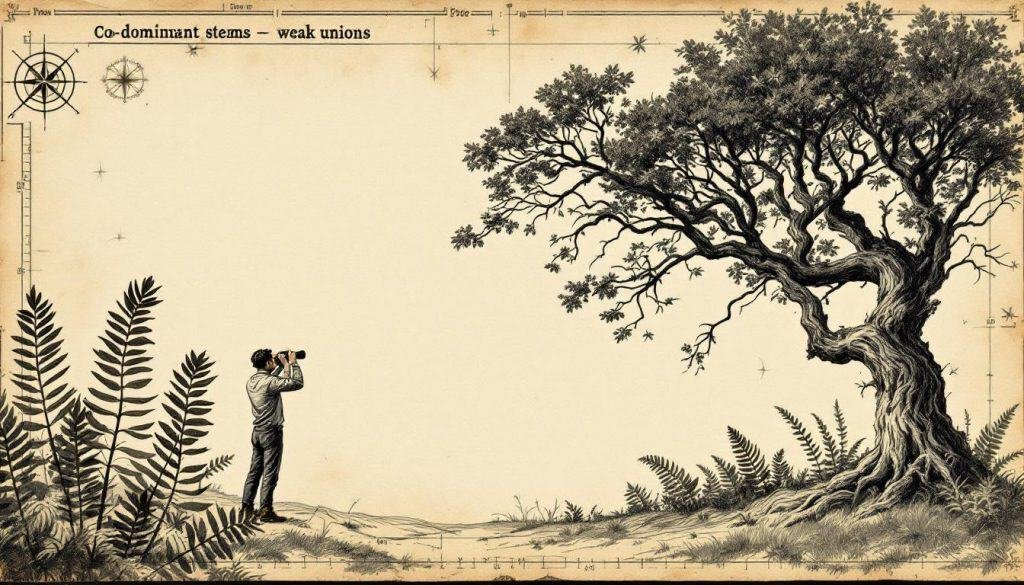
- Tree failures are 70% preventable through systematic seasonal inspections. The 7-point method spots hazards from dead branches to trunk cavities. Any cavity over 30% trunk diameter or crack over 1/4 inch needs immediate attention. Species like Bradford pears and silver maples require extra scrutiny for known failure modes. Professional assessment becomes essential when defects exceed homeowner evaluation tools.
That crack you heard during last night’s wind wasn’t just the house settling. Across neighborhoods every spring, tree failures destroy roofs, crush cars, and occasionally cause tragic injuries. The signs were there months earlier – most property owners simply don’t know what to look for.
As an ISA Board Certified Master Arborist who’s investigated hundreds of tree failures, I’ve learned that 70% of storm damage could be prevented with proper seasonal inspections. The difference between a healthy tree and an accident waiting to happen often comes down to knowing where to look and what those signs mean.
By the end of this guide, you’ll understand exactly how to walk your property with the same systematic approach I use in professional risk assessments. You’ll know which trees need immediate attention, which can wait for proper pruning, and which pose acceptable low risk to your family and property.
The Biological Reality: Why Trees Fail
Tree failure isn’t random – it’s the predictable result of structural defects overwhelming the tree’s ability to support itself. Every species has evolved specific architectural patterns that distribute weight and resist wind loads. When these patterns are disrupted by poor pruning, disease, or mechanical damage, stress concentrates in predictable failure points.
The most critical factor is the relationship between crown size and root system capacity. A mature oak can develop 20-30 tons of leafy crown biomass, requiring an anchoring root system spreading 2-3 times the canopy width. When construction, grade changes, or disease reduces this root zone by even 30%, the tree’s safety margin drops dramatically.
Decay fungi operate as invisible engineers, hollowing trunks and major limbs from the inside out. By the time external symptoms appear – conks, cavities, or cracks – the internal structure may already be compromised beyond safe retention. The tree continues adding new wood each year, but the hollow core grows faster than the living shell can compensate.
Included Bark: Bark trapped between two stems growing in tight V-shaped unions, creating a natural fault line that prevents strong wood formation and acts as a built-in breaking point.
The 7-Point Visual Inspection Method
Professional risk assessment starts 50 feet from the tree, scanning for obvious defects before moving closer. This systematic approach prevents tunnel vision and ensures nothing gets missed during detailed inspection.
Begin by assessing the entire tree’s form and lean. Healthy trees grow straight toward light sources; pronounced lean toward buildings or power lines indicates potential failure direction. Check the trunk for spiral grain patterns – these natural twists concentrate stress during wind loading and indicate weaker wood structure.
Warning Signs to Watch For
- Dead or hanging branches: Look for leafless twigs in summer, bark sloughing off, or branches suspended in the canopy that could fall without warning
- Cavities and hollows: Any opening larger than 2 inches diameter, especially near the base or major unions, indicates internal decay
- Cracks in trunk or major limbs: Vertical seams opening wider than 1/4 inch, or horizontal cracks across the grain, signal immediate structural failure risk
Move closer to examine branch attachments. Look up into the canopy from directly beneath – any branches growing at sharp V-angles rather than U-shaped unions are inherently weak. Multiple stems emerging from the same point create included bark that acts like a natural wedge.
Tools That Make Assessment Accurate
While experienced arborists can spot major hazards with naked-eye inspection, proper tools separate thorough assessment from guesswork. You don’t need professional gear, but these basics will make your inspections consistent and reliable.
Tools You Will Need
- Binoculars (8×32 minimum): Essential for examining high branches and cavities safely from the ground
- Measuring tape: Quantify cavity openings, crack widths, and trunk diameter for comparison over time
- Sounding mallet: A rubber mallet or axe handle for gently tapping trunks to detect hollow sounds indicating internal decay
A simple plumb line helps assess trunk lean accurately. Tie a weight to 6 feet of string and hold it against the trunk at shoulder height. Any deviation from vertical greater than 15 degrees toward targets warrants professional evaluation. Document the angle and direction with photos for year-over-year comparison.
Pro Tip: Take photos of concerning trees from the same spot each season. Digital timestamps reveal changes invisible during single inspections – lean progression, cavity growth, or branch dieback that develops gradually.
Seasonal Timing and Urgency Thresholds
Tree risk assessment isn’t a one-time event – seasonal changes dramatically affect both hazard visibility and failure likelihood. Spring growth can mask winter damage, while autumn leaf drop reveals previously hidden structural issues.
When to Act
Best window: Late fall through early spring when leaves are down. Why this timing matters: Defects become visible, tree stress is minimal, and professional crews have availability before storm season demand peaks.
After major weather events – ice storms, sustained winds over 40 mph, or heavy wet snow – immediate re-inspection is critical. Stress fractures can develop overnight, and hanging branches that were stable may now pose imminent danger.
Set calendar reminders for quarterly walk-throughs: March (before spring growth), June (after spring storms), September (before hurricane season), and December (post-leaf drop). This rhythm catches developing issues before they become emergencies.
Common Assessment Mistakes Homeowners Make
The biggest error is focusing only on obvious problems while missing subtle indicators. A large dead branch gets attention while the 3-foot cavity at the base goes unnoticed. Another frequent mistake is assuming healthy-looking foliage means structural soundness – internal decay can progress for years before affecting crown appearance.
Common Mistakes to Avoid
- Over-trusting foliage density: Vigorously growing trees can mask extensive internal decay for 2-3 years before crown decline becomes apparent
- Ignoring root zone changes: New construction, grade changes, or soil compaction within the dripline often precede delayed failure by 5-10 years
- Misjudging branch size: Any limb over 4 inches diameter that could strike a target poses significant hazard regardless of apparent health
Don’t rely on quick fixes like cabling or bracing visible defects without understanding underlying causes. These are temporary measures that may provide false security while decay continues advancing.
Species-Specific Vulnerability Patterns
Each tree species has evolved unique failure modes based on wood properties and growth habits. Understanding these patterns helps prioritize which trees need closer attention in your landscape.
| Species | Primary Failure Mode | Priority Inspection Points |
|---|---|---|
| Bradford Pear | Weak branch unions, splitting at V-crotches | Multiple stems from single point |
| White Pine | Shallow roots, windthrow in wet soil | Root plate movement, soil heaving |
| Sugar Maple | Internal decay, large limb drop | Trunk cavities, dead upper branches |
| Cottonwood | Brittle wood, large branch failure | Codominant stems, included bark |
Mature silver maples over 40 years old deserve particular scrutiny – their rapid growth creates weak wood prone to sudden limb drop during calm weather, a phenomenon called “summer branch drop” that can occur without warning signs.
When Professional Assessment Becomes Essential
While homeowners can identify obvious hazards, certain situations require trained arborist evaluation. Any tree with recent lean change, over 20 inches diameter at breast height, or within falling distance of high-value targets needs professional assessment.
Call an Arborist When You Find
- Any crack wider than 1/4 inch in trunk or major limbs
- Cavities with opening larger than 30% of trunk diameter
- Tree leaning more than 15 degrees from vertical
- Construction activity within tree’s dripline in past 5 years
- Dead branches over 4 inches diameter in upper canopy
Professional arborists use resistograph drills to measure internal decay, aerial lifts to examine crown structure, and formal risk matrices that calculate actual failure probability. This information guides retention versus removal decisions based on real data rather than fear or guesswork.
Expect to pay $150-400 for comprehensive assessment, including written report with photos and recommendations. This investment prevents far costlier emergency removals and provides documentation for insurance claims if failure occurs.
Creating Your Action Plan
Effective tree risk management combines regular homeowner monitoring with strategic professional involvement. Start by inventorying all trees on your property – note species, approximate diameter, and proximity to targets like buildings or play areas.
Schedule annual professional assessments for your largest trees (over 20 inches diameter) and any within 20 feet of structures. For smaller trees, your quarterly inspections should catch developing issues before they become critical.
Document everything with photos and measurements. Create a simple spreadsheet tracking tree location, size, last inspection date, and noted issues. This record becomes invaluable when selling property or filing insurance claims.
Remember that tree risk exists on a continuum, not as safe versus dangerous. The goal isn’t zero risk – it’s understanding and managing acceptable risk levels while preserving the enormous benefits mature trees provide to your property value, energy costs, and quality of life.