Understanding Pipe Replacement After Root Damage
Learn how tree roots invade sewer lines, warning signs to spot early, and proven prevention methods from a Master Arborist.
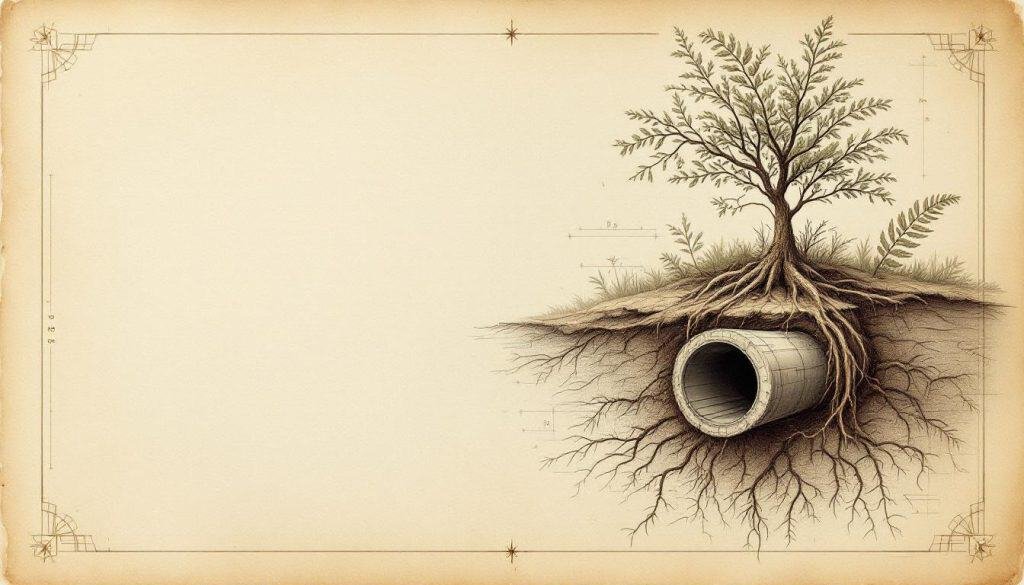
- Tree roots invade sewer pipes through gaps as small as 1/8 inch seeking water and nutrients.
You noticed the downstairs toilet gurgling last week, then the shower started draining slow. This morning, sewage backed up into the basement tub. Sound familiar? Tree roots have likely found their way into your sewer line, a scenario I encounter weekly as Michael J. Hartman, ISA Board Certified Master Arborist. Understanding how roots behave underground and what attracts them to pipes can save you thousands in emergency plumbing bills.
Tree roots don’t randomly attack pipes—they’re following water vapor that escapes through tiny cracks or loose joints. Once inside, they expand like a net, catching debris and creating a dam. The good news? Early detection and proper tree selection can prevent 90% of these conflicts. By the end of this guide, you’ll know exactly what to watch for, when to act, and whether to call a professional.
Why Roots Target Sewer Lines
Tree roots grow where conditions support life: oxygen, nutrients, and moisture. Your sewer line delivers all three in abundance. A 4-inch clay pipe joint from 1960 might have a 1/8-inch gap—roots detect water vapor escaping through this opening and grow toward it at rates up to 3 feet per year. Once a pencil-thick root penetrates, it expands to finger-size within two seasons, creating a living net that snags toilet paper, grease, and solids.
The physics are brutal: a 6-inch root mass can reduce a 4-inch pipe to 1-inch flow capacity. During heavy use—like Thanksgiving dinner or laundry day—wastewater backs up because it can’t escape faster than you’re adding it. Cast iron pipes from the 1950s corrode from the inside, creating rough surfaces that roots follow like breadcrumbs. PVC pipes rarely fail this way unless improperly glued joints separate during ground settling.
Root Intrusion: The process where tree roots penetrate sewer pipes through joints or cracks, then expand inside the pipe creating blockages.
Early Warning Signs Inside Your Home
Roots don’t announce themselves with dramatic symptoms at first. The earliest indicator is often a toilet that flushes slowly after heavy rain—roots have reduced capacity, and saturated soil adds external pressure. Next, you’ll hear gurgling from floor drains when the washing machine empties. This occurs because air trapped by the root mass escapes backward through the path of least resistance.
Multiple fixtures backing up simultaneously signals a main line issue, not a localized clog. If your kitchen sink drains fine but the basement toilet overflows when you run it, roots have created a partial blockage downstream. The toilet paper test helps confirm: flush three squares and time drainage. Normal pipes clear in 8-12 seconds; root intrusion typically takes 20+ seconds.
Warning Signs to Watch For
- Slow drains throughout the house: Multiple fixtures affected, not just one sink
- Gurgling sounds: Bubbling from toilets or floor drains when using water elsewhere
- Repeated clogs: Same drain backing up every 3-6 months despite cleaning
- Lush lawn patches: Greener grass over sewer line indicates nutrient-rich leaks
Professional Diagnostic Methods
Plumbers confirm root intrusion using specialized cameras that travel 100 feet through 4-inch pipes. The footage reveals white root masses against dark pipe walls, often appearing like coral formations. A 200-foot camera scope costs $200-400 but prevents unnecessary excavation. The camera head includes a radio transmitter; above ground, we trace the exact location and depth of root masses within 6 inches.
Hydro-jetting clears roots temporarily using 4,000 PSI water jets, but this creates a clean surface for faster regrowth. The pipe’s condition matters more than root volume: a clay pipe with multiple offset joints needs replacement regardless of root size. PVC pipes showing root intrusion at one joint often indicate ground settling or improper installation that will repeat elsewhere.
Tools You Will Need
- Drain camera: Look for 200-foot capacity with self-leveling camera head
- Radio locator: Traces camera transmitter to mark exact pipe location
- Hydro-jet system: Minimum 4 GPM at 4,000 PSI to cut through root masses
- Root saw attachment: Rotating blade that fits jet hose for heavy intrusions
Tree Species That Cause Most Problems
In my 30 years addressing sewer conflicts, five species cause 80% of root intrusions. Silver maple leads the list—its aggressive surface roots spread 2-3 times the canopy width and penetrate any gap larger than 1/16 inch. Willow trees seek water so aggressively they’ll grow roots 150 feet to reach a leaking pipe. American elm’s fibrous root system creates dense mats that completely fill pipes within five years.
Poplars and cottonwoods grow 6-8 feet annually, with roots matching that pace. These trees planted within 50 feet of sewer lines virtually guarantee future problems. Conversely, oaks typically cause fewer issues due to their deeper, taproot-dominant structure—unless the sewer line runs through a shallow trench. The critical distance varies by species: maples need 35 feet minimum, while oaks can safely sit 20 feet away if soil depth exceeds 24 inches.
| High-Risk Species | Lower-Risk Alternatives |
|---|---|
| Silver maple (35+ ft needed) | Oak species (20+ ft acceptable) |
| Willow (50+ ft needed) | Honeylocust (25+ ft acceptable) |
| Poplar (40+ ft needed) | Ginkgo (20+ ft acceptable) |
Prevention During New Planting
Preventing root intrusion starts before you plant. Call 811 to mark utilities—sewer lines often run surprisingly shallow, sometimes just 18 inches deep. Measure from the center of your planting hole to the nearest sewer cleanout; if under 25 feet, choose a different species or location. Create a root barrier using 24-inch deep aluminum or plastic sheeting installed vertically between the tree and pipe.
Soil preparation matters: compacted clay forces roots to spread horizontally seeking oxygen, increasing sewer line encounters. Amend the entire planting area—not just the hole—with 2-3 inches of compost tilled 12 inches deep. This encourages deeper root growth away from utilities. Water new trees deeply but infrequently at the drip line, training roots to grow downward rather than spreading wide seeking surface moisture.
Pro Tip: Install a 4-inch perforated drain pipe 3 feet from your sewer line, sloped to daylight. Roots follow this easy water source instead of attacking your sealed pipe. I’ve used this technique successfully for 200+ plantings over sewer easements.
Removal Options and Effectiveness
Mechanical removal using a root-cutting auger attached to a sewer machine provides immediate relief but stimulates regrowth. The spinning blades cut roots flush with pipe walls, creating thousands of injury sites that sprout new roots within months. Chemical treatments like copper sulfate or metam sodium kill roots on contact but require repeated applications every 6-12 months.
Foam treatments offer better coverage: a root-killing foam expands to fill the pipe, coating all root surfaces. The active ingredient, dichlobenil, prevents regrowth for 12-24 months. However, chemicals don’t address the underlying gap that allowed entry—roots return until you repair the pipe. Pipe lining creates a new seamless pipe inside the old one, eliminating all joints and cracks that roots exploit.
Common Mistakes to Avoid
- Ignoring the pipe condition: Killing roots without fixing cracks guarantees return within a year
- Overusing chemicals: Repeated copper sulfate treatments can kill beneficial soil microbes
- Planting quick fixes: Fast-growing species like willow solve one problem but create bigger ones
Timing and Seasonal Considerations
Root growth follows predictable patterns. In temperate climates, roots grow most actively during spring (April-May) and fall (September-October) when soil temperatures range 50-70°F. Schedule preventive treatments in late summer when growth slows but roots remain active enough to absorb chemicals. Emergency removals work year-round but are most effective during active growth periods when roots contain maximum moisture.
Plumbing repairs requiring excavation should wait for dry conditions—wet soil increases cave-in risk and makes locating all utilities more difficult. In northern climates, avoid digging within 3 feet of trees after October 15th; frozen soil prevents proper backfilling and damages roots. Southern regions can work year-round but should avoid summer’s extreme heat when PVC glue joints cure too quickly.
When to Act
Best window: late summer before fall growth. Treatments applied August-September prevent the aggressive fall root expansion that typically causes winter backups.
When to Call a Professional
Attempting DIY root removal often creates bigger problems. Homeowners renting 50-foot drain snakes typically punch a small hole through the root mass, providing temporary relief but leaving 80% of roots intact. Professional equipment reaches 200+ feet with cameras to verify complete removal. More importantly, certified arborists understand tree stability—removing major roots can destabilize the entire tree.
Call immediately if roots have caused pipe collapse or offset joints over 1 inch. These situations require excavation and pipe replacement, not just cleaning. Any root removal within 10 feet of the trunk demands arborist evaluation—removing structural roots can cause catastrophic tree failure. Professional assessment costs $150-300 but prevents $5,000+ in emergency tree removal after it falls on your house.
What to Do Next
Start with a camera inspection if you notice any warning signs—this $250 investment prevents $2,000 emergency calls. Document the pipe condition and root locations, then develop a management plan. For minor intrusions, schedule annual cleaning combined with chemical foam treatments. Severe cases require pipe repair or replacement; consider trenchless options that preserve landscaping.
Prevention remains your best strategy. Map your sewer line and plant future trees at appropriate distances. Replace aging clay or cast iron pipes before roots find them—PVC installed proactively costs half as much as emergency replacement after intrusion occurs. Remember: the tree isn’t the enemy, it’s following natural instincts. Smart planting and maintenance create harmony between your landscape and infrastructure.