Tree Species that Lift Concrete: A Practical Guide
Tree roots can crack foundations and pipes, but strategic species selection and placement prevent costly damage while maintaining healthy landscapes.
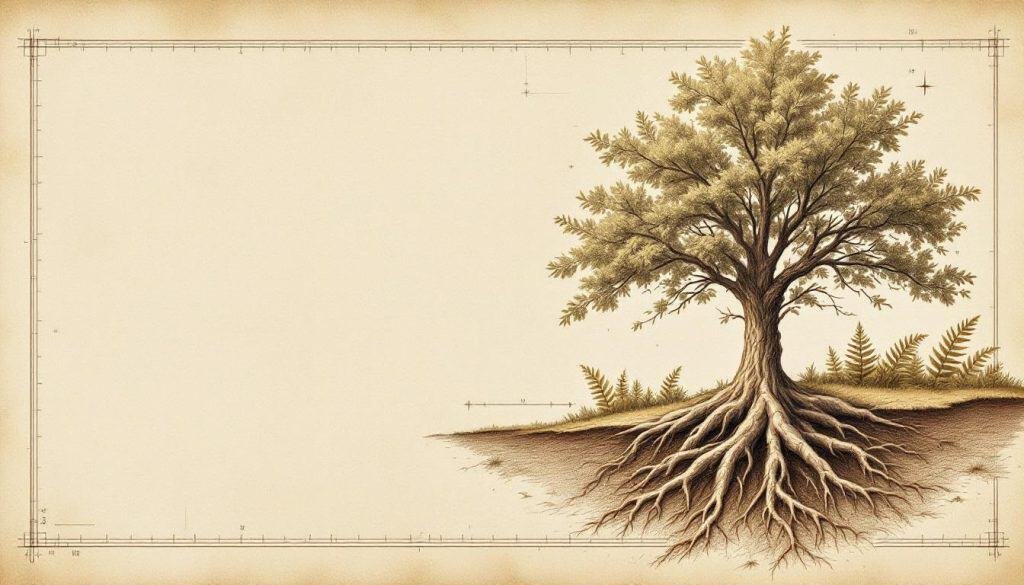
- Oaks cause 11% of foundation damage despite being only 2% of urban trees. Plant large trees minimum 30 feet from foundations in clay soils. Root barriers must extend 30-36 inches deep to be effective. Winter dormancy is optimal for root pruning and barrier installation. Any tree within 20 feet of foundation warrants professional risk assessment.
You noticed it first as hairline cracks snaking across the basement wall, then the doors upstairs started sticking. Your neighbor casually mentioned the massive oak tree shading both houses, and now you’re wondering if the roots are slowly destroying your foundation. This isn’t paranoia – tree roots cracking concrete cause millions in foundation damage annually, yet most homeowners plant trees without understanding the underground consequences they’ll face decades later.
As an ISA Board Certified Master Arborist who’s diagnosed foundation issues across Texas for over three decades, I’ve seen how the wrong tree in the wrong place transforms from landscape asset to structural liability. By the end of this guide, you’ll know exactly which trees to avoid near buildings, how far to plant different species, and what warning signs indicate roots are already causing problems beneath your home.
How Tree Roots Actually Damage Foundations
Tree roots exhibit three primary behaviors that threaten building foundations: soil moisture extraction, physical pressure against structures, and exploitation of existing cracks. When roots encounter a foundation wall, they don’t typically punch through intact concrete. Instead, they travel along the surface seeking moisture, creating zones of desiccated soil that shrink away from the foundation. This soil shrinkage creates void spaces, allowing the foundation to settle unevenly.
The real damage begins when foundations already contain micro-cracks from settling, poor construction, or thermal cycling. Roots detect these cracks as moisture pathways – even tiny cracks allow root tips to penetrate, following water vapor gradients into basements and crawl spaces. Once inside, roots expand exponentially, widening cracks and creating pathways for water infiltration that accelerates deterioration.
Soil Desiccation: The process where tree roots extract soil moisture faster than it can be replaced, causing clay soils to shrink dramatically and sandy soils to consolidate, both resulting in foundation movement.
Clay soils are particularly vulnerable to root-related foundation damage. In Texas gumbo clays, a single mature tree can extract 100-200 gallons daily during peak growth, causing soil shrinkage measurable in inches. This creates the classic foundation pattern where corners nearest large trees drop while center sections remain stable, resulting in diagonal cracks radiating from affected areas.
Identifying High-Risk Tree Species Near Buildings
Certain tree species pose disproportionate foundation risks due to their root architecture, growth rate, and water demands. Research shows that while oaks represent only 2% of urban tree populations, they cause 11% of foundation damage cases – a 5.5:1 damage-to-population ratio. This isn’t coincidental but reflects their aggressive lateral root systems extending 2-3 times the canopy width.
Fast-growing species present particular hazards because above-ground growth directly correlates with below-ground expansion. Poplars, willows, and silver maples can add 3-5 feet of new root growth annually during establishment. These species also exhibit high water demands, with mature poplars transpiring 50-100 gallons daily. Location matters significantly – a silver maple planted 40 feet from a foundation poses minimal risk, while the same tree 15 feet away becomes a guaranteed problem.
Warning Signs to Watch For
- Surface roots within 20 feet of foundation: Indicate roots are already seeking structural moisture and will continue expanding
- Diagonal cracks in foundation corners: Suggests differential settling from soil moisture extraction by nearby trees
- Sticking doors and windows: Indicates foundation movement, often correlating with tree proximity
- Visible root penetration in basement walls: Confirms active intrusion that will accelerate over time
Slow-growing species like live oaks and cedar elms develop more contained root systems but still require careful placement. These trees compensate for slower growth with extreme longevity, meaning a poorly placed live oak planted today could threaten foundations for 200+ years. The key is understanding both current and ultimate tree size when selecting planting locations.
Safe Planting Distances for Common Tree Species
Establishing appropriate setback distances requires understanding each species’ mature canopy spread and root zone characteristics. General guidelines suggest planting trees at least 1.5 times their mature canopy radius from foundations, but this varies dramatically by species and local soil conditions. In shrink-swell clay soils common across the southern United States, doubling these distances provides essential safety margins.
For large trees with mature spreads exceeding 50 feet – oaks, pecans, sycamores – maintain minimum 30-foot setbacks from foundations. Medium trees like crepe myrtles and redbuds require 15-20 foot clearances, while small ornamental species can safely approach 8-10 feet. However, these distances assume well-draining soils; clay soils demand additional buffer zones.
| Tree Type | Mature Height | Safe Distance | Risk Level |
|---|---|---|---|
| Oak, Pecan, Sycamore | 50-80 feet | 30-50 feet | High |
| Maple, Ash, Poplar | 40-60 feet | 25-40 feet | Very High |
| Crepe Myrtle, Redbud | 15-25 feet | 15-20 feet | Medium |
| Japanese Maple, Dogwood | 8-15 feet | 8-12 feet | Low |
Consider underground utilities when calculating setbacks. Tree roots naturally exploit sewer lines and water pipes, following nutrient-rich leaks. Plant trees at least 10 feet from sewer laterals and 5 feet from water service lines, recognizing that root barriers may be necessary in constrained urban lots.
Installing Root Barriers for Existing Trees
When mature trees already threaten foundations, root barriers offer a non-lethal solution that preserves both tree and structure. Effective barriers must extend 30-36 inches below grade and be installed 3-5 feet from the foundation, creating a no-grow zone while maintaining adequate root space for tree stability. The barrier material matters significantly – concrete cracks over time, while high-density polyethylene (HDPE) barriers provide 30+ year effectiveness.
Installation requires careful excavation to avoid major structural roots. Begin by trenching 3-4 feet from the foundation, cutting any crossing roots cleanly with sharp tools. Install the barrier vertically, ensuring the top extends 2-3 inches above soil grade to prevent surface root growth. Backfill carefully, avoiding soil compaction that could stress remaining roots.
Tools You Will Need
- HDPE root barrier panels: 30-36 inch depth, 40-60 mil thickness for longevity
- Sharp trenching shovel or spade: Clean cuts minimize root damage and disease entry
- Root pruning saw: Curved blade designed for underground root cutting
- Soil auger: For precise barrier placement around utilities
Timing proves critical for barrier installation. Schedule work during late fall or winter dormancy when trees experience minimal stress. This allows remaining roots to compensate before spring growth demands maximum water uptake. Monitor tree health closely for 2-3 years after installation, watching for canopy thinning or dieback indicating excessive root loss.
Root Removal vs. Tree Removal Decisions
Deciding between targeted root pruning and complete tree removal requires evaluating multiple factors: tree health, structural risk, aesthetic value, and legal considerations. Roots larger than 2 inches diameter within the critical root zone (roughly trunk diameter × 3) provide essential stability, and removing more than 25% of these structural roots risks tree failure during storms.
Foundation damage assessment determines the appropriate response. Superficial root intrusion through existing cracks may respond to root cutting combined with foundation sealing. However, widespread soil desiccation from extensive root systems typically necessitates tree removal to prevent ongoing foundation movement. Document everything – photographs of root damage and foundation cracks support insurance claims and neighbor disputes.
Common Mistakes to Avoid
- Flushing root killers: Copper sulfate and similar chemicals damage sewer lines and contaminate groundwater without addressing foundation issues
- Excessive root pruning: Removing more than 25% of structural roots destabilizes trees, creating hazards during storms
- Partial barrier installation: Incomplete barriers redirect roots deeper rather than stopping them, potentially causing more severe future damage
Consider tree value when making removal decisions. A healthy 40-year-old oak adds $10,000-$30,000 in property value while providing significant cooling benefits. Alternative solutions like supplemental irrigation to reduce soil moisture extraction, or installing root barriers during foundation repair, may preserve valuable trees while addressing structural concerns.
Seasonal Timing for Tree Management
Tree root activity follows predictable seasonal patterns that directly impact foundation risks and management timing. During active growth periods (spring through early fall), roots rapidly expand seeking moisture and nutrients, making this the worst time for major root disturbance. Conversely, winter dormancy provides the optimal window for root pruning and barrier installation with minimal tree stress.
Soil moisture levels significantly influence foundation movement patterns. Extended summer droughts cause maximum soil shrinkage as tree roots extract available moisture, often revealing existing foundation issues as cracks widen. Spring brings the opposite problem – soil rehydration causes expansion that can lift foundations, particularly where root barriers have been recently installed.
When to Act
Best window: Late fall through winter dormancy. Root pruning and barrier installation during this period allows trees to establish new root growth before spring demands peak uptake. Avoid any major root work during active growth periods when trees are transpiring at maximum rates.
Monitor foundation movement seasonally. Measure crack widths monthly using a simple ruler, documenting changes that correlate with rainfall patterns and tree growth. Significant crack widening during drought periods suggests active root influence requiring immediate intervention, while stable measurements during favorable conditions indicate lower priority issues.
Regional Soil and Climate Considerations
Local geological conditions dramatically affect tree-related foundation risks. Expansive clay soils common throughout Texas, Oklahoma, and parts of the Southeast experience dramatic volume changes – up to 15% shrink-swell potential – making them particularly vulnerable to moisture extraction. In these regions, tree spacing recommendations increase by 50% compared to stable sandy or loamy soils.
Arid climates present unique challenges where trees become essential for landscape cooling yet pose significant risks. Desert-adapted species like mesquite and palo verde develop aggressive root systems seeking limited water sources. In these environments, foundation watering zones extending 10-15 feet from structures help maintain soil moisture while directing tree roots away from buildings.
Coastal areas face different threats where salt-tolerant trees like live oaks predominate. Salt spray and sandy soils create shallow root systems that spread widely seeking fresh water, but these same conditions provide better drainage that reduces foundation movement risks. The key becomes managing irrigation to maintain consistent soil moisture rather than preventing root access.
Professional Assessment and Long-term Monitoring
Foundation damage from tree roots rarely resolves without professional intervention. Certified arborists can accurately assess tree health and root impacts using tools like air spades to excavate root systems without damage. Structural engineers evaluate foundation movement patterns to determine whether tree management or structural repairs take priority.
Professional assessment typically includes soil testing to determine shrink-swell potential, tree root mapping using ground-penetrating radar, and foundation elevation surveys to document movement patterns. These comprehensive evaluations cost $500-$1,500 but prevent expensive mistakes like removing valuable trees unnecessarily or installing inadequate barriers.
Pro Tip: Before any major tree work near foundations, take detailed photographs of the house from multiple angles, including foundation cracks and door alignments. These baseline images prove invaluable for insurance claims and monitoring changes after root management.
Establish long-term monitoring protocols regardless of intervention type. Annual foundation inspections during extreme weather periods identify developing problems early. Document tree growth rates and canopy spread – a tree adding 6+ inches of trunk diameter annually indicates root expansion that may soon threaten adjacent structures. Budget for periodic professional assessments every 5-10 years as trees mature.
What to Do Next
Start today by measuring the distance between your home’s foundation and all existing trees. Use the species-specific guidelines provided to identify immediate risks – any tree closer than recommended distances warrants professional evaluation. Document current foundation conditions with photographs and simple crack-width measurements to establish baselines for future monitoring.
For immediate concerns, contact a certified arborist for root zone assessment before taking action. Avoid the temptation to simply cut problem roots – improper pruning accelerates tree decline while potentially creating storm hazards. Instead, develop a comprehensive management plan that balances tree preservation with structural protection, including proper barrier installation or strategic tree replacement.
Remember that tree-related foundation damage develops slowly over decades, but addressing it proactively saves tens of thousands in future repairs. pick the right trees to avoid these issues altogether. The trees you plant today will shape your foundation risks for generations – choose wisely, plant appropriately, and monitor consistently to maintain healthy trees and stable foundations simultaneously.
Understanding how roots crack pavers can also help you spot early warning signs around driveways and walkways. In extreme cases, you may wonder can tree roots grow through concrete entirely – while rare, it highlights the importance of proper species selection and placement.