Root Depth vs Root Spread: Which Is Right for You
Discover the surprising reach of tree roots and learn practical strategies to prevent root damage to foundations, driveways, and utilities.
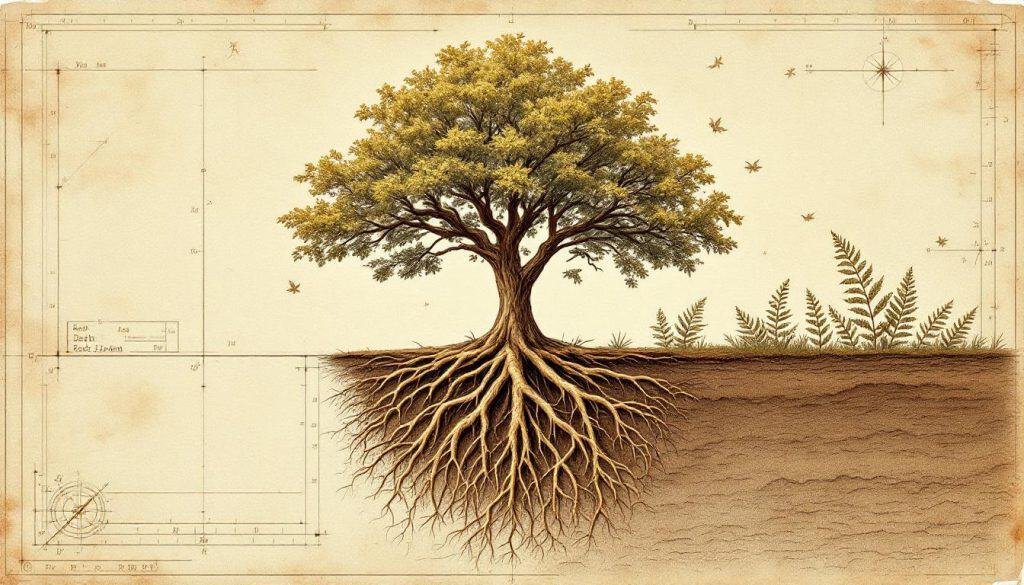
- Tree roots spread 2-4x the crown diameter, dense feeder roots zone, up to 7x for structural roots. Surface roots indicate compacted soil or restricted growing space below limits deep root development. Root pruning within critical root zone (1 foot per inch trunk diameter) risks tree instability. Proper root barriers installed during planting prevent 90% of future hardscape conflicts. Consult certified arborist for any root pruning within 10 feet of trunk or affecting structures.
You noticed the sidewalk lifting near your 20-year-old live oak, or maybe your neighbor’s maple is pushing up patio stones three houses down. Either way, you’ve landed here because tree roots are doing something unexpected in your space, and you need to know how far they’ll really go and what you can do about it. I’m Michael Hartman, ISA Board Certified Master Arborist, and after three decades of mapping root systems and resolving root conflicts, I’ll show you exactly what determines root spread and how to manage it before expensive damage occurs.
Tree roots rarely respect property lines, hardscape boundaries, or our neat diagrams of where we think they should grow. Understanding their true reach helps you make informed decisions about planting locations, construction projects, and when professional intervention becomes essential versus manageable DIY measures.
Why Roots Spread So Far: The Biological Drive
Tree roots spread because that’s how they survive. In nature, a tree’s only job is to successfully reproduce, and spreading roots accomplish three critical functions: mechanical support against wind forces, water absorption during drought periods, and nutrient collection from the widest possible area. The root system mirrors these needs with remarkable precision.
Research from Colorado State University confirms what field observations have shown for decades: most tree roots occupy an area two to four times the diameter of the crown. However, this is just the dense concentration zone. Individual structural roots can extend much further, with some studies documenting roots reaching four to seven times beyond the crown’s surface area. The key insight here is that the “root zone” isn’t a neat circle but a dynamic system responding to environmental opportunities and constraints.
Roots are opportunistic explorers. They proliferate where conditions favor growth – moist, uncompacted soils rich in organic matter – and retreat from hostile environments like compacted construction zones or areas with high water tables. This explains why the same species planted in different locations can have dramatically different root patterns. A red maple in sandy loam might have roots extending 50 feet from the trunk, while the same tree in heavy clay might concentrate 80% of its roots within 15 feet.
Root zone: The three-dimensional area beneath and around a tree where active root growth occurs, typically extending 2-4 times the crown diameter in favorable conditions.
Identifying Root Spread: Reading the Underground Story
You can’t see most roots directly, but the surface tells a compelling story about what’s happening below. Start by observing the tree’s crown – measure the drip line (the outer edge of the canopy) and multiply by three to estimate the dense root zone. However, this is just the beginning of your detective work.
Surface indicators provide crucial clues. Look for raised areas in lawns, lifting sidewalks, or cracks in driveways that follow straight lines toward the tree. These usually indicate large structural roots growing close to the surface. The roots – those visible at ground level – often appear 10-15 feet from the trunk in mature trees, marking the transition zone between dense feeder roots and long-distance structural roots.
Warning Signs to Watch For
- Heaving soil: Mounded or cracked ground extending from trunk indicates large roots
- Surface roots: Visible roots 10+ feet from trunk suggest restricted deep growth
- Hardscape damage: Lifting sidewalks, patios, or foundations following tree direction
- Utility issues: Plumbing backups during drought when roots seek water in pipes
Professional arborists use additional tools including soil probes, ground-penetrating radar, and air spading to map root systems accurately. For homeowners, the most reliable method combines visual assessment with strategic soil probing – use a 3-foot metal rod to test soil resistance in concentric circles from the trunk. Soft penetration indicates root channels; hard resistance suggests compacted soil or large.
Measuring and Mapping Your Tree’s Root Zone
Accurate root zone mapping requires systematic measurement combined with environmental assessment. Begin by establishing the tree’s critical root radius – the minimum area that should remain undisturbed to maintain tree health. For most species, this equals 1 foot of radius for every inch of trunk diameter measured at 4.5 feet above ground.
Next, assess environmental factors that modify this basic calculation. Trees in restricted planting areas (narrow park strips, between sidewalks and streets) develop compressed root systems that may extend further horizontally but more shallowly. Conversely, trees in open landscapes with deep, fertile soil may concentrate roots more vertically than horizontally.
Root Zone Mapping Checklist
- Measure trunk diameter at 4.5 feet height
- Calculate critical root radius: 1 foot per inch of trunk diameter
- Mark drip line and extend 3x diameter for exploration zone
- Probe soil resistance in 5-foot intervals outward
- Document hardscape damage patterns and distances
- Photograph from multiple angles for future reference
Digital tools enhance accuracy. Use smartphone apps to overlay your measurements on satellite imagery, creating a digital map that shows property boundaries, existing structures, and your calculated root zones. This proves invaluable when planning construction projects or discussing issues with neighbors.
Root Barriers and Management Strategies
Prevention beats remediation every time when managing root spread. The most effective strategy involves installing root barriers during initial planting, but retrofit solutions exist for existing conflicts. Modern root barriers use specialized materials that redirect root growth downward rather than simply blocking it, preventing the circling root problems associated with older solid barriers.
Barrier installation depth matters significantly. For most landscape trees, 18-24 inches provides adequate redirection, but species like willows, poplars, and silver maples require 30-inch barriers. The barrier should extend 5 feet from the trunk for every 6 inches of trunk diameter, creating a sufficient redirection zone without restricting healthy growth.
Tools You Will Need
- Root barrier panels: High-density polyethylene panels 18-30 inches deep
- Trenching shovel: For precise barrier placement along property lines
- Soil auger: Post-hole digger for deep barrier installation
- Measuring tape: Accurate placement 5 feet from trunk per 6″ diameter
Existing root management requires different approaches. Air spading uses compressed air to safely excavate soil around roots without damage, allowing selective root pruning when necessary. This technique proves essential when roots have already invaded sensitive areas like foundations or utility lines. Never attempt mechanical removal of roots near structures without professional assessment – the structural support those roots provide may be critical to tree stability.
Common Root-Related Problems and Solutions
Foundation damage from tree roots represents one of the most misunderstood landscape issues. In reality, roots rarely crack sound foundations directly – instead, they exploit existing cracks or weaknesses, then expand them as they grow. The real threat occurs during drought periods when roots remove moisture from clay soils, causing shrinkage that affects foundations built on expansive clay.
Sidewalk and driveway lifting follows predictable patterns. Roots grow toward these structures because they provide moisture condensation zones – the concrete stays cooler and collects dew, creating a microclimate that roots exploit. The lifting occurs when roots grow directly beneath the concrete, expanding as they thicken with age.
Common Mistakes to Avoid
- Topping trees to reduce roots: This actually stimulates aggressive root sprouting and weakens the tree
- Chemical root killers: These damage the entire tree and contaminate soil for decades
- Cutting all roots on one side: Creates dangerous instability that can lead to tree failure
- Ignoring species differences: Oaks behave differently from maples in root development patterns
Utility conflicts require immediate attention. Roots entering sewer lines create persistent clogs that worsen over time. The solution involves mechanical root removal combined with pipe relining, but prevention through proper planting distances proves far more cost-effective. Maintain minimum planting distances of 10 feet for small trees, 20 feet for medium trees, and 30 feet for large species from sewer lines.
Timing Root Work: Seasonal Considerations
Root pruning and barrier installation timing significantly impacts tree health and success rates. Dormant season work, typically late fall through early spring before bud break, minimizes stress and allows trees to seal wounds before active growth begins. However, this varies by species and local climate conditions.
Hot summer root work can shock trees, especially when combined with drought stress. If emergency root work becomes necessary during summer, increase watering frequency and consider temporary shade structures to reduce transpiration stress. Never perform major root work during periods of active drought or immediately following construction damage to the root zone.
When to Act
Best window: Late fall through early spring during dormancy. This timing allows maximum recovery before active growth resumes. Emergency root work can occur year-round with proper aftercare including supplemental watering and reduced fertilization.
Planning lead times matter for construction projects. Begin root zone assessment 6-12 months before major construction to allow for barrier installation or tree removal decisions. This prevents rushed decisions that often lead to poor outcomes for both trees and construction projects.
Species-Specific Root Behaviors
Oak trees develop deep, spreading root systems that can extend 2-3 times the crown diameter, but their roots tend to grow deeper than many species. This makes oaks generally more compatible with nearby structures, though their massive size means the absolute distances can still be significant. White oaks typically develop deeper roots than red oaks, making them preferable near structures.
Maple species, particularly silver and Norway maples, present the opposite challenge. They develop dense, shallow root systems that aggressively seek surface moisture. These species commonly cause sidewalk and driveway issues even when planted at recommended distances. Their roots also readily invade sewer lines and drainage systems.
| Tree Type | Typical Root Spread | Depth Pattern | Common Issues |
|---|---|---|---|
| Oak (mature) | 50-70 feet from trunk | Deep, spreading | Foundation moisture draw during drought |
| Silver Maple | 40-50 feet from trunk | Shallow, dense | Sidewalk lifting, sewer invasion |
| Pine (mature) | 30-40 feet from trunk | Deep taproot with spreading laterals | Rare hardscape issues |
Fruit trees present unique considerations. Most have relatively compact root systems, making them suitable for smaller spaces, but their intensive management needs (watering, fertilization) often concentrate root activity near the surface. This can lead to conflicts with nearby structures despite their smaller overall size.
Pro Tip: When selecting trees for tight spaces, choose species with deep root systems over shallow spreaders. Pines and oaks often work better near structures than maples and willows, despite their larger overall size. The key is matching root architecture to your space constraints.
Professional vs. DIY: Making the Call
Simple root pruning of small roots (under 1 inch diameter) located more than 10 feet from the trunk falls within competent DIY territory. Use sharp, clean tools and make clean cuts rather than tearing. However, any root larger than 2 inches diameter, or any root within the critical root zone (1 foot per inch trunk diameter), requires professional assessment.
Professional intervention becomes essential when roots affect foundations, utilities, or when tree stability questions arise. Certified arborists use specialized equipment like resistograph drills to assess internal root decay and can calculate the structural impact of proposed root removal. They also carry insurance that protects you from liability if tree failure occurs after root work.
Cost considerations often drive the DIY vs. professional decision, but weigh these against risk. Professional root barrier installation typically runs $15-25 per linear foot including materials and labor. Emergency tree removal after failed DIY root work costs $1,500-5,000. The economics favor professional assessment for any significant root conflict.
What to Do Next: Your Action Plan
Start today by walking your property and measuring trunk diameters, and calculating critical root zones for all significant trees. Document any existing hardscape damage with photos and measurements from the trunk. This baseline documentation proves invaluable whether you pursue DIY solutions or professional consultation.
For immediate concerns about roots affecting structures or utilities, contact a certified arborist for assessment rather than attempting removal. The consultation cost (typically $150-300) provides professional documentation and recommended solutions, often saving thousands in potential damage or failed remediation attempts.
Long-term planning involves reviewing your tree inventory every 3-5 years as trees grow and environmental conditions change. Trees that were once perfectly placed may develop conflicts as they mature. Early intervention through selective pruning or barrier installation prevents expensive emergency responses later. Your trees and your wallet will thank you for proactive management based on solid understanding of how far those roots really want to spread.