How Far do Tree Roots Grow? Here Is What Science Says
Tree roots spread far beyond what most homeowners expect. Learn the science behind root growth and what it means for your property.
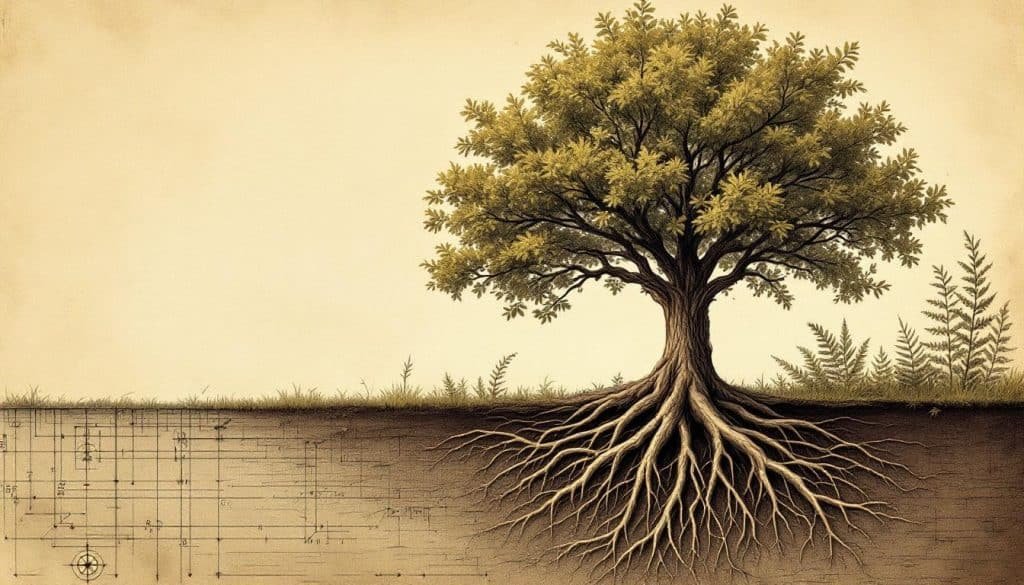
- Tree roots typically spread 2 to 3 times the canopy width, mostly within 18 inches of soil depth.
You notice a crack in your driveway, a lifted sidewalk panel, or a slow drain in your basement — and suddenly you are wondering whether that oak tree planted 20 feet away is the culprit. It is a question I hear constantly from homeowners and contractors alike, and the answer is almost always more surprising than they expect. Tree roots do not stay neatly beneath the canopy. They travel, they probe, and they exploit every weakness in the soil around them.
The science of root architecture has advanced considerably over the past three decades, and what researchers have found challenges the old mental image of roots mirroring the crown above ground. I am Michael Hartman, ISA Board Certified Master Arborist (TX-0198B), and in this article I will walk you through what the research actually shows about how far tree roots grow, why they grow that way, and what that means for your foundation, your hardscape, and your trees. By the time you finish reading, you will have a clear, evidence-based picture of root spread — and a practical framework for making decisions about the trees on your property.
Whether you are planning a new planting, dealing with an existing conflict, or simply trying to understand what is happening underground, the information here will give you a foundation — no pun intended — for taking the right action.
The Biology Behind Root Spread
Tree roots are not passive structures. They are dynamic, actively growing organs that respond to soil chemistry, moisture gradients, oxygen availability, and physical resistance. The primary driver of lateral root spread is the search for water and nutrients, both of which are unevenly distributed through any soil profile. When a root tip encounters favorable conditions — loose soil, a moisture pocket, a decomposing organic layer — it accelerates growth in that direction. This is called hydrotropism and chemotropism working in tandem.
Critical Root Zone (CRZ): The area of soil surrounding a tree that contains the majority of its feeder roots and is essential to the tree’s structural stability and nutrient uptake. It is typically calculated as a radius of one foot per inch of trunk diameter at breast height.
Most of a tree’s absorbing roots — the fine, hair-like structures responsible for water and nutrient uptake — are concentrated in the top 6 to 18 inches of soil. This surprises many people who imagine roots plunging deep into the earth. Oxygen availability drops sharply below 18 to 24 inches in most soils, which is why the vast majority of root biomass stays shallow. The structural roots that anchor the tree do extend deeper, but even these rarely exceed 3 to 5 feet in depth under normal conditions.
What roots lack in depth, they more than compensate for in lateral spread. Research consistently shows that the root system of a mature tree extends well beyond the drip line — the outer edge of the canopy. In open-grown trees with no soil restrictions, root spread of two to three times the canopy radius is common. For a mature silver maple with a 40-foot canopy spread, that means roots potentially reaching 60 to 80 feet from the trunk in favorable soil conditions.
What the Research Actually Shows About Root Distance
Studies using ground-penetrating radar, soil excavation, and isotopic tracing have produced some striking numbers. Research published through university extension programs and arboricultural institutions has documented root systems extending four to seven times the trunk diameter in open soil conditions. A tree with a 12-inch diameter trunk could have roots reaching 48 to 84 feet from the base. That is not an outlier — it is a documented range for many common landscape species.
The 85 percent figure is one of the most practically useful data points in arboriculture: approximately 85 percent of a tree’s root mass is located within the top 18 inches of soil. This shallow concentration is why surface roots become visible in compacted or thin soils, and why construction activity near trees — even activity that seems distant — can cause significant root damage. Cutting a trench 30 feet from a large oak is not a safe distance if that oak’s roots extend 50 feet.
Pro Tip: When I assess a tree for construction impact, I use the rule of thumb that one inch of trunk diameter equals roughly one foot of critical root radius — but I always extend my concern zone to at least 1.5 times that distance for large-canopied species like oaks, elms, and silver maples. The research supports being conservative here. Root damage shows up as canopy decline 2 to 5 years after the injury, long after the contractor has moved on.
Species variation matters enormously. Willows and silver maples are notorious for aggressive lateral spread and a strong affinity for moisture sources, including irrigation lines and older clay sewer pipes. Oaks tend to develop deeper structural roots than maples but still spread laterally well beyond their canopy. Ornamental trees like dogwoods and redbuds have comparatively compact root systems, rarely extending more than 1.5 times the canopy radius. Understanding species-specific behavior is essential when evaluating proximity to structures.
How Soil Type Shapes Root Spread
Soil is not a uniform medium, and roots respond dramatically to its variability. In loose, well-aerated sandy loam, roots spread freely and can reach maximum distances. In compacted clay soils — common in urban landscapes and construction sites — roots are physically restricted and may concentrate in the upper 6 inches where oxygen is still available, creating the surface root problems homeowners frequently complain about. Compaction does not stop root growth; it redirects it.
Hardpan layers, caliche deposits common in Texas and the Southwest, and high water tables all act as barriers that force roots to spread laterally rather than vertically. A tree growing above a caliche layer at 18 inches depth will develop an almost entirely horizontal root system, spreading aggressively in all directions to compensate for the restricted soil volume. This is one reason why trees in arid regions with shallow soils often show root conflicts with hardscape at distances that seem surprising.
| Soil Type | Expected Root Spread Behavior |
|---|---|
| Sandy loam, well-aerated | Deep and wide; roots reach maximum lateral distance |
| Compacted urban clay | Shallow and wide; surface roots common; restricted depth |
| Caliche or hardpan layer | Almost entirely lateral; aggressive spread near surface |
| High water table soil | Shallow lateral spread; structural roots limited in depth |
| Rocky or thin topsoil | Opportunistic growth along cracks; unpredictable spread |
Water availability is the single most powerful driver of directional root growth. Roots will grow toward consistent moisture sources with remarkable persistence. Leaking irrigation lines, downspout discharge zones, and aging clay sewer pipes all attract roots from considerable distances. A willow or poplar planted 40 feet from a sewer line is not a safe planting in most cases — these species have been documented sending roots 100 feet or more toward moisture sources in dry conditions.
Identifying Root Spread on Your Property
You cannot see most of a tree’s root system without excavation, but there are reliable surface indicators that tell you a great deal about what is happening underground. Raised or cracked pavement near a tree is the most obvious sign, but it is worth noting that not all pavement damage near trees is caused by roots — freeze-thaw cycles and soil settlement are also common culprits. The distinction matters before you make any decisions about the tree.
Warning Signs of Aggressive Root Spread
- Raised or buckled pavement: Pavement lifting in a pattern radiating from the tree base indicates lateral roots growing under the surface layer. Most common within 15 to 25 feet of large-canopied trees.
- Visible surface roots: Roots appearing above grade indicate compacted soil or insufficient soil volume. The visible portion is a fraction of the actual root extent.
- Slow or gurgling drains: Root intrusion into sewer or drain lines typically begins at joints or cracks. Fine roots enter first, then expand and block flow over time.
- Lawn depressions or sinkholes near the tree: Can indicate root decay or large roots decomposing after tree removal, creating voids in the soil.
- Foundation wall cracks in a horizontal pattern: While roots rarely directly crack foundations, they can extract moisture from clay soils causing differential settlement.
Ground-penetrating radar (GPR) is now a practical tool for mapping root systems without excavation. Certified arborists and utility locating companies use GPR to identify major root locations before construction or trenching. For high-value trees near planned construction, a GPR survey is money well spent — it takes the guesswork out of root zone mapping and gives contractors a defensible plan for avoiding damage.
Root Growth and Foundations: Separating Fact from Fear
The question I get asked most often is whether tree roots will crack a foundation. The honest answer is: it depends on the foundation type, the soil, and the species. Roots do not generate enough force to crack poured concrete foundations in good condition. What they can do is exploit existing cracks, grow into them, and widen them over time. They can also extract moisture from expansive clay soils adjacent to foundations, causing the soil to shrink and the foundation to settle unevenly — a process called desiccation-induced settlement.
Older foundations — rubble stone, brick, or early poured concrete with significant cracking — are genuinely vulnerable to root intrusion. Modern poured concrete or concrete block foundations in good repair are far more resistant. The species planted near the foundation matters as much as the distance. A live oak 15 feet from a foundation in well-drained sandy soil poses a very different risk than a silver maple 15 feet from a foundation in expansive black clay.
The general guidance from most arboricultural and structural engineering sources is to maintain a minimum planting distance equal to half the tree’s mature canopy spread from any foundation. For a tree with a 50-foot mature spread, that means 25 feet minimum. This is a conservative buffer, but it accounts for the reality that root spread often exceeds canopy spread in favorable soils.
Common Mistakes Property Owners Make About Root Zones
Common Mistakes to Avoid
- Assuming roots stop at the drip line: The drip line is not a root boundary — it is simply the outer edge of the canopy. Roots routinely extend two to three times beyond the drip line in open soil. Planning construction or planting based on the drip line alone will underestimate root extent.
- Cutting roots close to the trunk without assessment: Severing roots within a radius of three times the trunk diameter can destabilize the tree and create a hazard. Always consult an arborist before cutting any root larger than 2 inches in diameter within 15 feet of the trunk.
- Assuming tree removal eliminates root risk: After removal, roots from large trees continue to decay for years, creating soil voids. Sewer lines can still be affected by roots that were growing before removal. A stump grinder removes the visible stump but leaves the lateral root system intact.
- Ignoring small trees near infrastructure: A 4-inch diameter ornamental tree today will be a 16-inch diameter tree in 20 years. Root spread scales with trunk size. Plan for the mature tree, not the tree you planted.
Seasonal Timing and Root Growth Rates
Root growth is not constant throughout the year. In temperate climates, roots grow most actively in two distinct windows: early spring before bud break, when soil temperatures rise above 40°F, and again in fall after leaf drop, when the tree redirects energy from canopy maintenance to root development. Summer root growth slows significantly during heat stress, and winter growth essentially stops in most species once soil temperatures drop below 40°F.
When to Act
Best window: late fall through early spring (October through March in most of the U.S.). Root pruning, barrier installation, and soil aeration work done during dormancy causes less stress to the tree and allows cut roots to callus before the next active growth period. Avoid major root work during summer heat stress or during spring flush when the tree is most vulnerable to disturbance.
Annual root elongation rates vary by species and conditions. Fast-growing species like silver maple, willow, and cottonwood can extend roots 3 to 5 feet per year in favorable soil. Slower-growing species like oaks and beeches typically extend 1 to 2 feet per year. Over a 20-year period, even a slow-growing oak can develop a root system reaching 20 to 40 feet from the trunk — well into the territory of driveways, foundations, and utility lines planted nearby at the time of installation.
Species-Specific Root Behavior: Regional Notes
In the southern United States, live oak is the dominant large tree in residential landscapes, and its root behavior deserves specific attention. Live oaks develop extensive lateral root systems that frequently surface in lawns and lift pavement, but they also develop deep structural roots that provide remarkable wind resistance — a critical trait in hurricane-prone regions. The lateral roots of a mature live oak can extend 50 to 70 feet from the trunk, and in the expansive clay soils of central Texas, these roots are a primary driver of foundation movement.
In the Pacific Northwest, Douglas fir and big-leaf maple dominate, and both develop root systems that respond strongly to the region’s wet winters and dry summers. Big-leaf maple roots are particularly aggressive near water features and drainage infrastructure. In the Midwest, silver maple and American elm have historically been the most problematic species for sewer line intrusion, a legacy of the era when these trees were planted in parkways directly above clay tile sewer systems.
Ornamental species deserve mention because they are frequently underestimated. Crape myrtles, widely planted across the South, have relatively non-invasive root systems that rarely cause structural damage. Japanese maples are similarly compact. Knowing your species is the first step in any root risk assessment.
When to Call a Professional Arborist
Some root situations are genuinely DIY-manageable. Installing a root barrier along a new garden bed edge, aerating compacted soil to redirect surface roots, or simply understanding the root zone before you dig a post hole — these are tasks a knowledgeable homeowner can handle with the right information. But several scenarios require a certified arborist or, in some cases, a structural engineer working alongside one.
Situations That Require a Certified Arborist
- Any root pruning within 15 feet of the trunk of a tree with a trunk diameter over 6 inches
- Foundation cracking or settlement that may be related to a nearby tree
- Construction or trenching planned within the critical root zone of a mature tree
- Sewer or drain line blockage suspected to involve tree roots
- A tree showing canopy decline after nearby construction or soil disturbance
- Planning removal of a large tree near a structure where root decay voids are a concern
The cost of an arborist consultation — typically $150 to $350 for an on-site assessment — is trivial compared to the cost of foundation repair, sewer line replacement, or losing a mature tree that could have been preserved with proper planning. ISA Certified Arborists and Board Certified Master Arborists can be located through the ISA’s online directory, and many municipalities have staff arborists available for consultation on public tree issues at no charge.
What to Do Next: A Clear Action Path
Understanding root spread is not just academic — it is the foundation of every good decision you make about trees near structures, utilities, and hardscape. Start by identifying the species of trees on your property and researching their mature size and known root behavior. Then map the distances from each tree to your foundation, sewer cleanout, driveway, and any planned construction. Use the one-foot-per-inch-of-trunk-diameter rule as your minimum critical root zone, and extend your concern to 1.5 times that distance for large-canopied species.
If you find conflicts — existing or potential — prioritize them by risk. A willow 20 feet from a sewer cleanout in clay soil is a higher priority than a dogwood 15 feet from a concrete driveway. For high-priority conflicts, get a professional assessment before taking action. Cutting roots without understanding the tree’s structural dependency on them is one of the most common ways homeowners inadvertently create a hazard tree. The root system you cannot see is doing critical work, and respecting that invisible architecture is what separates good tree stewardship from expensive mistakes.