Proven Post-removal Cleanup Options That Actually Work
Girdling roots slowly strangle trees from below ground. Here’s how much time you have, when to intervene, and what happens if you don’t.
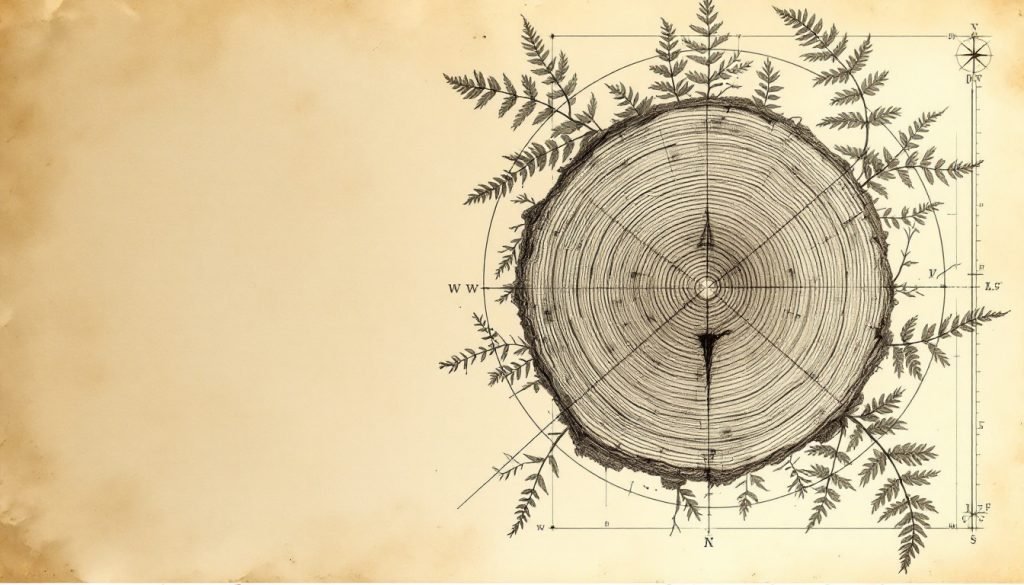
- Girdling roots kill by compressing cambium and cutting sugar flow. Severity is judged by % of trunk circumference compressed. Sugar maple tolerates 50 % girdle for 10-15 years; birch only 3-5. Roots 50 % need removal this season. Measure your tree and schedule an arborist within 30 days if above 25 %.
If you have just noticed a root crossing your maple like a tight belt or you were told during a house inspection that “girdling roots are present,” you are probably asking the same urgent question: how long do I have? The short answer ranges from months to decades, depending on tree species, the percentage of stem circumference being constricted, and the tree’s current health. Michael J. Hartman, ISA Board Certified Master Arborist, has documented cases where a red oak survived twelve years with a 40 % girdle yet showed sudden die-back the year a second root tightened to 60 %. By the end of this guide you will understand exactly why girdling kills, how to measure the clock on your specific tree, and what steps will buy you the most extra years.
The Anatomy of a Girdling Root and How It Strangles the Tree
Girdling roots begin as ordinary lateral roots that for some reason—planting too deep, compacted soil, or container spirals—fail to grow radially away from the trunk. Instead they turn upward and begin to circle or cross the stem. As both trunk and root enlarge, the root compresses the cambium and phloem, the thin living layers just beneath the bark that transport sugars from leaves to roots. Once roughly one-third of the stem circumference loses phloem continuity, root carbohydrate reserves drop and fine feeder roots begin to die back.
The mechanical constriction also reduces hydraulic flow. University researchers using dye tracers show that a 50 % girdle can cut xylem water transport by 30 % on hot afternoons, creating chronic drought stress even when soil moisture is adequate. Over time the compressed zone acts like a tourniquet; the trunk above the girdle swells, bark cracks, and decay fungi colonize the seam. At this point the tree is living on borrowed time.
Term: Cambium is the thin layer of dividing cells between bark and wood that produces new phloem and xylem each growing season. When squeezed by a girdling root, it stops producing these vital tissues.
Species-Specific Lifespans Under Root Girdling
Not all species decline at the same speed. Sugar maple and Norway maple—prone to girdling because of dense fibrous roots—can live 10 to 15 years with a 50 % girdle before catastrophic die-back appears. In contrast, fast-growing poplars and birches often collapse within 3 to 5 years once the compression reaches one-third of the trunk. Live oaks with their massive pre-existing root flare can tolerate up to 70 % girdling for two decades, although wind-throw risk increases sharply once the flare wood is narrowed.
For ornamental cherries and crabapples the rule of thumb is one inch of trunk diameter equals one year of grace once a 45 % girdle is reached. A four-inch caliper Kwanzan cherry therefore has roughly four years of normal bloom left before foliage thinning and branch death become obvious. These timelines assume average site conditions; drought or construction damage accelerates decline, while supplemental watering and mulching can stretch the calendar by 30 %.
| Species Group | Typical Years with 50 % Girdle | First Visible Symptom |
|---|---|---|
| Sugar/Norway maple | 10–15 | Early fall color, leaf size reduction |
| Oak (white, live, red) | 15–25 | Upper crown thinning, epicormic shoots |
| Birch/poplar | 3–5 | Rapid branch die-back, chlorosis |
| Cherry/crabapple | 4–7 | Reduced flowering, black knot infection |
Reading the Signs: How to Gauge Severity in the Field
Start with a simple visual inspection at the root flare. Remove soil gently until the first main lateral roots are visible; flare should resemble the base of a wine glass, not a telephone pole. Measure trunk circumference at 4.5 ft height, then measure the length of trunk that the girdling root contacts. If the contact arc is less than 25 % of circumference, the tree is still in the “yellow zone” and intervention can wait one growing season. At 25–50 % move to the “orange zone” and schedule removal within the year. Above 50 % equals red-zone urgency—act this season.
Next look for secondary symptoms in the crown. Leaves that are smaller, lighter green, or turning fall color weeks early indicate phloem strangulation. Epicormic shoots along the lower trunk are the tree’s emergency attempt to re-establish a vascular system below the girdle. Finally, use a rubber mallet to tap the trunk just above the root; a hollow sound can indicate cambial die-back and internal decay. Combine these clues with the species timeline to estimate remaining years.
Warning Signs to Watch For
- Stunted leaf size: Leaves half normal length by mid-summer signal phloem blockage.
- Early fall color: Girdled maples turn yellow in August, weeks before neighbors.
- Cracked or sunken bark: Compression crease running vertically above the root.
- Epicormic sprouts: Water shoots from the trunk below the girdle.
Tools and Techniques for Safe Root Removal</ Small Trees
Homeowners can safely correct girdling roots on trees under 6 in. trunk diameter with the right approach. Begin by excavating the flare with an Air-Spade or gentle water jet to avoid additional root damage. Identify the smallest diameter root crossing the stem; this is usually the first girdle and the safest to remove. Use a sharp, sterile pruning saw to make two clean cuts—one on each side of the trunk—removing at least a 4-inch section so the ends cannot re-fuse. Leave the cut ends exposed for one season to ensure callus formation before backfilling soil.
For larger roots (> 1.5 in. diameter) or when multiple roots are stacked vertically, consult an arborist. The risk of removing a structural root supplying 30 % of the tree’s hydraulic flow outweighs the DIY savings. Professionals may use radial trenching or root pruning with an air knife, plus cabling above the girdle to reduce wind stress during recovery.
Tools You Will Need
- Air-Spade or pressure washer with soil probe: Exposes roots without blade damage.
- Sharp pruning saw or reciprocating saw: Clean cuts reduce infection risk.
- Isopropyl alcohol: Sterilize blade between cuts to prevent pathogen transfer.
- Wooden stakes and flagging: Mark root locations before backfilling to avoid re-injury.
When Professional Removal Becomes Essential
Any girdling root on a tree over 10 in. diameter at breast height requires an arborist’s assessment. The larger the trunk, the higher the percentage of total root area any given circling root represents. Cutting a 4-inch root on a 12-inch maple removes only 11 % of the root cross-sectional area, but cutting the same root on a 24-inch oak removes 33 %. That loss can trigger sudden hydraulic failure, especially during summer heat waves.
Additional red flags include roots fused to the trunk for more than 120 degrees, extensive decay in the compressed zone, or the presence of multiple stacked girdles. Arborists will often perform a resistograph drill to quantify internal decay before prescribing removal. In some cases, the safer option is to cable the tree for stability and schedule gradual root removal over three years, allowing the tree to grow compensatory roots between each cut.
Pro Tip: Photograph the root flare every spring from the same angle after intervention. A visible increase in trunk diameter just above the old compression line is the best proof the vascular system has recovered.
Recovery Timeline After Root Removal
Expect a two-stage recovery. Year one focuses on rebuilding fine feeder roots; leaves may still appear small, but new root initials form underground. Year two brings fuller foliage and a measurable increase in trunk diameter. By year three, most trees resume normal growth rates if crown die-back was less than 25 % at the time of correction. During this window, maintain 3–4 inches of wood-chip mulch over the root zone and provide 1 inch of water per week during droughts.
Monitor for secondary issues such as sunscald on newly exposed trunk sections or insect borer attacks on the pruning wounds. A light coat of diluted latex paint or tree wrap for the first winter can prevent southwest injury. If canopy thinning exceeds one-third, supplemental fertilization with a low-nitrogen, high-potassium blend supports root regeneration without overstimulating top growth.
What to Do Next
Step outside, locate the root flare on your suspect tree, and run a tape measure around the trunk at soil line. Mark any root that crosses the stem and estimate the arc it covers. Compare your measurement to the species timelines provided above. If the tree is in the yellow zone, take photos and revisit next year. If you are in the orange or red zone, schedule an ISA Certified Arborist consultation within the next 30 days. The price of a site visit is trivial compared to the cost of emergency removal when the tree finally fails.