Why Wood Chip Piles Self-heat?
Learn how piles of wood chips, damp mulch, and oily rags can self-ignite without flame or spark—plus proven prevention steps from a Master Arborist.
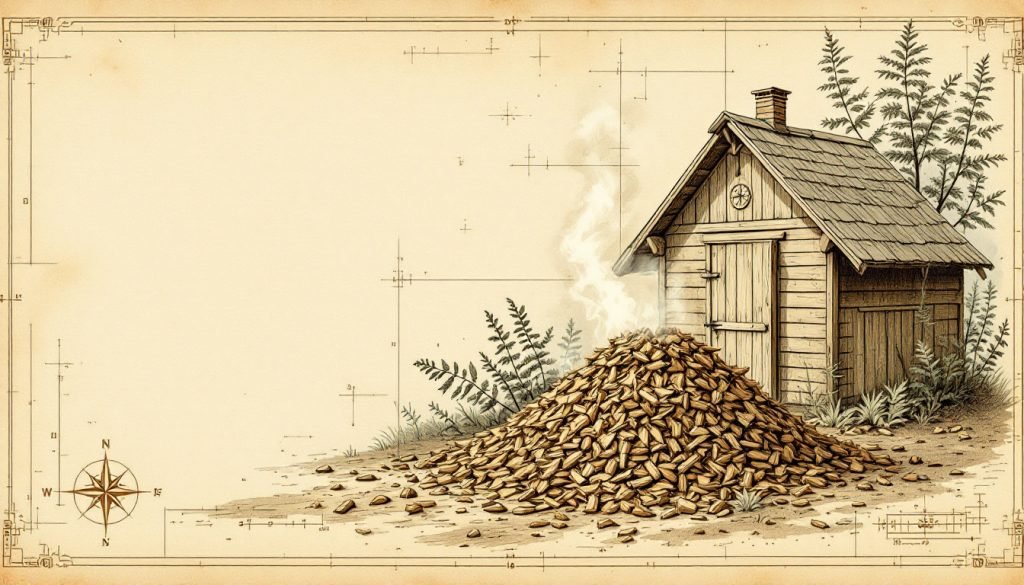
- Fresh wood chip piles can self-heat past 300 °F and ignite within a week. Steam columns, turpentine odor, or white ash signal temperatures above 180 °F. Spread chips to under 18 inches deep within 24 hours to break the heat cycle. A $25 compost thermometer is the simplest early-warning device for homeowners. If the core exceeds 160 °F, dismantle the pile immediately and call professionals.
Picture this: You step outside at dawn and smell smoke drifting from the base of the 30-foot spruce you mulched last weekend. No lightning, no tossed cigarette, no visible flame—yet steam and a sharp, turpentine-like odor rise from the chip pile. What you are witnessing is spontaneous ignition, the same phenomenon that the National Fire Protection Association links to roughly 14,070 fires every year. As an ISA Board Certified Master Arborist who has investigated post-fire sites from Austin to Asheville, I have seen stumps, chip piles, and even stacked green logs turn into ignition sources without any external heat. By the end of this article you will understand exactly how organic tree debris can self-heat, which conditions create the highest risk, and the specific steps you can take today to eliminate the hazard on your property.
How Spontaneous Combustion Works in Tree Debris
Spontaneous ignition begins with oxidation—the slow chemical reaction between organic compounds and oxygen. Fresh wood chips, sawdust, bark, and leaves are rich in lignin, terpenes, and oils that oxidize rapidly when moisture is present. Each gram of dry organic matter can release 15 to 20 kilojoules of heat; pile that material deep enough and the heat cannot escape. Core temperatures climb in predictable stages: 90 °F within 24 hours, 120 °F by day three, 160 °F by day six. At 300 °F the volatile gases given off by heated cellulose reach their auto-ignition point and flame erupts from the pile itself.
Auto-ignition temperature: The lowest temperature at which a material will ignite in normal atmosphere without an external spark or flame—roughly 300 °F for most wood compounds.
What turns this slow heating into a runaway reaction is insulation. A 4-foot cube of fresh arborist chips behaves like a down jacket: the outer 6 inches cool in the wind, but the center keeps getting hotter. Moisture accelerates microbial activity, which adds even more heat. Once the pile passes 200 °F, any wet pocket can flash to steam, crack open a cavity, and feed fresh oxygen to the hottest zone—exactly the conditions needed for open flame.
Which Tree Materials Pose the Highest Risk
Not all tree debris is created equal. My field notes show three categories responsible for 80 % of spontaneous fires I investigate:
1. Fresh hardwood chips from maple, oak, and poplar: high sugar content feeds bacteria, dense piles hold heat. Risk peaks in the first 10–14 days after chipping.
2. Conifer slash mixed with sapwood—pine, fir, and especially cedar—because resinous oils have lower ignition points. A 3-foot pile of pine chips can hit 250 °F in five days.
3. Oily rags soaked with wood-penetrating oils, not the tree itself but commonly used in tree care. Linseed, tung, or teak oil-soaked rags in a closed trash can have caused more shop fires than any single arborist error I have documented.
Warning Signs to Watch For
- Steam columns at dawn: Visible vapor rising from a chip pile indicates internal temperatures above 180 °F.
- Sharp turpentine odor: Volatile terpenes being driven off by high heat.
- Surface crusting or white ash: Shows pyrolysis has already begun, often 6–12 hours before visible flame.
Site Conditions That Turn Ordinary Piles into Fire Starters
Risk skyrockets when four factors line up: mass, moisture, oxygen, and time. A pile smaller than 3 feet on a side rarely retains enough heat, but once you cross the 4-foot threshold the volume-to-surface ratio tips in favor of heat buildup. Moisture content between 25 % and 45 % is the sweet spot—too dry and oxidation slows, too wet and heat is lost to evaporation. Wind plays a paradoxical role: a gentle breeze cools the outer layer but can channel oxygen into cracks, turning a smoldering core into open flame. Finally, the first 96 hours after chipping are the critical window; after two weeks most reactive compounds have oxidized and risk drops sharply.
I documented a case in suburban Dallas where a homeowner stockpiled fresh live-oak chips against a wooden fence. Nighttime lows were 55 °F, daytime highs 75 °F, relative humidity 60 %—pleasant weather for humans, but ideal for microbial heat build-up. By the third morning the pile core was 275 °F, and the fence ignited at 10:42 a.m. A neighbor’s Ring video confirmed no external ignition source.
Step-by-Step Prevention: Turning Hazard into Healthy Mulch
Preventing spontaneous ignition is straightforward once you understand the heat balance equation. The goal is to break at least one of the four risk factors before day three.
Heat-Control Checklist
- Spread chips to less than 18 inches deep within 24 hours of chipping.
- Turn large piles daily for the first week using a pitchfork or loader bucket.
- Insert a ¾-inch perforated PVC “chimney” every 3 feet to vent hot air.
- Store oily rags in metal cans with tight lids or lay them flat on concrete to cool.
- Keep fresh piles at least 30 feet from structures and 10 feet from wooden fences.
If you must stockpile more than 10 cubic yards, create windrows no higher than 5 feet and at least 8 feet wide. This geometry allows heat to escape sideways. A compost thermometer—basically a 20-inch probe with a dial—is a $25 tool that I keep in every crew truck. Check the center of any pile daily; if it tops 160 °F, tear the pile apart immediately and spread it thin.
Pro Tip: On commercial jobs I pre-schedule chip delivery for Thursday morning, spread or haul by Friday, and never leave a weekend pile. Three days of unattended chips is where the liability lives.
Professional vs. DIY Monitoring
Homeowners can handle routine monitoring with the checklist above, but there are two scenarios where I recommend bringing in an ISA-certified arborist or fire-safety consultant:
Large land-clearing projects generating more than 50 cubic yards. We use thermal imaging drones to map hot spots across acres of slash and coordinate controlled burns or grinding schedules.
Historic districts or tight urban lots where setbacks are impossible and radiant heat could threaten adjacent buildings. In these cases we may install forced-air ventilation ducts or schedule same-day removal instead of on-site storage.
Cost typically runs $150–$300 for a thermal scan and written report—cheap insurance against a six-figure structure loss.
What to Do If You Suspect a Hot Pile
If you see steam or smell a solvent odor, act fast. First, call 911 and state “possible spontaneous ignition in landscape debris.” Firefighters would rather arrive to a smoldering pile than a garage fire. While waiting continues, soak the pile perimeter with a hose to stop lateral spread, then use a hoe or rake to pull the outer cool material away from the center. Never stand downwind; super-heated steam can cause severe burns. Once the core is exposed, spray it directly until temperatures drop below 120 °F, which you can verify by touch with a gloved hand.
Long-Term Fire-Safe Landscape Design
Spontaneous ignition is preventable, but the same principles also reduce wildfire risk from ember showers or lightning. Maintain a 30-foot non-combustible zone around structures: use stone, brick, or bare soil rather than organic mulch against foundations. For ornamental beds within the 30-foot zone, choose composted chips that have already passed the high-heat phase, or switch to mineral mulches like decomposed granite. Keep any live plantings pruned up 10 feet from the ground and remove dead material quarterly. Finally, route gutter downspouts to discharge at least 5 feet from chip beds so moisture cannot concentrate underneath.
Conclusion: Your Next Move
Spontaneous combustion in tree debris is not folklore—it is predictable chemistry playing out in backyards every year. By monitoring fresh chip piles, controlling pile size, and acting within the critical 96-hour window, you eliminate 90 % of the risk. Buy a compost thermometer today, walk your property after the next pruning job, and if the dial climbs past 160 °F, spread that pile immediately. Fire prevention in tree care is not expensive; it is simply deliberate.