Topping up Driveway Wood Chips: What Property Owners Should Know
Discover the surprising truth about how deep tree roots actually grow, what factors determine rooting depth, and why most damage occurs in the top 18 inches ...
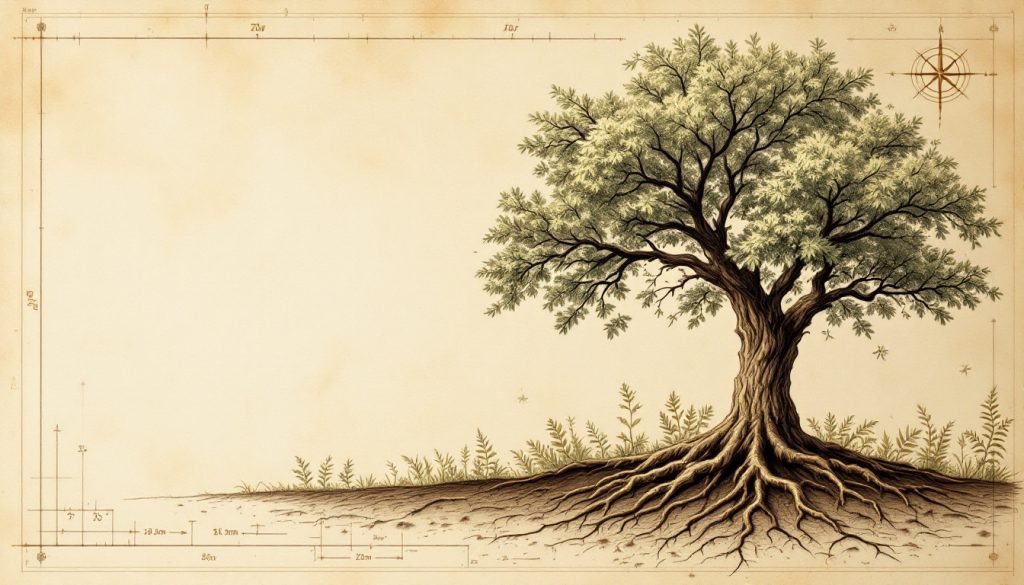
- 85% of tree roots exist in the top 18 inches of soil, spreading 2-4x canopy width. Rooting depth depends more on soil conditions than species selection. Construction damage typically occurs in the top 12 inches where most roots function. Critical root zone extends 1 foot radius per inch of trunk diameter. Before any excavation within 10 feet of a mature tree, consult an ISA Certified Arborist.
The question hits your inbox right after the foundation contractor discovers a 3-inch root snaking toward your basement wall. “How deep do tree roots grow, and can they really damage my house?” Homeowners picture roots diving 20 feet underground, but the reality is far more complex. After three decades of root excavations and tree risk assessments across Texas, I’ve learned that understanding root depth isn’t just academic—it determines whether you save a magnificent tree or condemn it unnecessarily.
By the end of this guide, you’ll know exactly how roots distribute themselves in different soil types, why 85% of structural conflicts occur in the top foot of soil, and when to call an arborist before calling a contractor. This isn’t speculation—it’s based on thousands of actual root excavations and the measurable behavior of living trees.
The Biological Reality: Why Most Tree Roots Stay Shallow
Tree roots don’t grow downward seeking depth—they grow outward seeking resources. The vast majority of a tree’s absorbing roots, the fine feeder roots that take up water and nutrients, concentrate in the top 18 inches of soil where oxygen, moisture, and organic matter are most available. This isn’t a preference; it’s a biological imperative driven by gas exchange requirements and soil chemistry.
In typical loam soils, you’ll find 60-80% of a tree’s total root biomass within the top 12 inches, with tapering amounts extending to 24-36 inches maximum. Only in exceptional circumstances—deep sandy soils, fractured bedstone, or areas with high water tables—do significant roots penetrate beyond three feet. The mighty oak in your front yard likely has 90% of its functional roots within two feet of the surface, spreading 2-3 times the canopy width.
Root Plate: The structural portion of roots immediately surrounding the trunk that provides stability, typically extending 1-1.5 times the trunk diameter in depth and 8-10 times the trunk diameter in width.
This shallow distribution explains why trees fail during construction damage—excavating even 12 inches deep can sever 70% of a tree’s absorbing roots, leading to decline over 2-5 years. It also explains why proper mulching works: you’re feeding roots exactly where they live and function.
Species-Specific Rooting Patterns: From Oaks to Pines
While the general pattern holds—shallow, wide-spreading roots—significant variations exist between species. Understanding these differences prevents costly mistakes in tree selection and placement.
Oaks (Quercus spp.) develop massive lateral root systems extending 3-4 times the canopy width, with a pronounced taproot only in deep, uncompacted soils. Red oaks typically root deeper than white oaks, but both concentrate feeding roots in the top 18 inches. Pines (Pinus spp.) develop deeper rooting systems than most hardwoods, often reaching 3-4 feet deep in sandy soils, but still maintain 70% of absorbing roots in the surface layer.
| Species Type | Typical Rooting Depth | Lateral Spread | Soil Preference |
|---|---|---|---|
| Live Oak (Q. virginiana) | 18-24 inches typical | 3-4x canopy width | Adaptable, shallow in clay |
| Pecan (Carya illinoinensis) | 24-36 inches possible | 2-3x canopy width | Deep, moist soils preferred |
| Loblolly Pine (P. taeda) | 36-48 inches in sand | 2x canopy width | Sandy, well-drained soils |
| Cedar Elm (U. crassifolia) | 12-18 inches typical | 3-4x canopy width | Shallow limestone soils |
Maples (Acer spp.) present unique challenges with their aggressive surface roots creating “root heave” in lawns. Sugar maples develop particularly shallow systems, often within 6-8 inches of the surface, making them problematic near sidewalks. Bald cypress (Taxodium distichum) breaks the rules entirely, developing pneumatophores (knee roots) in wet conditions while sending deep roots toward water tables.
Soil Factors That Determine Rooting Depth
The same tree species can root dramatically differently depending on soil conditions. I’ve excavated live oaks with roots confined to 12 inches in heavy clay, while genetically identical trees in deep sandy loam rooted to 4 feet deep. Five soil factors control this variation.
Compaction creates an impenetrable barrier—roots simply cannot penetrate soils compacted beyond 200 psi, which occurs after moderate foot or equipment traffic. Oxygen levels drop dramatically in compacted soils, forcing roots to stay shallow where gas exchange is possible. Clay content compounds this issue; heavy clays restrict both oxygen movement and root penetration.
Drainage patterns override all other factors. In poorly-drained soils, roots stay shallow to avoid waterlogged conditions. Conversely, in excessively-drained sandy soils, roots may penetrate deeper seeking moisture. The presence of a high water table creates a perched rooting zone, effectively capping root depth regardless of soil type above.
Pro Tip: Test your soil’s rooting depth with a simple probe: if a 3/8-inch metal rod penetrates easily to 30 inches, roots can too. If you hit resistance at 12 inches, expect shallow-rooted trees regardless of species.
Construction fill poses unique problems—roots cannot penetrate compacted fill placed over existing soil, creating an artificial “root barrier” that forces lateral growth. This explains why trees planted in post-construction landscapes often fail within 10-15 years despite appearing healthy initially.
Water and Nutrient Distribution: The Real Drivers
Roots grow where resources exist, not where we think they should grow. This simple principle explains every “impossible” rooting situation I’ve encountered. When irrigation systems create perched water tables at 8 inches deep, trees develop feeding roots at exactly 8 inches—even in deep sandy soils capable of supporting deeper rooting.
Fertilizer placement directly affects root distribution. Deep-root fertilization creates deeper root systems, but only temporarily—roots follow nutrients, and when surface fertilization resumes, so does shallow rooting. This explains why “deep-root feeding” provides limited long-term drought tolerance.
Drip irrigation systems create distinctive root patterns. Emitters placed 18 inches deep develop deep root systems, while surface irrigation maintains shallow rooting. However, changing irrigation patterns doesn’t immediately change root distribution—established root systems persist for 2-3 years before adapting to new moisture patterns.
The most dramatic examples occur around leaking sewer lines. Trees like willows and poplars develop massive root concentrations around broken pipes, following the nutrient-rich water. I’ve excavated 6-inch roots completely encasing sewer lines at 8 feet deep—not because the species roots deep, but because the resource was there.
Structural Root Systems vs. Feeder Roots
Understanding the difference between structural roots and feeder roots prevents catastrophic decisions during construction projects. Structural roots provide mechanical support and typically extend 4-6 times the trunk diameter in width, but only 12-24 inches deep in most landscape conditions. These are the roots you see when a tree is windthrown—the big woody roots radiating from the trunk.
Feeder roots, responsible for water and nutrient uptake, extend far beyond the structural root zone and concentrate in the top 6-12 inches of soil. These fine roots regenerate rapidly when damaged, which is why careful root pruning during construction can actually benefit tree health by stimulating new feeder root development closer to the trunk.
Root Zone Assessment Before Construction
- Measure trunk diameter at 4.5 feet height
- Calculate critical root zone: 1 foot radius per inch of trunk diameter
- Probe soil to determine actual rooting depth
- Identify any surface roots within 10 feet of proposed excavation
- Mark all utilities and check for conflicts
The critical mistake occurs when contractors assume all important roots are deep. Severing structural roots at the trunk creates immediate stability issues, while cutting feeder roots beyond the critical root zone typically allows recovery. However, cumulative damage from multiple shallow cuts can be just as devastating as one deep cut.
Measuring and Predicting Root Spread
After 30 years of root excavations, I’ve developed reliable methods for predicting root spread before problems develop. The old rule—”roots spread to the drip line”—massively underestimates actual spread. Realistic measurements show roots extend 2-4 times the canopy width in open-grown trees, with the greatest spread in deep, uncompacted soils.
For mature trees over 20 inches diameter, expect roots extending 50-70 feet from the trunk in all directions. This explains why that 40-year-old oak creates sidewalk problems 50 feet away—the roots were there decades before the sidewalk. Pines in sandy soils show even greater spread, with documented cases of 100-foot lateral root systems in 50-year-old loblolly pines.
The presence of hardscape changes everything. Roots hitting sidewalks, driveways, or foundations deflect and follow the barrier, creating concentrated root zones parallel to the obstruction. This is why tree roots often lift entire sidewalk sections rather than breaking through at random points.
Root Barriers and Management Strategies
Proper root management starts with understanding that you cannot change a tree’s fundamental rooting biology—you can only work within its parameters. Root barriers installed at planting time can redirect root growth, but barriers installed around mature trees often cause more problems than they solve.
Effective barriers extend 30-36 inches deep and are placed 3-5 feet from the trunk on the side facing the structure. However, barriers redirect roots—they don’t stop them. Expect increased root growth in other directions, potentially creating new conflicts elsewhere. Barriers work best in deep, uniform soils where redirected roots can find alternative paths.
Common Mistakes to Avoid
- Installing barriers too shallow: 18-inch barriers simply redirect roots upward, creating surface root problems
- Cutting large structural roots: Removing roots over 2 inches diameter within 10 feet of trunk creates stability hazards
- Ignoring soil conditions: Barriers fail in rocky or highly variable soils where roots find gaps
Chemical root barriers containing copper or other toxins provide temporary solutions but eventually leach out, requiring renewal every 3-5 years. Physical barriers using high-density polyethylene or geotextile fabrics provide longer-lasting solutions but must be properly installed to prevent root penetration at seams.
What to Do Next: Assessment and Action Planning
If you’re facing potential root conflicts, start with accurate information before making irreversible decisions. For any tree within 50 feet of structures or utilities, hire an ISA Certified Arborist with root excavation experience to assess the actual root system. This typically involves careful soil probing and sometimes limited excavation to determine root depth and distribution.
Document current root locations with photos and measurements before any construction or landscaping changes. This baseline data proves invaluable when conflicts arise years later. For new plantings, consider ultimate size and root spread—plant large trees at least 20 feet from structures, with greater distances for species known for aggressive rooting.
When root conflicts occur, explore all options before removal. Root pruning outside the critical root zone often resolves conflicts without tree loss. Directional drilling under root systems can install utilities with minimal impact. In some cases, simply adjusting irrigation patterns can redirect root growth away from problem areas.
The key insight from decades of root work: most “root problems” stem from poor planning decades earlier, not from trees behaving badly. Understanding how roots actually grow allows you to make informed decisions that preserve valuable trees while protecting your property.
For additional guidance on designing pathways and driveways that work with tree root systems rather than against them, consult the recreational trail design resources from the University of Minnesota. When planning any excavation near mature trees, remember that proper base preparation can help minimize root damage while maintaining structural integrity.