Melamine vs Particle Board Makeup: Which Is Right for You
Particle board transforms low-grade wood chips and sawmill waste into usable building material through heat-pressed melamine-formaldehyde resin. Understandin...
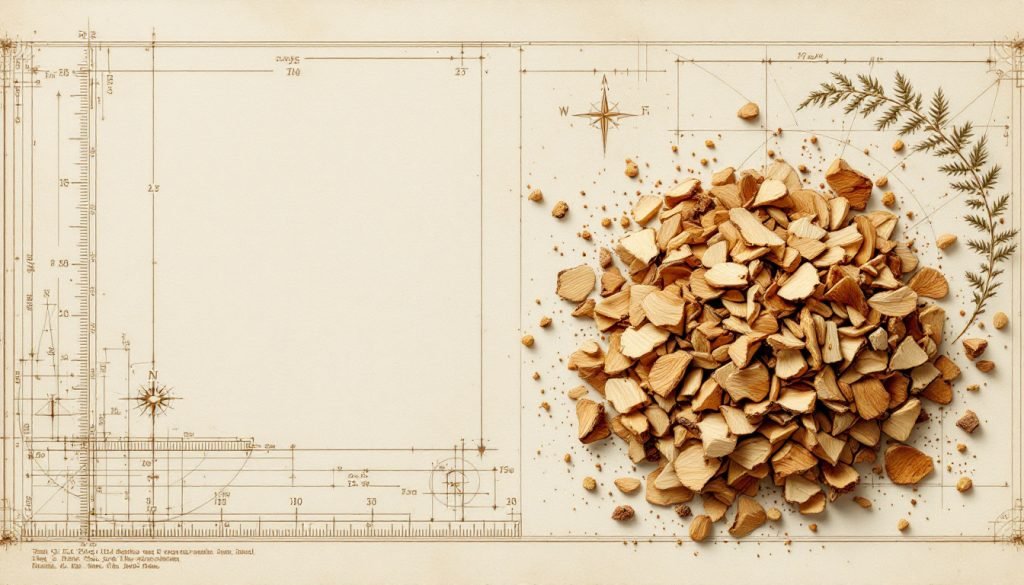
- Particle board is heat-pressed wood chips bonded by melamine-formaldehyde resin. Clean chips under 15 % moisture and 5 % bark earn top mill price. Conifer chips command premium due to longer fibers reducing resin need. Contamination from treated lumber or metal scraps can void an entire truckload. Schedule delivery October–March when mill demand peaks and chip supply tightens.
If you have ever helped clean up after a large tree removal and wondered where all those chips and slabs could go, you have brushed up against the raw material stream that feeds the particle board industry. Homeowners staring at mountains of fresh chips often ask whether their tree waste has any value beyond mulch. The short answer is yes—most modern particle board plants purchase clean wood chips, sawdust, and planer shavings by the ton. By the end of this article you will understand exactly how that transformation happens, why melamine-formaldehyde resin is the critical binder, and how arborists can segregate material to command the best price.
Michael J. Hartman, ISA Board Certified Master Arborist TX-0198B, has brokered chip sales from job sites for thirty years. The key is matching your waste stream to the mill’s specification the same way you would match a tree species to a planting site. Once you know what “clean chips” really means to a particle board plant, you can turn disposal costs into revenue and keep tree material out of landfills.
What Particle Board Actually Is
Particle board is an engineered wood panel manufactured from wood chips, sawmill shavings, or even sawdust that is dried, blended with a synthetic resin—mostly melamine-formaldehyde or urea-formaldehyde—and then pressed under heat to create a rigid sheet. The finished board has a consistent density, usually between 37 and 50 lb per cubic foot, and is surfaced with decorative paper overlays or wood veneer for furniture and cabinetry.
Term: Melamine-formaldehyde resin is a thermosetting plastic created by reacting melamine with formaldehyde; once cured under heat, it forms an irreversible, water-resistant bond between wood particles.
The resin content ranges from 6–12 % by weight depending on the grade of board. Higher resin percentages create moisture-resistant grades used for kitchen countertops and bathroom vanities, while standard interior grades use the minimum amount needed for structural integrity. Moisture resistance is achieved by the cross-linked polymer network that forms when the resin cures, not by added waxes or oils.
From Tree Waste to Pressed Panel: The Manufacturing Steps
Arborists see raw material arriving at mills in three forms: whole chips from chippers, planer shavings from millwork, and screened sawdust from sawmills. Mills first screen the material to remove bark, dirt, and oversized pieces. Clean chips target a 2–8 mm particle length and less than 5 % bark content. Anything larger is hammer-milled; fines are burned for process heat.
Incoming Material Checklist for Mill Acceptance
- Moisture content below 15 % on delivery
- No pressure-treated lumber, MDF, or particle board fragments
- Bark fraction under 5 % by weight
- Metal contamination limited to incidental nails only
After screening, the chips enter giant drum dryers dropping moisture to 2–4 %. Resin is sprayed on as a fine mist while the chips tumble in high-speed blenders. The blended furnish is then spread into a continuous mat that passes through pre-press rollers and finally into a 200–240 °C hot press where 25–30 kg/cm² pressure cures the resin in 90–180 seconds depending on board thickness. The resulting panel exits at 6–38 mm thickness before cooling and sanding.
Why Melamine Resin Dominates the Binder Market
Melamine-formaldehyde (MF) resin replaced urea-formaldehyde (UF) in most premium boards because MF offers superior water resistance and lower formaldehyde emissions. When heat-activated, MF forms a dense, three-dimensional polymer network that locks wood particles together permanently. The cured resin has a glass transition temperature above 120 °C, so kitchen hot pans do not soften the board.
Pro Tip: Mills pay a premium for chips from conifers because the longer tracheids interlock better under pressure, reducing resin demand by up to 1 %. If you are selling chips, segregate pine and fir from hardwood removals.
MF resin also cross-links faster than UF, allowing mills to increase press line speed by 15–20 %. The drawback is cost: melamine costs roughly twice as much per kilo as urea., so interior shelving uses UF while flooring substrates use MF.
Grades and Their Tree Waste Requirements
Not all chips are equal. Furniture-grade board demands lighter-colored softwood chips to achieve a uniform core color. Flooring-grade board tolerates darker hardwood chips because it will be laminated anyway. Moisture-resistant grades require resin-rich chips, so mills prefer shavings from kiln-dried lumber over green chips from fresh removals.
| Board Grade | Preferred Chip Type | Resin Content | Market Price Adder |
|---|---|---|---|
| Furniture M-2 | Pine/fir chips < 5 % bark | 6 % UF | Base price |
| Flooring P-5 | Hardwood chips OK | 9 % MF | +$18/m³ |
| Moisture-resistant MR | Kiln-dried shavings | 11 % MF | +$35/m³ |
The price differential explains why savvy arborists keep species separate when possible. A truckload of clean pine chips can earn $12–15 more per ton than mixed urban chips containing palm or eucalyptus, which mills reject due to high extractive content that interferes with resin cure.
Common Contaminants That Kill a Sale
One drywall screw or a single piece of pressure-treated 2×4 can contaminate an entire 25-ton truckload. Mills run magnets over incoming material, but stainless-steel screws and aluminum flashing slip through. The worst offenders are creosote-treated railroad ties and CCA-treated deck boards; trace amounts raise arsenic levels above EPA thresholds for landfill disposal, forcing mills to dump the entire load at their expense.
Common Mistakes to Avoid
- Mixing stumps with chips: Stump grindings contain soil and stones that abrade mill knives—keep them separate.
- Ignoring chain oil: Petroleum-based bar oil above 1 % by weight triggers hazardous waste fees—switch to vegetable-based oil or blow chips clean.
Plastic landscape edging and nylon rope are equally problematic. Once melted in the dryer, they form carbon specks that show through light-colored laminates. Train crews to pick contaminants off the chip pile before loading trucks.
Regional Variation in Mill Specifications
Particle board plants cluster near large sawmills because chips are bulky and expensive to truck. In the Pacific Northwest, mills prefer Douglas-fir and hemlock chips and reject red alder due to staining. Southeast mills favor loblolly pine and slash pine. Texas mills near Dallas and Houston accept mixed hardwoods but charge penalties for mesquite because its high tannin content corrodes steel press platens.
Urban arborists have the hardest time; city tree removals yield mixed species and higher contamination. The workaround is partnering with tub-grinding contractors who will accept mixed loads, screen out metal, and resell clean chips to panel plants. Expect to receive 60–70 % of mill gate price, but you eliminate hauling and screening costs.
When to Sell vs. When to Mulch
The decision hinges on volume and cleanliness. A single 24-inch silver maple removal yields roughly 2.5 tons of chips—barely half a truckload. Unless you have a nearby mill pickup route, the cost of driving 50 miles each way eats any profit. Instead, screen the chips for mulch and sell the excess to local landscape yards.
When to Act
Best window: October through March when mills run extra shifts for winter building demand and chip supplies tighten. Summer surpluses from land-clearing projects drop prices by 30 %.
When you do have 15 tons or more of clean chips, call the mill’s procurement desk before you chip. They will reserve a delivery slot and quote a price locked for seven days. Have a loader on site to push chips into the mill’s walking-floor trailer; mills do not wait while you shovel by hand.
What to Do Next: Turning Waste into Revenue
Start by auditing your chip stream. Record species, volume, and contamination for one month. Contact the nearest particle board plant and request their current chip specification sheet—every mill posts one. Compare your audit to the spec and calculate the per-ton price difference between mulch and mill sale.
Next, invest in a magnetic roller or handheld wand to remove nails before chipping. Train ground crews to spot treated lumber and keep a separate pile for disposal. Finally, schedule heavy removals during mill pickup windows—late fall through early spring—to maximize price. Following these steps, a medium-sized tree service generating 200 tons of chips annually can add $8,000–12,000 to the bottom line while keeping valuable carbon locked in long-lived products instead of short-lived mulch piles.