The Ultimate Guide to Workwear Fit and Fatigue
Poor workwear fit is a hidden driver of fatigue and injury in tree felling. Learn how arborists choose gear that works with the body, not against it.
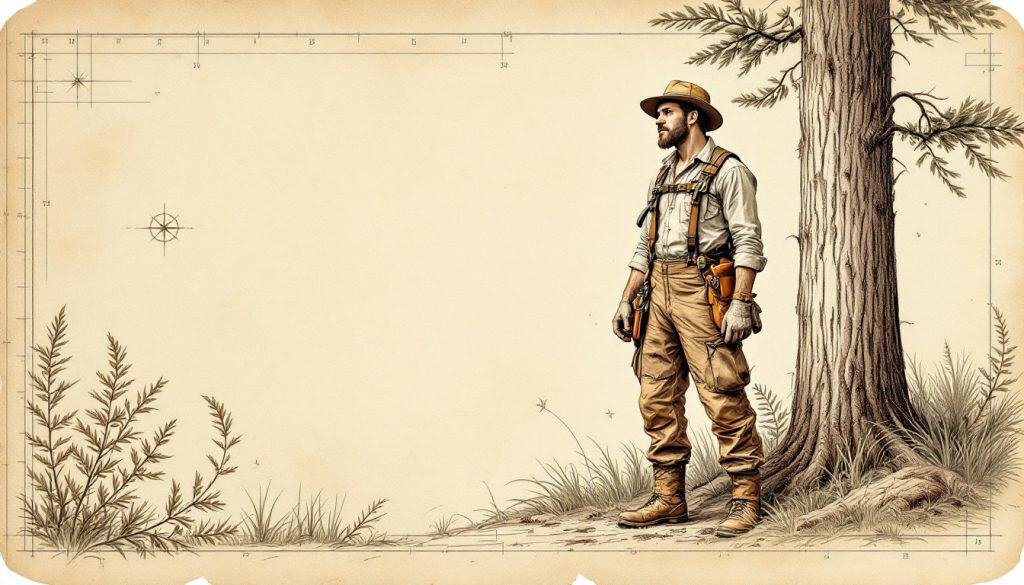
- Ill-fitting workwear forces compensatory muscle recruitment, directly accelerating fatigue during felling operations.
You are three hours into a felling operation, working through a stand of mature loblolly pine on a humid Texas morning. Your chainsaw pants are riding low, your suspenders are digging into your shoulders, and your chaps keep snagging on brush as you move between trees. By noon, your lower back is screaming and your grip strength is half of what it was at sunrise. The saw work is the same as always — but your body is done. This is the workwear fit and fatigue problem, and it sidelines more lumberjack-trained professionals than most people realize.
Workwear fit is not a comfort preference. It is a biomechanical variable that directly affects how long a climber or ground crew member can work safely and effectively. Ill-fitting gear forces compensatory movement patterns, increases metabolic cost, and accelerates the onset of muscular fatigue — all of which raise the probability of a critical error during high-consequence tasks like directional felling. ergonomics matter in workwear, and Michael Hartman, ISA Board Certified Master Arborist (TX-0198B), has spent decades watching otherwise skilled crews make avoidable mistakes in the final hours of a long day, and poor gear fit is consistently underestimated as a contributing factor.
By the end of this guide, you will understand the physiology behind workwear-induced fatigue, know exactly what fit characteristics to look for in every major garment category, and have a practical framework for evaluating your current kit before your next felling job.
Why Workwear Fit Directly Causes Fatigue
The human body is remarkably efficient when it moves in its natural range of motion. Introduce a garment that restricts that range — even slightly — and the neuromuscular system compensates by recruiting additional muscle groups to complete the same movement. This is called compensatory recruitment, and it is metabolically expensive. A pair of chainsaw trousers cut too narrow through the thigh forces a feller to externally rotate the hip on every step through uneven terrain. Over four hours, that adds up to thousands of additional micro-contractions in the hip abductors and lumbar stabilizers, muscles that were never meant to carry that load.
Friction and pressure points compound the problem. A waistband that digs into the iliac crest during repeated bending — think limbing a downed tree — creates localized discomfort that the nervous system interprets as a low-grade threat signal. The body responds by increasing muscle tension around the area, which further restricts movement and burns more energy. Research in occupational ergonomics consistently identifies pressure-point discomfort as a predictor of early fatigue onset in physically demanding trades. For lumberjack work specifically, where a momentary lapse in attention near a running saw can be fatal, fatigue onset timing is not an abstract concern.
Compensatory Recruitment: The process by which the body activates secondary muscle groups to complete a movement that a primary muscle group cannot perform efficiently, typically due to restriction, weakness, or pain. In workwear terms, it means your gear is making your muscles work harder than the task requires.
Heat retention is the third mechanism. Dense cut-protection layers — necessary for chainsaw work — trap metabolic heat. When a garment fits too tightly, airflow through the fabric structure is reduced, and the body’s thermoregulatory system must work harder to maintain core temperature. Elevated core temperature accelerates central fatigue, the neurological component of tiredness that degrades decision-making and reaction time well before peripheral muscle failure occurs.
The Anatomy of a Well-Fitted Chainsaw Trouser
Chainsaw trousers are the most biomechanically critical garment in a feller’s kit because they govern lower-body movement across every phase of the work: walking to the tree, establishing stance, making the notch cut, and retreating along the escape route. A proper fit starts at the rise — the distance from the crotch seam to the waistband. Most standard chainsaw trousers are cut for a mid-rise fit, but professionals who spend significant time in a wide stance or crouching position benefit from a higher rise that prevents the waistband from pulling down and exposing the lower back.
Thigh circumference is where most fit failures occur. The cut-protection fill in Class 1 and Class 2 chainsaw trousers adds significant bulk, and manufacturers compensate with varying degrees of gusset construction. A diamond gusset at the crotch allows the leg to swing forward and laterally without pulling the opposite trouser leg. Without it, a wide felling stance — feet at roughly shoulder width, knees slightly bent — creates immediate tension across the inner thigh panels. Test this in the store: take your felling stance and simulate a downward saw stroke. If you feel the fabric pulling tight across the back of the thigh or restricting knee flexion, the fit is wrong regardless of how the waist measurement reads.
Pro Tip: When sizing chainsaw trousers, always size for your thigh circumference first, then adjust the waist with suspenders or a belt. Manufacturers like Husqvarna and Stihl publish thigh measurement charts for exactly this reason. A trouser that fits the waist but binds the thigh will fatigue your hip flexors within two hours of active felling work — I have seen this pattern repeatedly on long production days.
Upper Body Workwear and Shoulder Fatigue
The chainsaw is a heavy, vibrating tool held at varying angles for extended periods. A well-fitted upper body layer — whether a cut-resistant shirt, a mesh safety vest, or a full jacket — needs to allow full shoulder elevation and cross-body reach without riding up or binding at the armpit. The critical measurement is the sleeve pitch, the angle at which the sleeve is set into the shoulder seam. A sleeve pitched too far forward restricts the rearward arm swing used when pulling a saw back from a cut. A sleeve pitched too far back creates a pulling sensation across the chest during forward reach.
Suspenders deserve specific attention because they are the primary load-transfer mechanism for heavy chainsaw trousers and chaps. Wide suspenders — at least 40mm — distribute the weight of cut-protection layers across the trapezius and shoulder girdle more effectively than narrow ones. Crossed-back configurations reduce the tendency of suspenders to slide off rounded shoulders during active movement. Suspenders that are too short force the shoulders into a slightly elevated position throughout the workday, loading the upper trapezius continuously and producing the characteristic neck and shoulder fatigue that many fellers incorrectly attribute to saw vibration alone.
Chainsaw Chaps Fit and Leg Mobility
Chaps are a supplemental cut-protection layer worn over trousers, and their fit interacts directly with trouser fit to either compound or mitigate movement restriction. The most common fit error with chaps is wearing them too long. Chaps that extend below the top of the boot create a tripping hazard on uneven ground and force an altered gait — shorter steps, higher knee lift — that significantly increases energy expenditure over a full day. The bottom edge of the chap should sit at the top of the boot lace area, approximately at the ankle, with no pooling of material.
Waist attachment points on chaps should position the cut-protection panels squarely over the front of the thigh and shin, not rotated inward or outward. Rotation occurs when the waist belt is fastened too loosely or when the chap is the wrong size for the wearer’s hip-to-thigh ratio. A rotated chap panel not only provides incomplete protection — it also creates an asymmetric drag on one leg that the wearer unconsciously compensates for with every step. Over a four-hour felling session, this asymmetric loading pattern is a reliable path to unilateral hip flexor and IT band fatigue.
Common Workwear Fit Mistakes in Felling Operations
- Sizing by waist measurement alone: Chainsaw trousers must be sized for thigh circumference first. A waist-only fit almost always results in thigh restriction that drives compensatory fatigue.
- Wearing chaps over the boot top: Excess chap length alters gait mechanics, increases tripping risk, and adds unnecessary fatigue-inducing resistance to every step on rough terrain.
- Narrow or crossed-front suspenders: Suspenders under 40mm width concentrate load on a narrow band of trapezius tissue, producing upper shoulder fatigue that is often misattributed to saw vibration.
- Ignoring thermal fit in warm conditions: Choosing a heavier cut-protection class than the task requires increases heat retention and accelerates central fatigue, degrading decision-making before muscle failure is even felt.
Footwear Fit and Ground-Level Fatigue
Chainsaw boots are the foundation of the entire system, and their fit determines how efficiently force is transferred from the ground through the kinetic chain during every saw stroke. The critical fit parameter is heel lock — the degree to which the heel is held firmly against the back of the boot during toe-up movements like climbing a log or ascending a slope. A heel that lifts inside the boot causes the foot to pronate and the ankle to roll inward, loading the medial knee and hip in ways that produce fatigue far up the kinetic chain from the actual point of poor fit.
Toe box width matters specifically for lumberjack work because the wide felling stance places lateral load on the outer edge of the foot. A toe box that is too narrow forces the toes into compression during lateral weight shifts, reducing proprioceptive feedback from the foot and degrading balance on uneven ground. Steel or composite toe caps must not contact the toes during normal standing — there should be a thumb’s width of clearance. Boots that are correct in length but too narrow through the ball of the foot are one of the most underreported sources of lower-limb fatigue in production felling crews.
Managing Fatigue Through Workwear Layering Strategy
Layering strategy in felling work is not just about temperature regulation — it is about managing the cumulative weight and restriction load on the body across a full shift. The base layer against the skin should be moisture-wicking and form-fitting without compressing muscle tissue. Compression that is too aggressive at the calf or thigh impairs venous return, accelerating peripheral fatigue in the legs. Loose base layers, on the other hand, bunch under cut-protection garments and create pressure points at fold locations.
The principle of minimum necessary protection applies directly to fatigue management. Class 1 chainsaw trousers, rated for saw speeds up to approximately 20 meters per second, are significantly lighter and less restrictive than Class 2 trousers. For ground-level felling work where the saw speed and task profile genuinely fall within Class 1 parameters, wearing Class 2 protection adds weight and heat retention without a proportional safety benefit. Matching protection class to actual task demands is a legitimate fatigue-reduction strategy, not a corner-cutting exercise.
Pre-Shift Workwear Fit Check for Felling Operations
- Take a full felling stance and confirm chainsaw trousers allow unrestricted knee bend and hip rotation without pulling at the crotch seam
- Raise both arms overhead while wearing the upper body layer — no riding up at the waist or binding at the armpit
- Walk 20 steps on uneven ground in chainsaw boots and confirm zero heel lift inside the boot on each step
- Check chap panel alignment — cut-protection material should sit centered over the front of each thigh, not rotated inward
- Verify suspender width is at least 40mm and that crossed-back configuration is seated correctly on both shoulders
- Confirm no waistband, belt, or strap is creating a pressure point against a bony landmark when you bend forward 45 degrees
What to Do Next: Building a Fatigue-Aware Gear System
Start with an honest audit of your current kit. Put on every garment you wear for a felling day, take your working stance, and move through the full range of motions the job requires — wide stance, forward bend, lateral step, overhead reach. Note every point of restriction, pressure, or pulling. These are not minor annoyances. They are the specific locations where your body is spending extra energy all day long.
Replace garments in order of biomechanical impact. Chainsaw trousers and boots have the highest leverage on total fatigue because they govern lower-body movement across the entire shift. Upper body layers and chaps come next. When purchasing replacements, bring your actual work boots to try on trousers, and always test fit in the felling stance rather than standing upright. Many arborist supply retailers will allow a full range-of-motion test before purchase — insist on it. A garment that fits correctly in a standing position but binds in a working position is the wrong garment regardless of its protection rating or price point. The investment in properly fitted workwear pays back in extended productive hours, reduced injury risk, and the kind of mental sharpness at the end of a long felling day that keeps you and your crew safe.