Everything You Should Know About Logging Crew Roles
Discover how professional logging crews safely fell, process, and transport timber using specialized roles, equipment, and safety protocols.
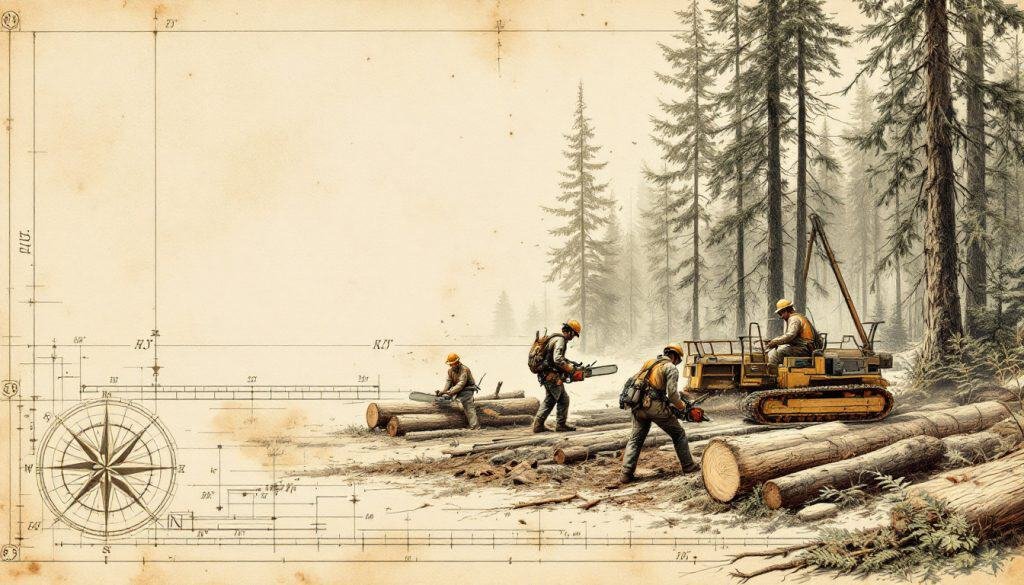
- Logging crews fell, delimb, buck, and transport logs using 2-10 specialized workers. Mechanical systems (skidders, forwarders, skyline, or helicopter) match terrain and impact tolerance. Choker setters and chasers manage cable systems that move logs safely from stump to landing. Modern crews cut injury rates via enclosed cabs, daily inspections, and mandatory PPE protocols. For private harvest, verify insurance, BMP compliance, and mill payment transparency before signing contracts.
You have a large tree that needs to come down—maybe several on a rural lot or a wooded section behind your house. A quick search brings up “logging crew,” but what exactly does that mean? How do these teams differ from the local tree-service crew you see in neighborhoods?
A logging crew is the coordinated team that fells standing timber in forests, bucks the trunks into merchantable logs, delimbs them, and moves everything from stump to roadside landing for trucking to mills. In this guide, Michael J. Hartman, ISA Board Certified Master Arborist, breaks down each crew role, the mechanical systems they use, and the safety culture that keeps fatality rates trending downward even as harvest volumes rise.
Core Logging Crew Roles and Responsibilities
Most crews range from two to ten workers, depending on terrain, contract volume, and the logging system chosen. Each person has a clearly defined task to keep the operation both productive and safe.
Fallers (about 5,600 employed nationally) are the specialists who cut down individual trees, either with chainsaws on steep slopes or with tracked feller-bunchers on gentler ground. They decide the precise felling direction to avoid hang-ups and minimize breakage.
Choker setters hike the slopes behind the fallers, wrapping a wire-rope “choker” noose around each downed log and hooking it to a skyline or skidder line so the wood can be dragged to the landing.
Chasers work at the roadside landing. As logs arrive, they unhook the choker cables, roll logs into sorted piles, and finish any remaining delimbing or bucking with a chainsaw to meet mill specifications.
Equipment operators (the largest group—34,300 nationwide) run grapple skidders, forwarders, and loaders that yard, sort, and load the logs onto trucks. Their enclosed cabs have reduced weather exposure and boosted safety.
Log graders and scalers (4,500 workers) inspect each log for knot size, straightness, and overall grade, then mark it for the correct mill destination. Their decisions directly affect the revenue the landowner receives.
Choker: A wire-rope noose that cinches tight around a log when tension is applied, allowing safe extraction without rolling or shifting dangerously.
Mechanical vs. Manual Felling Systems
The crew chooses among five main logging systems based on slope, soil, contract terms, and environmental restrictions.
Ground-skid systems use wheeled or tracked skidders that drag logs along the ground to the landing. They work well on gentle to moderate slopes and are the most common on private woodlots.
Forwarder systems load full tree-lengths or cut-to-length logs onto a self-loading trailer that carries—not drags—the wood to the road. This reduces soil disturbance and improves log quality.
Cable (skyline) systems suspend logs on a high-line cable, lifting them clear of the ground. They’re essential on steep terrain where tractors can’t operate safely.
Helicopter systems are the premium option for extreme terrain or sensitive watersheds, flying logs out one turn at a time. While expensive, they eliminate the need for access roads and slash soil impact to near zero.
Within each system, the actual cutting can be manual (chainsaws) or mechanical (feller-bunchers, harvesters). Mechanical harvesting now dominates because one operator can cut, delimb, and buck a tree in under a minute while seated in a climate-controlled cab.
| System | Best Terrain | Soil Impact | Relative Cost |
|---|---|---|---|
| Ground skid | Gentle to moderate slopes | Moderate | Low |
| Forwarder | Gentle to moderate | Low | Medium |
| Cable skyline | Steep slopes | Low | Medium-High |
| Helicopter | Extreme slopes/wetlands | Minimal | Very high |
From Stump to Truck: The Felling & Extraction Workflow
On the morning of harvest, the crew holds a safety tailgate meeting, confirms emergency evacuation routes, and inspects all equipment. Then the process begins:
- Tree marking or GPS flagging ensures only designated stems are cut.
- Felling operators notch the tree facing the intended lay, then make the back cut to drop it precisely between residual leave trees.
- Limbing and bucking occur either at the stump or at the landing. Stump-side processing reduces soil compaction, while landing processing allows better grading.
- Choking involves placing the choker cable around the log and securing the bell hook to the skidder, skyline, or forwarder grapple.
- Yarding or forwarding moves the log to the landing while minimizing damage to residual vegetation and soil.
- Sorting and loading use knuckle-boom loaders to stack logs by species and grade onto trucks bound for sawmills, pulp plants, or biomass facilities.
A skilled crew can move 50–100 tons of wood per productive machine hour, depending on haul distance and terrain difficulty.
Pro Tip: If you’re hiring a crew for private-land harvest, request the skid-trail layout map before cutting starts. Properly spaced trails (80–100 ft apart on slopes) slash soil erosion and residual tree damage by half compared to ad-hoc shortcuts.
Safety Culture and Risk Mitigation
Logging remains one of the most hazardous occupations, with fallers facing the highest fatality rate of any job category. Contact with falling trees or moving logs accounts for the majority of tragedies. Modern crews counter these risks through:
- Comprehensive training: Every new hire receives job-specific safety instruction, even if prior saw experience exists.
- Personal protective equipment (PPE): Hardhats with ear and eye protection, cut-resistant pants, steel-toe boots, and high-visibility vests are mandatory.
- Mechanization: Enclosed cabs on harvesters, skidders, and loaders shield operators from falling debris and weather.
- Radio communication: Hand signals are still used, but continuous radio contact between equipment operators and ground personnel prevents miscommunication.
- Daily equipment inspection: Chainsaw chain tension, hydraulic leaks, wire-rope integrity, and brake function are checked before the first tree is cut.
These measures have cut non-fatal injury rates by roughly one-third over the past two decades, according to shift hazards industry safety audits.
When a Logging Crew Makes Sense for Private Landowners
Most urban tree removals are handled by municipal or residential tree-services, but a logging crew becomes the right choice when:
- You have at least 5–10 acres of merchantable timber (generally 8-inch DBH or larger for pine, 12-inch for hardwoods).
- Access roads can support loaded log trucks (minimum 12-ft width, 60,000-lb axle load).
- The harvest goal is income generation, not just hazard removal.
- You’re comfortable with selective or clear-cut harvesting that may alter aesthetics for years.
Smaller lots or single yard trees are better served by certified arborists with cranes and bucket trucks, who focus on risk mitigation rather than log value recovery.
average dayQuestions to Ask a Prospective Logging Contractor
- Are you bonded and insured for both workers’ comp and general liability?
- Will you provide a written harvest plan with skid-trail layout and Best Management Practices (BMPs)?
- Who markets the logs and how is the landowner paid—lump sum or percentage of mill receipts?
- What cleanup and site restoration is included once the last log leaves?
What Happens After the Logs Leave Your Property
Once loaded onto 80-foot log trucks, the wood heads to specialized mills:
Sawmills convert straight, high-grade logs into dimensional lumber and plywood. Prices fluctuate weekly based on housing demand and export markets.
Pulp mills take smaller or irregular logs for paper, cardboard, and engineered wood products.
Biomass plants burn low-grade wood to generate electricity or produce wood pellets for residential heating.
Within 48 hours of harvest, a reputable contractor will provide the landowner with mill scale tickets documenting species, log grade, and net tonnage—transparency that builds trust and ensures fair payment.
Next Steps: Hiring, Permits, and Forest Stewardship
Start by contacting your state forestry service for a list of certified logging contractors who follow BMPs. Obtain any county harvest permits and notify adjacent landowners as required. Require a detailed contract covering stumpage rates, damage clauses, and restoration bond. Finally, schedule a post-harvest site visit with a consulting forester or logging crew ISA-certified arborist to ensure residual trees remain healthy and erosion controls are functional.
With the right crew and plan, a logging operation can improve forest health, generate income, and set the stage for vigorous regeneration—all while keeping safety at the forefront.
When vetting contractors, also review logging worker profiles to understand the skills and certifications you should expect from each crew member.