Axes vs Chainsaws Cutting Tasks: Explained
Learn when a chainsaw outperforms an axe for felling, limbing, and bucking trees. Master arborist guidance on power-to-weight, safety, and technique.
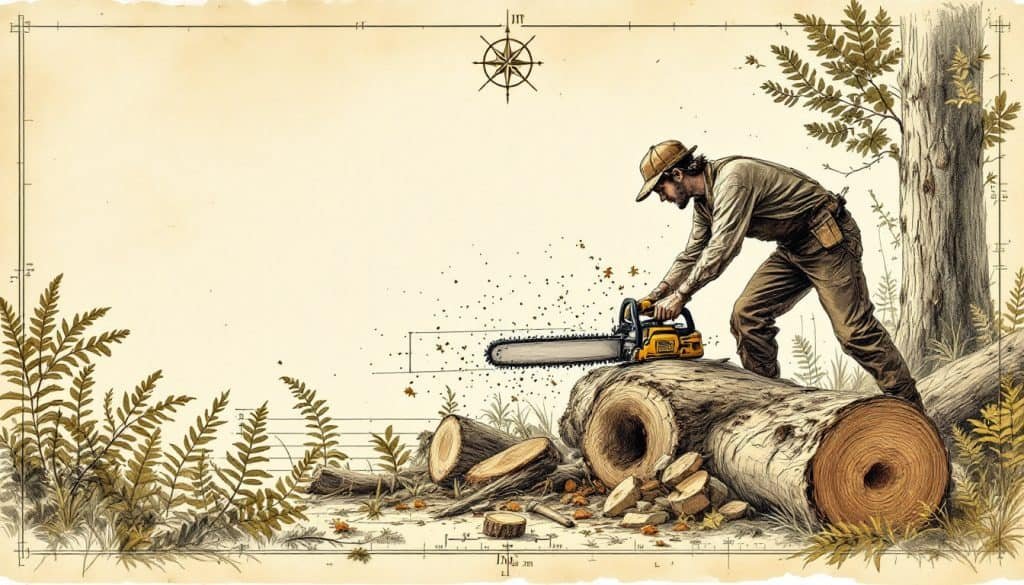
- Chainsaws deliver 5× the cutting power of an axe with narrower kerf and less fatigue. Use chainsaws for trunks over 12" DBH, limbing, and bucking; reserve axe for splitting. Dense hardwoods like live oak blunt an axe quickly and justify a saw. Urban noise rules or wilderness fire bans may force axe use despite efficiency loss. If diameter exceeds your inseam or tree leans toward a structure, call a pro.
You’ve got a leaning silver maple in the backyard, or maybe a storm-toppled pine across the driveway. The first thought is usually, “Do I grab the axe or fire up the chainsaw?” Both tools can fell a tree, yet the difference in effort, outcome, and safety is dramatic. After three decades of climbing and cutting, I still see property owners exhaust themselves with the wrong tool for the job. By the end of this article you will know exactly when a chainsaw is a better choice over an axe, and when an axe still has its place.
Michael J. Hartman, ISA Board Certified Master Arborist TX-0198B, has cut everything from 8-inch dogwoods to 48-inch post oaks. The decision between chainsaw and axe is never theoretical—it is dictated by wood density, cut location, and the physics of human energy. Let’s break that down.
Why Cutting Method Matters: The Physics of Wood and Muscle
Wood is a composite of cellulose fibers glued together by lignin. To separate those fibers you must deliver enough force to shear the lignin bonds. An axe concentrates that force along a thin, wedge-shaped edge driven by human muscle. A chainsaw replaces human muscle with a 2-horsepower engine pulling 50–70 cutting teeth at 45 mph through the kerf. In practical terms, a sharp axe can deliver roughly 0.3 kW of power at the bit for a skilled user, while even a homeowner-grade chainsaw delivers 1.5 kW continuously.
The difference becomes obvious on anything thicker than your thigh. A 20-inch diameter red oak contains about 0.3 cords of wood. With an axe you are looking at 200–250 full-force swings to sever the trunk; with a chainsaw the cut is complete in 20–30 seconds of throttle time. Beyond pure power, the chainsaw kerf is 1/8-inch wide versus the 1-1/4-inch wedge path of an axe, so you remove far less wood and retain more control over directional felling.
Kerf: The slot left in the wood by a cutting tool. Narrower kerf equals less wasted wood and reduced cutting effort.
Task-by-Task: When the Chainsaw Wins
Not every tree job is the same. Break the work into phases—felling, limbing, bucking, and splitting—and the chainsaw’s advantages sharpen.
Felling: Any trunk over 12 inches in diameter is chainsaw territory. The saw allows precise notch and back-cut placement, critical for directional control. An axe can notch, but the heavier the blow the less accurate the angle, and fatigue sets in fast.
Limbing: Once the tree is on the ground, removing branches from the crown upward is far quicker with a chainsaw. An axe requires awkward overhead swings where a single mis-hit can glance into your shin.
Bucking: Cutting the trunk into firewood lengths, or “bucking,” highlights the biggest gap. A 16-inch log bucked with an axe needs a V-notch on both sides followed by a powerful final blow. The same log takes one straight chainsaw cut.
Splitting: Here the axe or maul regains ground. The chainsaw is not designed for splitting along the grain; it is designed for cross-cutting across the grain. For splitting rounds into firewood, reach for a splitting maul.
| Task | Chainsaw Advantage | Axe Advantage |
|---|---|---|
| Felling >12″ trunk | Speed, precision, reduced fatigue | Lightweight, quiet |
| Limbing | One-handed operation on small branches | Better for twiggy brush |
| Bucking | Single straight cut | No fuel, no noise |
| Splitting | Poor grain control | Efficient splitting wedge action |
Species and Wood Density Considerations
Softwoods like eastern white pine (density 25 lbs/ft³) can be felled with either tool, but dense hardwoods such as live oak (density 60 lbs/ft³) will blunt an axe edge in minutes and exhaust the user. Sugar maple at 45 lbs/ft³ sits in the middle; you can fell a 10-inch maple with an axe in ten minutes, yet a chainsaw still saves your shoulders for the rest of the day.
Another factor is moisture. Fresh-cut green ash is easier to axe-cut than air-dried locust. Yet once locust dries to 12% moisture content, the lignin bonds crystallize and the axe bounces. A sharp chainsaw chain slices through dry locust at the same speed as green ash.
Pro Tip: If you absolutely must use an axe on dense hardwood, take a 15-second rest every 10 swings to let the axe cool. Overheated steel loses temper and the edge rolls, making each subsequent swing less effective.
Safety Realities: Kickback, Glance-Offs, and Drop Zones
Chainsaws have a reputation for danger, yet axes cause more emergency-room visits per hour of use. Chainsaw injuries are usually lacerations when the chain contacts flesh; axe injuries combine lacerations with blunt-force trauma from glancing blows.
The key difference is predictability. A chainsaw’s kickback zone is marked on every bar, and proper stance keeps your body out of the cutting plane. An axe blow can deflect off hidden knots or twisted grain, sending the blade toward your leg or torso. Steel-toe boots stop a chainsaw chain; they won’t stop an axe head traveling at 60 mph.
Drop zone safety is clearer with a chainsaw. You control the hinge wood thickness and can read the tree’s lean. With an axe, each heavy blow can shift the trunk slightly, altering the intended fall path mid-cut.
Warning Signs to Watch For
- Barber-chair split: Vertical split running up the trunk during axe felling—imminent uncontrolled fall.
- Glancing axe marks: Angled chops indicate grain run-out and high deflection risk.
- Chain smoking: Blue smoke from chainsaw bar means bar oil is low—stop and refill immediately.
Tool Selection and Maintenance
Not all chainsaws or axes are equal. For a homeowner cutting up to 18-inch hardwood, a 40–45 cc saw with a 16-inch bar balances power and weight. Professional-grade 60 cc saws with 20-inch bars are justified only if you routinely drop 24-inch oaks.
Axe selection hinges on handle length and bit geometry. A 36-inch felling axe gives the leverage needed for large trunks, whereas a 28-inch boy’s axe is fine for limbing. Keep the bit convex and razor-sharp; a blunt axe is more dangerous because it requires harder swings that are harder to control.
Tools You Will Need
- Chainsaw: 40–45 cc engine, 16-inch bar for homeowner work, full-chisel chain for clean hardwood.
- Axe: 36-inch straight hickory handle, 3.5-pound head, single-bit for versatility.
- Safety gear: Chainsaw chaps, helmet with face shield, steel-toe boots for both tools.
- Sharpening kit: 5/32-inch round file and raker gauge for chainsaw; 10-inch mill bastard file for axe.
Environmental and Site Constraints
Urban backyards often dictate tool choice. Noise ordinances may limit chainsaw use to daylight hours, or homeowners’ associations may outright ban them. In those cases, an axe becomes the only legal option. Conversely, wilderness areas may prohibit gasoline engines to reduce wildfire risk—here again the axe rules.
Ground slope also matters. On steep hillsides, the weight of a 15-pound chainsaw becomes a liability when you need both hands free to steady yourself. A lightweight axe can be holstered in a belt loop and drawn only when footing is secure.
When to Act
Best window: early morning on a wind-calm day. Cool temperatures keep the chainsaw engine at peak power and reduce user fatigue. Avoid midday when thermal winds can unpredictably shift tree fall direction.
Professional vs DIY Decision Matrix
Property owners regularly overestimate their stamina and underestimate tree complexity. If the trunk diameter at breast height exceeds your inseam length, hire a certified arborist. Likewise, any tree leaning toward a structure, power line, or public road requires professional rigging and liability insurance.
DIY is reasonable for straight, sound trees under 14 inches DBH with at least one full tree-length of clear drop zone. Even then, schedule a practice session on a smaller tree first. If you cannot sink an axe into the trunk past the bit in three swings, the wood is too dense for safe amateur felling and you need a saw.
Go/No-Go Checklist Before You Cut
- Tree diameter ≤14 inches DBH.
- Lean direction obvious and clear of obstacles.
- Wind speed under 10 mph.
- Chainsaw chain sharp and bar oil full.
- Escape route planned at 45° angle from fall direction.
What to Do Next
Take a slow walk around the tree you intend to cut. Measure the diameter at chest height—if your tape reads 16 inches or more, the chainsaw is mandatory. Check local noise rules and fire restrictions. Lay out your safety gear the night before so you are not tempted to skip chaps because the saw is already running. Finally, if any doubt creeps in, text photos of the tree and surrounding hazards to a local ISA Certified Arborist for a quick consultation. Five minutes of expert advice beats five hours in the emergency room. And remember to choose lumberjack tools from good brands to ensure reliability and safety.