Replanting Timeline After Harvest: Explained by Arborists
Learn the science-backed steps to restore forest health and value after timber harvest, from site prep to seedling selection.
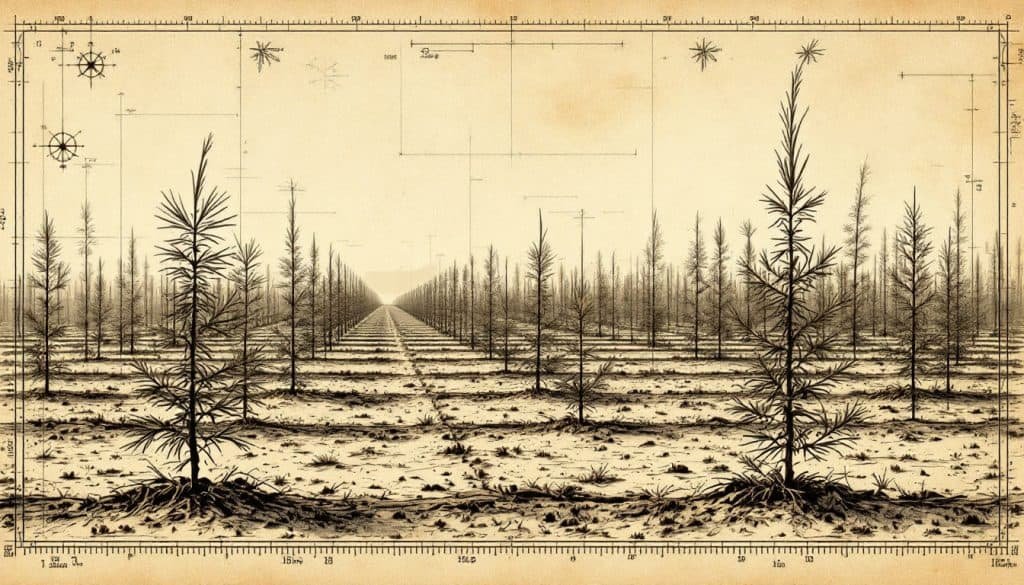
- Replanting after harvest maintains forest productivity and land value. Site-specific species selection and rust-resistant seedlings maximize survival. Cost-share programs can cut out-of-pocket expenses by up to 50 percent. First-year release and survival surveys are the highest-impact cultural practices. Submit cost-share paperwork six months before final harvest to secure funding.
You just finished a timber harvest on your family land or a client’s tract. The ground is bare, slash is scattered, and the once-shady canopy is now open sky. Whether the goal is another high-value sawtimber rotation, wildlife habitat, or long-term carbon storage, the next decision—what and how to replant—will dictate the site’s productivity for the next 25 to 60 years. Michael J. Hartman, ISA Board Certified Master Arborist (TX-0198B), has overseen dozens of post-harvest reforestation projects across the South and Midwest. In the next ten minutes you will understand the biological “why” behind successful regeneration, how to read the site for the its own clues, and the exact sequence of operations that turn a freshly cut tract into a thriving new stand.
The Biological Imperative: Why Forests Must be Actively Regenerated
Clear-cutting removes not only merchantable wood but also the seed source, root grafts, and mycorrrhizal network that used to anchor the soil and cycle nutrients. Within weeks, sun-loving pioneer species—often sweetgum, winged elm, or invasive privet—race to colonize the exposed mineral soil. Without deliberate intervention, these early successional plants can dominate for decades, reducing site productivity by up to 40 percent and delaying the next rotation by ten years or more. Actively replanting shortens that lag phase, giving desired species a three- to four-year head start before competing vegetation becomes entrenched.
Ecological succession: The predictable, stepwise change in plant species composition over time as a site moves from bare ground to mature forest.
Financially, timely reforestation also locks in the land’s future value. A tract with well-stocked, healthy seedlings at age five commands a 15–20 percent premium over cutover ground left to natural regeneration. That premium compounds every year as the stand advances toward sawtimber size.
Reading the Site: Soil, Moisture, and Microclimate
Before ordering a single seedling, spend half a day walking the tract with a soil auger and hand level. The goal is to confirm three variables: texture/drainage, residual slash density, and exposure. Sandy loam on south-facing slopes drains fast and warms early—ideal for loblolly or shortleaf pine. Clay loam in narrow drainages holds moisture longer and favors yellow-poplar or cherrybark oak. Note every skid road and landing; compacted ruts will need subsoiling or ripping. Map slash piles thicker than 6 inches; they will block planter access and harbor rodents.
Warning Signs to Watch For
- Ruts deeper than 6 inches: Compaction layer needs sub-soiling to restore root penetration.
- Scalped mineral soil on >30% slopes: High erosion risk; install silt fencing or seed with annual rye immediately.
- Heavy hardwood slash: Expect stump sprouting; budget for an early herbicide release spray.
Take soil samples from each major soil type and send them to your state extension lab. Target pH 5.5–6.2 for most southern pines, 6.0–6.8 for oaks. If phosphorus is below 15 ppm, plan a broadcast application of 250 pounds per acre of 10-10-10 before planting.
Species and Stock Type: Matching Genetics to Site
On upland sites with 35+ inches of annual rainfall, first-generation loblolly pine seedlings grown in 164 ml SuperCells give the best cost-per-survival ratio. Switch to containerized longleaf only if fire can be re-introduced within five years; otherwise, the grass stage will last a decade. On rich cove sites, plant 1-0 northern red oak bareroot stock at 6 by 8 foot spacing. For wildlife mast, interplant 10 percent swamp chestnut oak and 5 percent persimmon as microsites.
| Species | Site type | Survival target | Rotation length |
|---|---|---|---|
| Loblolly pine | Well-drained upland | 85 % at year 3 | 25–30 yr |
| Longleaf pine | Sandy, fire-maintained | 75 % at year 5 | 45–60 yr |
| Cherrybark oak | Moist bottomland | 80 % at year 4 | 35–45 yr |
Order seedlings nine to twelve months ahead; high-genetic-gain families sell out first. every nursery in the South. Specify rust-resistant fusiform rust resistance ratings of 0.0 for loblolly and 1.0 for slash.
Site Preparation: From Slash to Plantable Rows
Begin six months before planting. Shear and pile any slash within 30 feet of the new road system, then broadcast burn under a 5 mph wind at 25–40 percent fuel moisture. Burning reduces hardwood rootstock and releases nutrients tied up in needles and bark. Next, apply 1.5 quarts per acre of Arsenal AC (imazapyr) plus 1 percent glyphosate to eliminate sweetgum and privet sprouts. Two weeks later, run a 36-inch sub-soiler shank on 8-foot centers across compaction zones; set the ripper 14 inches deep to fracture the plow pan.
Tools You Will Need
- Soil auger: 36-inch stainless steel, 1.5-inch diameter for texture checks.
- Sub-soiler: Three-shank ripper on 65-hp tractor minimum.
- Herbicide sprayer: 100-gallon PTO sprayer calibrated to 15 gpa at 20 psi.
Finish with a light disking to create 4- to 6-inch furrows that trap winter moisture. Disking is optional on sandy soils but critical on clay where surface sealing can reduce seedling root egress by 60 percent.
Planting Operations: Timing, Technique, and Quality Control
Plant between December 15 and March 15 in the Gulf South; frost-heaved seedlings in January often out-perform those planted in late February on droughty sands. Use a tractor-mounted mechanical planter set to open a 10-inch deep slit; operators should maintain 2 mph to keep the soil foot firm. Target spacing: 6.5 by 10 feet (670 trees per acre) for pulpwood rotations, 8 by 8 feet (680 trees) for sawlog regimes. Carry a planting bar for every fifth row to replace J-rooted seedlings immediately—do not wait until the end of the day.
Quality Control Checklist
- Root collar buried 0.5 inch below mineral soil.
- Seedling perpendicular, not leaning downslope.
- Soil firmed around roots—no air pockets.
- Tags placed every 50th tree for survival counts.
Within 48 hours of planting, spray a 4-foot band of Oust XP (sulfometuron methyl) at 2 ounces per acre to provide 60–90 days of pre-emergent weed control. This single application can raise first-year height growth by 35 percent on fertile sites.
Year-One Care: Release, Insects, and Mortality Surveys
Conduct the first survival census between July 15 and August 15 when foliage is fully expanded and drought stress is evident. Flag any plot with less than 400 living trees per acre; replant in December with 1-0 bareroot stock at 8 by 8 spacing. Release herbicide mixes vary by competing vegetation: for fescuery grass, use 4 ounces per acre of Accord XRT plus 0.25 percent surfactant; for woody brush, bump imazapyr to 24 ounces per acre.
Pro Tip: Clip competing vines at ground level with a machete, then immediately dab cut stumps with 50 percent Garlon 4 in basal oil. This spot treatment cuts follow-up labor by 70 percent compared to broadcast spraying.
Watch for Nantucket pine tip moth damage on loblolly—tiny dead shoot tips with resinous frass indicate infestation. Spray 4 ounces per acre of Dimilin 2L when 25 percent of terminals show damage. Remove hardwood sprouts within 3 feet of each pine by hand clipping or directed spray to eliminate light competition.
Financing and Cost-Share: Making Regeneration Cash-Flow Positive
Total out-of-pocket costs for a typical 50-acre loblolly tract run $285–$320 per acre in the Southeast: $110 site prep burn, $55 herbicide, $65 seedlings, $45 planting, $ 10 first-year release. That figure drops to roughly $200 per acre after state and federal cost-share programs. The USDA Conservation Reserve Program (CRP) Practice CP-3A pays up to 50 percent of establishment plus an annual rental payment for 10–15 years. State forestry agencies often add an additional $75–$100 per acre through Forest Stewardship or Forest Land Enhancement programs. Apply six months before harvest; funding cycles fill fast.
When to Act
Best window: Submit cost-share paperwork 180 days before harvest closure. Applications received after the sale date face funding delays of up to 24 months.
Keep every receipt; reforestation costs are deductible as a Section 175 soil and water conservation expense in the year incurred. On profitable harvest years, that deduction can offset ordinary income at marginal tax rates above 30 percent.
Long-Term Monitoring: Thinning, Fire, and Final Harvest
Begin basal area management at age 12–15 when the stand reaches 90 square feet per acre. First thinning removes every fourth row plus marked culls, reducing density to 60 square feet and instantly increasing diameter growth on residual stems. On longleaf sites, prescribe burn every 2–3 years starting at age 5 to reduce brown-spot needle blight and maintain understory diversity. Maintain a 10-foot buffer around each residual oak clump to preserve hard mast for wildlife.
Financially, a well-managed loblolly stand will yield 30–35 tons per acre at age 25, with 65 percent in chip-n-saw and sawlog classes. Internal rates of return commonly exceed 8 percent even after deducting all regeneration, annual taxes, and management fees. The key is to treat reforestation as a manufacturing process—controlled inputs, measured outputs, and disciplined timing—not as passive “tree planting.”
What to Do Next: Your 30-Day Action Plan
Walk the tract this weekend with the checklist above and flag soil types, slash concentrations, and access routes. Call your state forestry service Monday to confirm cost-share deadlines and seedling availability. By Friday, submit soil samples and request rust-resistant seedling quotes from at least two nurseries. Schedule the burn contractor within 10 days; prime burn windows close fast in late winter. Finally, pencil out the cash flow: compare total establishment cost against projected stumpage prices at age 25 to confirm the investment meets your hurdle rate. Execute the plan, and the next generation will inherit a forest that is healthier—and more valuable—than the one you just harvested.
Understanding seedling survival factors is essential to maximize your investment and ensure long-term forest health.