How Much Logging Truck Weighs: The Real Answer
You’ve just watched a loaded logging truck rumble past your property and felt the ground shake. That same question pops into your head every time: how heavy is that thing, really? Whether you’re a landowner planning timber harvest, a municipal arborist reviewing traffic permits, or simply curious about the logistics behind tree removal, understanding logging […]
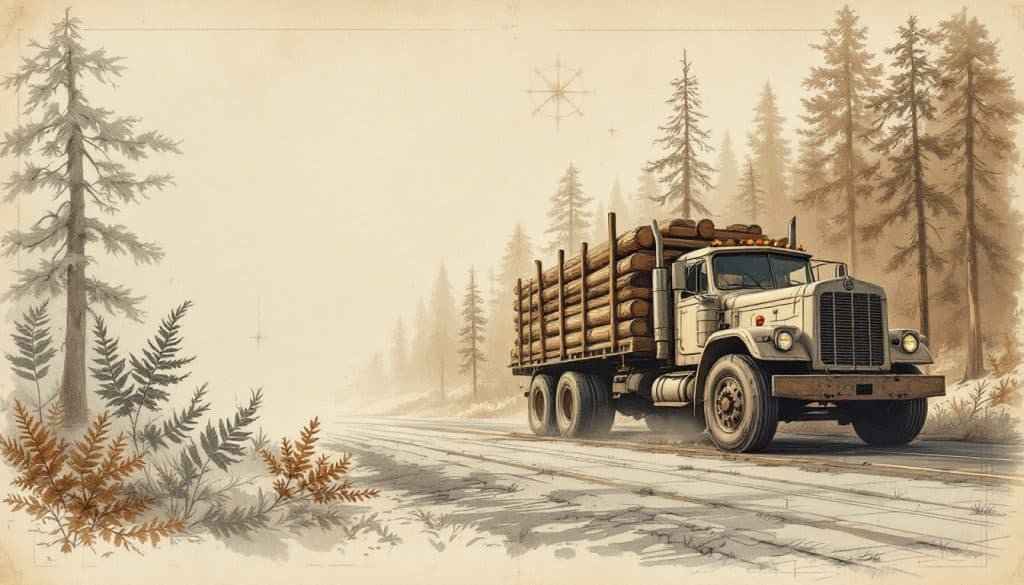
- Loaded logging trucks weigh 80,000-160,000 pounds depending on configuration. Species density varies 35-75 pounds per cubic foot, dramatically affecting load weight. Standard driveways cannot handle 17,000-pound axle loads without damage. State permits allow 105,000+ pounds on designated routes with proper fees. Always assess access routes and surface strength before scheduling tree removal.
You’ve just watched a loaded logging truck rumble past your property and felt the ground shake. That same question pops into your head every time: how heavy is that thing, really? Whether you’re a landowner planning timber harvest, a municipal arborist reviewing traffic permits, or simply curious about the logistics behind tree removal, understanding logging truck weights is crucial for safety, infrastructure planning, and project costs. As an ISA Board Certified Master Arborist who’s overseen countless timber operations across Texas, I’ll break down the real numbers behind these massive vehicles and what they mean for your tree work.
By the end of this article, you’ll know exactly what contributes to logging truck weight, why these vehicles often exceed standard highway limits, and how to factor truck weight into your tree removal or timber sale decisions. You’ll also understand the safety implications for your property and local roads.
The Loaded Reality: 80,000 to 160,000 Pounds
A fully loaded logging truck typically weighs between 80,000 and 160,000 pounds, depending on configuration and local regulations. The standard tri-axle log truck with a pup trailer – the most common setup in North American timber operations – carries about 25-30 tons of logs while staying within federal interstate limits of 80,000 pounds gross vehicle weight. However, many states allow heavier configurations through special permits or grandfathered weight limits on designated routes.
In the Pacific Northwest, where Douglas-fir and Western Hemlock grow massive, you’ll see quad-axle trailers pushing 105,500 pounds legally. The southeastern states often use longer combination vehicles with multiple trailers that can exceed 120,000 pounds on specific state highway systems. These weights include the truck tractor (typically 18,000-22,000 pounds), empty trailer weight (15,000-25,000 pounds), and the logs themselves.
Pro Tip: When calculating driveway or road damage risk, assume 15,000 pounds per axle for a loaded logging truck on your property. This conservative estimate accounts for dynamic loading when trucks navigate turns or uneven surfaces.
What Actually Makes Up the Weight
The weight breaks down into three main components: the truck tractor itself, the empty trailer system, and the payload of logs. A modern Kenworth or Peterbilt day cab tractor designed for logging typically weighs 18,000-22,000 pounds with fuel, chains, and required safety equipment. The trailer system – including the main log bunk and any pup trailers – adds another 15,000-25,000 pounds depending on steel versus aluminum construction and the number of axles.
The payload varies dramatically based on wood species and moisture content. Dry Southern pine weighs about 35 pounds per cubic foot, while fresh-cut live oak can exceed 60 pounds per cubic foot. A standard load might contain 4,000-5,000 board feet of timber, translating to 25-40 tons of actual wood weight. However, when you account for oversized logs or high-density hardwoods, loads can push 45-50 tons in areas allowing higher weight limits.
Gross Vehicle Weight Rating (GVWR): The maximum operating weight specified by the manufacturer, including chassis, body, engine, fuel, accessories, driver, passengers, and cargo. Exceeding GVWR compromises braking, steering, and structural integrity.
Regional Weight Limits and Permits
Weight limits for logging trucks vary significantly by state and road classification. Federal interstate highways cap commercial vehicles at 80,000 pounds maximum, but state highways and county roads often have different standards. Oregon allows 105,500 pounds on state routes with proper permits, while Washington goes up to 137,700 pounds for specific configurations.
These higher limits require additional axles to distribute weight across more pavement contact points. A typical heavy configuration might include a three-axle tractor pulling a four-axle trailer with an additional two-axle jeep dolly. Each axle can legally carry 17,000-20,000 pounds depending on tire size and spacing. The key is spreading the load to minimize road damage while maximizing payload efficiency.
For private landowners, this means checking with your state’s Department of Transportation before planning any timber harvest. Some rural bridges have weight restrictions as low as 40,000 pounds, requiring smaller trucks or multiple trips. County road departments often issue seasonal weight restrictions during spring thaw when pavement is most vulnerable.
Impact on Your Property and Infrastructure
Understanding logging truck weight helps you assess potential damage to driveways, culverts, and road surfaces. Standard residential asphalt driveways are designed for passenger vehicles weighing 3,000-5,000 pounds – not 80,000-pound commercial trucks. The concentrated load from individual axles can exceed 17,000 pounds, creating ruts, cracking pavement edges, and potentially collapsing buried utilities.
Consider the turning radius and surface requirements for these vehicles. A loaded logging truck needs 40-50 feet of turning radius and compacted gravel or concrete surfaces rated for heavy loads. Soft shoulders or recent rain can cause trucks to sink and become stuck, potentially requiring expensive recovery operations. I’ve seen $50,000 driveways destroyed by a single logging truck during wet conditions.
Before any timber harvest, calculate the route from your property to the nearest public road. Look for low-hanging power lines, weak culverts, or sharp turns that might not accommodate a 70-foot vehicle combination. Many logging contractors require property owners to sign damage waivers for private roads, making pre-harvest assessment critical.
Weight vs. Volume: The Species Factor
The relationship between log volume and actual weight varies dramatically by tree species, making weight calculations complex for arborists and landowners. Southern yellow pine at 20% moisture content weighs approximately 36 pounds per cubic foot, while northern red oak at the same moisture content weighs 44 pounds per cubic foot. This 22% difference means a truckload of oak weighs significantly more than the same volume of pine.
Fresh-cut hardwoods can contain 50-100% moisture by weight, substantially increasing truck loads. A freshly felled white oak log might weigh 75 pounds per cubic foot when first cut, dropping to 45 pounds after air-drying for six months. This moisture variation affects everything from fuel efficiency to road wear calculations. Logging contractors often specify payment by weight rather than volume to account for these differences.
For urban tree removal, understanding species weight helps plan crane operations and truck routing. A mature red oak removal might require multiple truckloads even for a single tree, while several pine trees could fit on one load. Always specify in your contracts whether pricing includes trucking costs based on actual weight or estimated volume.
Pro Tip: When estimating removal costs, use 50 pounds per cubic foot for hardwoods and 35 pounds per cubic foot for softwoods. Multiply tree volume (length × diameter² × 0.0022) by species weight to estimate total truck weight before calling for removal.
Safety Considerations for Tree Operations
Logging truck weight directly impacts safety protocols for tree removal and timber loading operations. The center of gravity on a loaded truck sits 8-12 feet off the ground, making these vehicles prone to rollover on uneven surfaces or during sharp turns. When positioning trucks for loading, ensure level ground and adequate clearance from overhead hazards.
Braking distances increase dramatically with weight. A loaded logging truck traveling 55 mph needs 400-500 feet to stop on dry pavement – nearly the length of two football fields. This affects site safety planning, requiring flaggers and communication systems when trucks must share space with tree crews. Never assume a loaded truck can stop quickly for pedestrians or equipment.
Consider truck positioning during tree felling operations. A typical logging truck needs 14-foot clearance height and 8.5-foot width, plus additional space for loading equipment. Plan drop zones to accommodate these dimensions, remembering that trucks cannot easily maneuver on soft or sloped surfaces. Coordinate with drivers before beginning work to establish safe loading zones and communication protocols.
Cost Implications of Truck Weight
Truck weight directly affects transportation costs in tree removal and timber operations. Most commercial carriers charge $3-5 per mile for loads under 80,000 pounds, but overweight permits add $200-500 per trip plus route restrictions. For long-distance hauls, these permits can exceed the value of low-grade timber.
Fuel consumption scales with weight – a loaded logging truck averages 5-7 miles per gallon compared to 7-9 MPG empty. On a 200-mile haul, this translates to 30-50 gallons additional fuel consumption per load. With diesel at $4 per gallon, weight-related fuel costs add $120-200 per trip, significantly impacting project economics.
Many urban tree services use smaller trucks to avoid permit requirements, but this increases labor costs through multiple trips. A job requiring one 80,000-pound truck might need three 30,000-pound trucks, tripling driver costs and extending project timelines. Always clarify truck size and permit requirements in your service contracts to avoid surprise charges.
What This Means for Your Next Tree Project
Understanding logging truck weight empowers better decision-making for any substantial tree removal or timber harvest. Start by assessing your access routes – measure bridge weight limits, driveway widths, and turning radii. If your property cannot accommodate standard logging trucks, budget for smaller vehicles or crane-assisted loading onto trucks positioned on public roads.
When soliciting bids for tree removal, specify truck size requirements and access limitations upfront. Professional arborists will assess site conditions and recommend appropriate equipment, potentially using multiple smaller loads or staging areas to minimize property damage. Factor these logistics into your project timeline – heavier trucks move slower and may require special routing that adds days to the schedule.
For timber sales, understand that higher-value species and larger logs justify heavier truck configurations and permit costs. A mature walnut tree might generate enough value to warrant overweight permits, while smaller pine removals might use standard trucks even if it requires multiple trips. Work with a consulting forester to optimize both tree value and transportation efficiency based on your specific access and species mix.
Always verify contractor insurance coverage for heavy truck operations on your property. Standard tree service policies may not cover 80,000-pound commercial vehicles, requiring additional coverage or specific endorsements. This small detail can save thousands in liability claims if property damage occurs during removal operations. Log book requirements also vary by state, so ensure your contractor maintains proper documentation for oversized loads.