A Field Guide to Skid Steer Attachment Compatibility
Mechanized forestry equipment evolved from construction machines, requiring chassis modifications for terrain, slope safety, and OSHA cab protection.
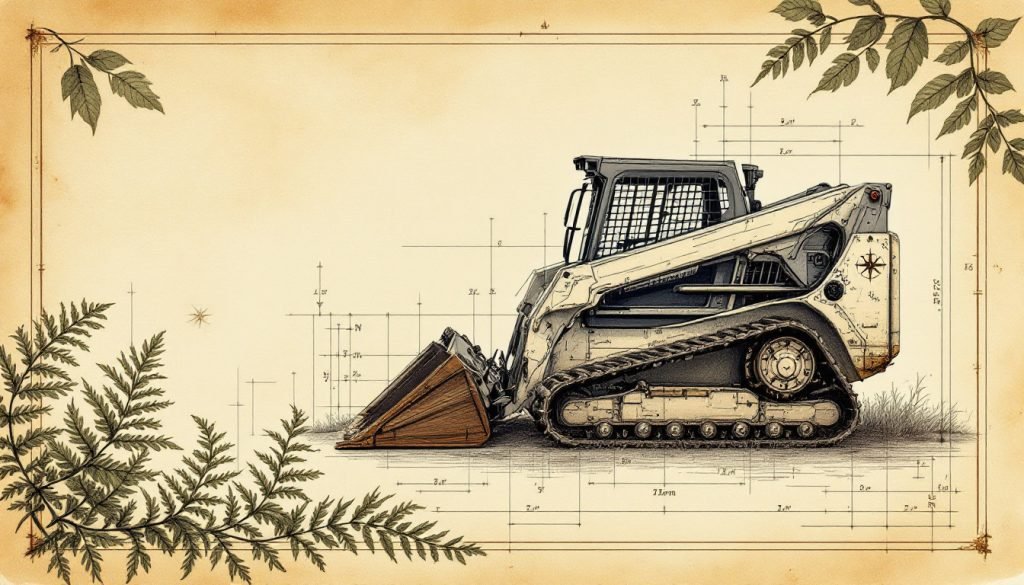
- Forestry chassis evolved from construction equipment, requiring higher clearance and stronger frames. OSHA mandates ROPS plus falling-object guarding; construction cabs rarely comply without retrofit. Slope limits depend on rollover safety, fluid retention, and soil erosion, not just engine power. Tracks reduce ground pressure to 4-7 psi, critical on pine feeder-root zones. Before purchase, verify transport width, cab certification, and cooling derate for summer dust loads.
A landowner watching a tracked feller-buncher crawl across a 30-percent slope often wonders why it looks like an excavator yet carries a saw head instead of a bucket. The answer lies in the chassis: almost every piece of mechanized forestry equipment began life as construction iron. Converting a backhoe or skid steer into a forest worker means re-thinking ground clearance, cab protection, and slope limits. As an ISA Board-Certified Master Arborist who has specified machines for fuel-reduction contracts from East Texas to the Hill Country, I have seen what happens when contractors ignore those design limits—rolled machines, sheared pins, and citations from OSHA. By the end of this article you will know exactly which chassis configurations work for timber work, how to read a slope rating tag, and when to insist on factory forestry guarding rather than a quick field retrofit.
From Construction Site to Forest Floor: Why Chassis Geometry Changes
Construction equipment is engineered for relatively flat pads and roadbeds where the biggest hazard is a buried utility line. Move the same carrier into a mixed pine–hardwood stand and the ground drops away at 20–35 percent, stumps become fulcrums, and a rolling log can punch through a standard cab window. Forestry-specific chassis address three failure modes: rollover, fluid loss on grade, and soil shear that leaves the machine stranded. Articulated frames lengthen the wheelbase while keeping turning radius tight; high-clearance undercarriages lift differentials above stump height; and boxed belly plates protect hydraulic tanks from hanging roots. The Forest Service catalogs seven basic forms—articulated, excavator base, skid steer, compact tracked loader, crane, tricycle, and crawler—but within each form, slope ratings and ballast points determine whether a machine can work safely on your site.
Gradeability: The steepest slope, expressed in percent grade, on which a machine can move mechanically without losing fluids or traction; distinct from safe operating slope, which is limited by rollover risk.
Slope Limits: Safety, Gradeability, and Soil Damage
Three independent factors control how steeply any chassis can work. Safety is the rollover threshold—typically 35–40 percent for a rubber-tired skidder with 2.5 m track width and full belly ballast. Gradeability is the mechanical limit where the engine stalls or hydraulic reservoirs leak; a 74 kW engine with a two-speed transmission may climb 50 percent on paper, yet vent hydraulic breathers at 38 percent, forcing the operator to stop. Finally, soil disturbance and erosion depend on soil texture, moisture, and rainfall patterns. A clay loam at 25 percent slope will rut severely under a 9-t forwarder, even though the machine is mechanically stable. Before specifying a machine, match the limiting factor on your tract; on most Piedmont soils in Texas, erosion risk caps the working grade before mechanical or rollover limits are reached.
Pro Tip: When evaluating a used articulated skidder, measure the frame twist with a plumb line; if articulation pins allow more than 3° of frame skew, the machine will crab on slopes and exaggerate soil shear.
Tires, Tracks, and Ground Pressure: Choosing the Footprint
Rubber-tired machines travel 20 km h⁻¹ on county roads and cost less to ship, but exert 35–55 psi ground pressure—enough to compact fragile pine feeder roots. Steel or rubber tracks spread that load to 4–7 psi, but add 15 percent to purchase price and require a low-boy for moves between sites. On sandier Coastal Plain soils, a 200 mm single-bar grouser track provides flotation without excessive slippage; on rocky Hill Country limestone, a triple-bar pad resists sidewall cuts from fractured stone. Whichever undercarriage you choose, match it to the wettest month you expect to work. A machine that ruts only in March may still create erosion channels that smother seedling roots for the rest of the rotation.
OSHA Cab Standards: Falling-Object and Roll-Over Protection
OSHA 1910.266 mandates that any machine used for logging must carry both ROPS (roll-over protective structure) and FOPS (falling-object protective structure). Construction cabs rarely meet FOPS because they are designed for falling bricks, not a 250 kg limb dropping 15 m. Retrofitting usually means adding 8 mm mesh or solid plate around the cab perimeter, upgrading polycarbonate to 12 mm, and relocating hydraulic lines so a burst hose cannot spray the operator. Factory forestry cabs integrate these features without compromising egress—door latches still release with one motion even when the frame is twisted after a rollover. If you buy a used excavator and bolt on a saw head, budget an extra USD 8–12 k for certified cab guarding; OSHA inspectors will not accept a homemade wire cage.
Power Trains: Why Forestry Engines Run Derated
A 120 kW engine in a wheel loader may pull a 20 m³ bucket all day, yet the same block in a harvester is software-derated to 95 kW. The reason is cooling reserve: saw heads generate continuous hydraulic heat, and radiator screens clog with pollen and bark dust. Forestry carriers run larger cores, reversible fans, and derated power so the engine loafs at 70 percent load, leaving headroom for the 45 °C summer day when fines build a mat on the screen. When spec’ing a used machine, check the hydraulic oil cooler for external bypass loops—missing loops force hot oil straight back to tank, glazing pumps within 500 hours.
Axle and Articulation Options: When to Choose a Rigid Frame
Most timber machines use oscillating tandem axles that allow ±10° of axle twist, keeping all wheels on the ground on uneven slash. Rigid frames make sense only on dead-level plantation rows where you need extra payload capacity; the fixed axle eliminates king-pin maintenance and carries 15 percent more weight for the same tire rating. For mixed-species stands with stumps and root mounds, insist on oscillating bogies and hydraulic weight transfer that can shift 30 percent of load from rear to front while climbing a landing pile.
Transport Width and Road Legal Limits
Highway legal width in Texas is 2.6 m without an oversize permit. A purpose-built forwarder with 700 mm tires and 2.9 m track width requires escort vehicles, adding USD 1.80 per loaded kilometre. If you plan to move between counties weekly, consider a 2.5 m narrowTrack version that ships on a standard drop-deck. Remember to pin the articulation cylinder before loading; hydraulic drift during transit can let the rear frame pivot, overhanging the trailer edge and triggering a citation.
Maintenance Access in the Woods: Service Points Matter
Forest machines run 10-hour shifts far from the shop, so daily greasing must be done from ground level with a manual gun, not a power-lube truck. Look for grouped zerk fittings behind hinged belly shields, spin-on hydraulic filters mounted horizontally to avoid draining 80 L of oil, and an engine oil drain routed to the frame rail where a 20 L evacuator can reach. A seemingly trivial detail—like a side-mounted DEF tank that can be filled while the saw head is tucked—can save 30 minutes per day, worth USD 4 k over a season.
Putting It Together: Spec’ing the Right Configuration
Start with the harvest plan: measure the steepest skid trail grade, the wettest soil-bearing month, and the average piece size you will extract. If any slope exceeds 30 percent, eliminate rubber-tired skidders unless you can ballast to 17 t and install wide-base 30.5-L tires. Next, list transport distance: if you cross county roads daily, narrow-track CTL machines become economical. Finally, check OSHA history: any citation for an unguarded cab within the last three years raises your insurance modifier 15 percent—enough to justify buying a factory forestry cab instead of a retrofit. Match engine derate to your ambient temperature peak; in East Texas that means 95 kW nominal for a 120 kW block, giving the cooling reserve you need for August dust.
Understanding forestry applications helps you choose the right carrier for each tract, while recognizing safety risks ensures both operator protection and regulatory compliance.