Harvester Tight Space Limitations: A Practical Guide
Learn how feller bunchers revolutionize tree removal with mechanical harvesting versus traditional manual felling methods.
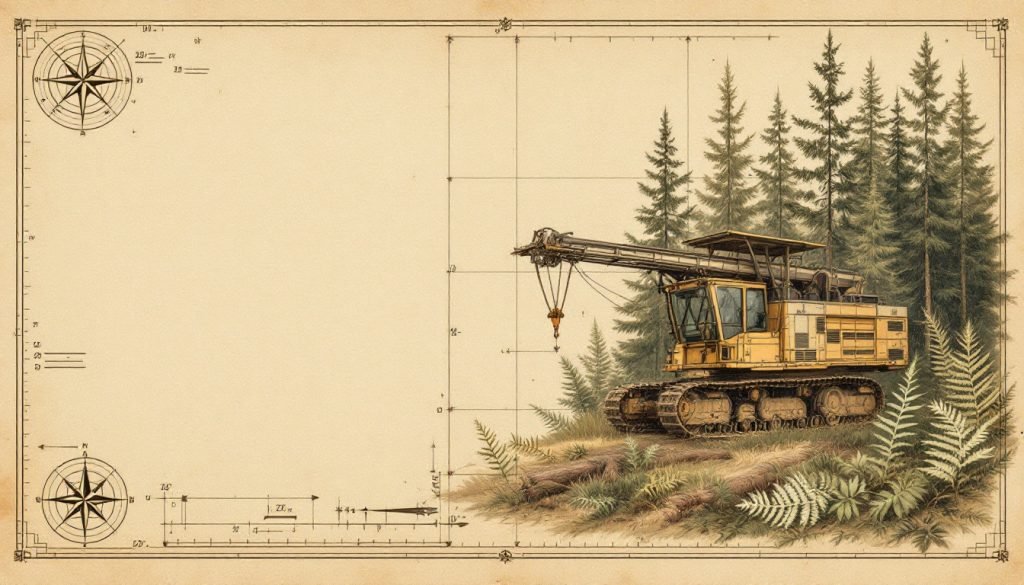
- Feller bunchers process 100+ trees per hour versus 20-30 for traditional crews. Mechanical harvesting works best for uniform stands on open terrain with 50+ trees. Traditional removal offers precision for obstacles, selective harvesting, or mixed species. Cost break-even typically occurs at 30-40 similar-sized trees on accessible sites. Get site assessments from both mechanical and traditional contractors before deciding.
You have a property with dozens of mature pines that need removal before construction begins. Your contractor mentioned using a “feller buncher” but you’re picturing the lumberjack with a chainsaw. This massive piece of forestry equipment represents a completely different approach to tree removal – one that can clear acres in hours versus days of traditional hand felling. As Michael Hartman, ISA Board Certified Master Arborist, I’ll break down exactly what a feller buncher does and when it makes sense versus traditional tree removal methods.
By the end of this guide, you’ll understand the mechanical harvesting process, know which situations favor each approach, and have the knowledge to make informed decisions about large-scale tree removal on your property.
What Exactly Is a Feller Buncher?
A feller buncher is a self-propelled harvesting machine that combines cutting and gathering functions in one unit. The machine features a heavy equipment base – either wheeled or tracked – with a specialized attachment that grasps trees while simultaneously cutting them. The cutting mechanism can be a chainsaw, circular saw, or shear device positioned at the base of the grabbing arm.
Once a tree is severed, the machine doesn’t simply drop it. Instead, the grabbing device retains control of the entire tree, then strategically places it in a organized pile or “bunch” for later collection by skidders or forwarders. This controlled placement prevents trees from falling unpredictably and allows for efficient processing of multiple stems in a systematic pattern.
Modern feller bunchers typically weigh around 13,910 kg (30,670 lbs) and run on diesel engines. The tracked versions provide stability on uneven terrain and soft ground conditions, while wheeled models offer greater speed and maneuverability on firmer surfaces. The operator sits in an enclosed cab with advanced controls allowing precise placement of each tree.
Feller Buncher: A mechanized tree harvesting vehicle that cuts, gathers, and stacks multiple trees in a single continuous operation without manual chainsaw work.
The Biological and Mechanical Reality Behind Machine Harvesting
Understanding why feller bunchers work so efficiently requires grasping both tree biology and mechanical engineering. Trees don’t fall randomly when cut – they follow predictable patterns based on crown weight distribution, lean angle, and wind pressure. A feller buncher’s grabbing mechanism controls these variables by supporting the tree’s weight throughout the cutting process.
From a mechanical standpoint, the cutting attachments apply force at the tree’s base that’s impossible to replicate with hand tools. A chainsaw bar on a feller buncher might be 30 inches long, powered by hydraulic systems delivering consistent cutting power regardless of wood density. The grabbing arms can exert several tons of pressure, allowing the machine to handle trees up to 24 inches in diameter efficiently.
The biological advantage comes from the machine’s ability to process trees before they hit the ground. Traditional felling causes extensive bark damage and soil compaction from falling trees. A feller buncher places each tree gently, preserving valuable lower trunk sections for milling while minimizing ground disturbance. This is particularly important on sensitive sites where soil compaction could affect future landscaping.
Pro Tip: Feller bunchers excel in uniform stands of similar-sized trees. Mixed species with widely varying diameters actually slow the process significantly, making traditional selective felling more efficient in diverse woodlots.
Traditional Tree Removal: The Manual Process
Traditional tree removal involves skilled arborists making strategic cuts to control tree fall direction, then processing the tree on the ground. This method starts with a notch cut on the fall side, followed by a back cut that releases the tree. Each tree requires individual assessment of lean, weight distribution, and surrounding obstacles.
The process continues with limbing – removing branches from the fallen tree – and bucking, which cuts the trunk into movable sections. For large properties, this means chainsaw operators, ground crews for branch removal, and equipment like skid steers or cranes for moving heavy sections. A skilled crew might remove 20-30 trees per day on favorable terrain.
Traditional removal offers unmatched precision for individual trees. Arborists can drop specific trees between buildings, over utility lines, or into tight spaces with minimal impact on surrounding vegetation. The method also allows for selective harvesting, where only certain trees are removed while preserving others for landscape value or future growth.
Comparing Efficiency and Cost Factors
The numbers tell a dramatic story when comparing these methods. A single feller buncher operator can process 100-150 trees per hour on uniform terrain with consistent tree sizes. This translates to clearing 2-3 acres per day depending on tree density. Traditional crews, even with multiple personnel, typically manage 1-2 acres per week on similar sites.
Cost analysis reveals more complexity. Feller buncher rental runs $800-1,200 per day plus fuel and operator costs. However, the massive time savings often make it economical for large projects. Traditional removal costs $300-800 per tree depending on size and complexity, but includes complete site cleanup and disposal.
Hidden costs favor different approaches depending on your end goals. Feller buncher operations leave slash (branches and tops) scattered across the site requiring additional cleanup. Traditional removal includes processing debris into manageable piles or complete removal. Conversely, traditional methods can cause more soil compaction from repeated equipment traffic compared to the single pass of a feller buncher.
| Factor | Feller Buncher | Traditional Removal |
|---|---|---|
| Daily Tree Capacity | 800-1,200 trees | 20-30 trees |
| Equipment Needed | Single machine + operator | Crew + multiple tools + debris handling |
| Precision Level | Low – systematic clearing | High – selective removal possible |
| Site Impact | Minimal soil, scattered debris | Moderate soil compaction, processed debris |
| Best For | Large uniform stands | Mixed species, obstacles, selective removal |
Safety Considerations and Risk Assessment
Traditional tree removal carries well-documented risks including falling trees, chainsaw kickback, and struck-by hazards from falling branches. These risks increase exponentially with tree height, lean, and proximity to structures. Professional tree services mitigate these through extensive training, proper equipment, and systematic safety protocols.
Feller buncher operations present different safety profiles. The operator remains enclosed in a reinforced cab with falling object protection, significantly reducing personal injury risk. However, the machine itself poses crushing hazards to ground personnel, requiring strict exclusion zones around the work area. The mechanical cutting process eliminates many human error factors that lead to accidents in traditional felling.
Property damage risks vary between methods. Traditional removal allows precise tree placement but depends heavily on operator skill and judgment. Mechanical harvesting removes human judgment variables but operates on predetermined patterns that might not account for every obstacle. Weather impacts traditional operations more severely – wind speeds above 15 mph typically halt manual felling, while feller bunchers can operate in winds up to 25 mph.
Environmental Impact and Site Recovery
The environmental footprint differs significantly between methods. Traditional selective removal preserves soil structure and understory vegetation while removing only target trees. This approach maintains wildlife habitat and reduces erosion potential. The process allows for careful direction of tree fall to avoid damaging retained vegetation.
Mechanical harvesting creates more uniform disturbance patterns that can actually benefit certain restoration projects. The systematic removal allows for planned re-vegetation efforts, while the scattered slash provides natural erosion control and organic matter for soil improvement. However, the method eliminates all vegetation in the harvest area, requiring active restoration.
Soil compaction represents a critical consideration. Traditional removal involves repeated equipment traffic across the site, potentially compacting soil to depths of 12-18 inches. Feller bunchers distribute their considerable weight over large track or tire surfaces, often causing less total compaction despite their massive weight. The key difference lies in traffic patterns – traditional removal creates concentrated wear paths while mechanical harvesting spreads impact across the entire area.
Making the Right Choice for Your Property
The decision between feller buncher and traditional removal hinges on four key factors: project scale, tree uniformity, site constraints, and end-use goals. Properties with 50 or more similar-sized trees on open terrain nearly always favor mechanical harvesting from both cost and timeline perspectives. The break-even point typically occurs around 30-40 trees for pine plantations or other uniform stands.
Properties with mixed species, significant obstacles, or selective removal needs require traditional methods. Mature hardwoods scattered throughout a residential lot, trees near buildings or utilities, or selective harvesting for timber value all favor skilled arborist crews. The precision of traditional removal also proves valuable when preserving specific specimen trees or maintaining landscape aesthetics.
Consider your timeline carefully. Mechanical harvesting can clear a site in days, allowing immediate construction or landscaping work to begin. Traditional removal provides more flexibility for phased projects but extends the overall timeline significantly. Weather windows also differ – feller bunchers operate in light rain and moderate winds while traditional crews face more restrictions.
Decision Checklist for Tree Removal Method
- Count trees and assess uniformity – 50+ similar trees favors mechanical harvesting
- Map obstacles within 2x tree height – buildings, utilities, or specimen trees require traditional removal
- Define end use – immediate construction favors speed of feller buncher
- Evaluate access – feller bunchers need 12-foot minimum clear path to site
- Check local regulations – some municipalities restrict mechanical harvesting near protected areas
What to Do Next
Start by walking your property with a notepad, counting trees and noting their sizes, species, and proximity to obstacles. Measure representative trees at chest height to estimate diameter classes. Take photos from multiple angles showing the relationship between trees and any structures or utilities.
Contact at least two tree service companies and one mechanical harvesting contractor for site assessments. Ask specifically about their experience with properties similar to yours in size and complexity. Request detailed proposals that include timeline, debris handling, and site restoration requirements.
Before making final decisions, verify local ordinances regarding tree removal permits, especially for properties over one acre or near protected areas. Most municipalities require permits for commercial tree removal regardless of method. Factor permit timing into your project schedule – mechanical harvesting permits often process faster due to reduced public safety concerns compared to traditional removal in residential areas.
Remember that the cheapest option rarely provides the best value. Consider the total project cost including site preparation, debris removal, and restoration. A mechanical harvester might clear your site for $8,000, but adding cleanup and grading could push total costs to $15,000. Traditional removal at $500 per tree for 30 trees costs $15,000 but includes complete cleanup and disposal. The right choice depends on your specific property characteristics and project goals.