Forestry Processor Logging Role: Demystified
Understand exactly what a forestry processor does in a logging operation and how it transforms felled trees into merchantable timber.
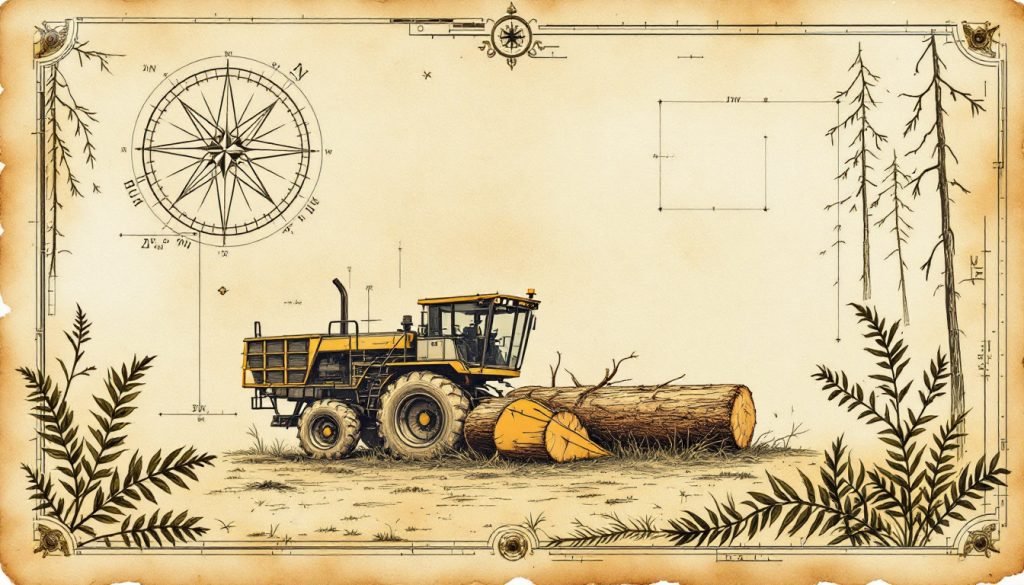
- A forestry processor delimbs, measures, and bucks felled stems — it does not fell standing trees. Processors pair with feller-bunchers in cut-to-length systems to maximize harvest throughput and timber value. Bucking optimization software on modern processor heads can increase recoverable timber value by 8–15 percent. Head capacity must match stand diameter and species or high-value stems get skipped or equipment gets damaged. Before signing a logging contract, verify the processor's head specs, software programming, and maintenance records.
If you have watched a modern timber harvest from the road and wondered how a single machine can turn a standing tree into a neat stack of cut logs in under two minutes, you have already witnessed a forestry processor at work. Property owners managing timber land, foresters planning harvests, and tree professionals expanding into land clearing all encounter this machine — and most underestimate how central it is to the entire workflow. The forestry processor is not simply a fancy chainsaw on a boom arm. It is the mechanical brain of the harvesting system, and understanding its role clarifies every other decision made on a logging site.
The confusion usually starts because the term “processor” gets used loosely. Some people call feller-bunchers processors. Others use the word to describe any machine with a harvesting head. I am Michael Hartman, ISA Board Certified Master Arborist TX-0198B, and over three decades of working with timber operations alongside conventional arboricultural work, I have seen that confusion cost landowners real money — in mismatched equipment contracts, inefficient harvests, and timber left on the ground. By the end of this article, you will know precisely what a forestry processor does, how it fits into the feller-buncher workflow, what mechanical principles drive its performance, and what to look for when evaluating a logging contractor’s equipment plan.
This is not a machine for homeowners to operate. But understanding it is absolutely within reach — and it will make you a far more informed partner in any commercial timber or land-clearing project on your property.
What a Forestry Processor Actually Is
A forestry processor is a purpose-built machine that takes a felled, delimbed, or whole tree stem and performs three sequential operations: delimbing (stripping branches), measuring (determining log length), and bucking (cross-cutting the stem into specific log lengths). Some processor heads also debark the stem, though that function is more common in mill-yard processors than in cut-to-length field units. The machine does not fell trees. That distinction is critical. The processor’s job begins after the tree is on the ground.
Forestry Processor: A harvesting machine or attachment that delimbs, measures, and bucks felled tree stems into specified log lengths — distinct from a feller-buncher, which cuts and accumulates standing trees.
Most field processors are either purpose-built tracked or wheeled machines with a processing head mounted on a boom, or they are excavator-based carriers fitted with a processing head as an attachment. The processing head itself contains feed rollers that grip and advance the stem, delimbing knives that strip branches as the stem moves through, an encoder wheel that measures stem length in real time, and a top saw or bar saw that bucks the log at the programmed length. Modern heads from manufacturers like Ponsse, John Deere, and Komatsu Forest run computerized optimization software that calculates the best cutting pattern for each individual stem based on diameter taper and target log specifications — all in seconds.
The result is a machine that can process a 14-inch-diameter pine stem into four 8-foot pulpwood logs and one 16-foot sawtimber log in roughly 45 to 90 seconds, depending on stem length and species density. That speed is what makes the processor the throughput bottleneck or the throughput engine of the entire harvest, depending on how well the operation is planned.
The Mechanical Logic Behind Processing: How the Head Works
The processing head operates on a feed-and-measure cycle that is elegant in its simplicity but demanding in its engineering tolerances. When the operator positions the head over a felled stem, the feed rollers — typically two to four hardened steel rollers with aggressive tread patterns — clamp the stem and begin pulling it through the head at speeds between 3 and 6 meters per second. As the stem moves, the delimbing knives, which are spring-loaded or hydraulically actuated blades arranged in a ring around the stem path, press against the stem surface and shear off branches at their base.
The encoder wheel rides directly on the stem surface and sends continuous position data to the onboard computer. When the measured length matches the target specification, the saw fires. On most modern heads, this is a bar saw driven by a dedicated hydraulic motor, capable of cutting through a 20-inch hardwood stem in under three seconds. The computer logs each cut, tracks stem volume, and adjusts the cutting pattern dynamically if the stem tapers faster than expected — a function called stem optimization or bucking optimization. This is not a minor feature. On a high-value hardwood harvest, optimized bucking can increase recoverable timber value by 8 to 15 percent compared to manual chainsaw bucking, simply by placing cuts where diameter and length specifications align most profitably.
Pro Tip: When reviewing a logging contractor’s equipment plan, ask specifically whether their processor head runs bucking optimization software and what log specifications it is programmed to. A head running outdated or generic parameters on your timber can leave significant value on the ground — I have seen landowners lose $40 to $80 per thousand board feet simply because the processor was cutting to the wrong length specifications for the receiving mill.
Hydraulic flow requirements for processing heads are substantial — most heads require 150 to 300 liters per minute at pressures between 250 and 350 bar. This is why the carrier machine matters as much as the head itself. An underpowered carrier running a large processing head will show sluggish feed speeds and slow saw cycles, reducing productivity and increasing fuel consumption per unit of timber processed.
Where the Processor Fits in the Feller-Buncher Workflow
In a conventional cut-to-length (CTL) harvesting system, the processor and the feller-buncher operate as a paired team. The feller-buncher — a machine equipped with a disc saw or bar saw felling head — moves through the stand, cuts trees at the stump, and accumulates several stems in its accumulating head before laying them in a bunch on the ground. The processor follows behind, working through the bunches systematically. A well-matched CTL system typically pairs one processor with one feller-buncher, though on high-volume sites, two feller-bunchers may feed a single high-capacity processor.
The spatial relationship between the two machines is deliberate. The feller-buncher lays bunches in rows oriented perpendicular to the strip roads, with the butt ends of the stems pointing toward the road. The processor then works along the strip road, reaching out with its boom to grab stems from the bunch, pulling them through the head, and stacking the cut logs in sorted piles beside the road for the forwarder to collect. This layout minimizes boom reach, reduces cycle time, and keeps the processor on firm ground rather than driving over the slash and soil disturbance left by the feller-buncher.
In a whole-tree harvesting system, the workflow differs. The feller-buncher still cuts and accumulates trees, but instead of a processor working in the strip, a skidder drags whole trees to a central landing, where a stationary or semi-mobile processor — sometimes called a slasher or landing processor — handles the delimbing and bucking. This system is common in softwood pulpwood operations in the southeastern United States, where stem uniformity makes landing processing efficient. CTL systems dominate in Scandinavia and are increasingly common in the Pacific Northwest and Great Lakes regions where terrain and species diversity favor in-strip processing.
Processor Versus Feller-Buncher: Understanding the Distinction
The single most common point of confusion among landowners and even some forestry professionals is conflating the processor with the feller-buncher. The feller-buncher’s job is purely mechanical severance and accumulation — it cuts the tree at the stump and holds multiple stems in its accumulating head until it lays a bunch. It does not delimb, measure, or buck. A feller-buncher with a disc saw head can fell a 20-inch pine in under five seconds, but it delivers a whole tree to the ground, branches and all.
| Machine Function | Feller-Buncher | Forestry Processor |
|---|---|---|
| Fells standing trees | Yes | No |
| Accumulates multiple stems | Yes | No |
| Delimbs stems | No | Yes |
| Measures log length | No | Yes |
| Bucks logs to specification | No | Yes |
| Operates on standing timber | Yes | No |
Some harvesting heads — called single-grip harvester heads — can both fell a standing tree and process it in one continuous operation. These are common on smaller-diameter timber in Scandinavian-style single-grip harvesters. However, on large-diameter timber or in high-production operations, the productivity gains from specialization — a dedicated feller-buncher working ahead and a dedicated processor following — outweigh the capital cost of running two machines. A single-grip harvester felling and processing a 16-inch pine might take 90 seconds per tree. A feller-buncher and processor team working the same tree as part of a bunch can achieve effective cycle times of 30 to 45 seconds per stem.
Species and Stem Characteristics That Affect Processor Performance
Not all timber processes equally, and the species composition of your stand directly affects processor productivity and head wear. Softwoods — loblolly pine, Douglas fir, lodgepole pine — feed smoothly through processing heads because their branch attachment angles are predictable and their wood density is relatively uniform. Hardwoods present more challenges. Species like red oak, hickory, and hard maple have denser wood, more variable branch angles, and higher silica content in some cases, all of which increase wear on delimbing knives and saw bars.
Stem diameter also matters significantly. Most field processing heads are rated for maximum stem diameters between 20 and 28 inches at the butt. Attempting to process stems larger than the head’s rated capacity causes feed roller slippage, incomplete delimbing, and accelerated mechanical wear. On a mixed hardwood stand in the Appalachians where co-dominant oaks might reach 30 inches DBH, a contractor running a mid-size processing head will either skip the largest stems — leaving high-value timber on the ground — or damage their equipment trying to force oversized stems through the head. Matching head capacity to stand characteristics is a pre-harvest planning requirement, not an afterthought.
Frozen stems in northern climates present a separate challenge. At temperatures below minus 10 degrees Celsius, frozen wood can cause saw bar pinching and feed roller slippage, and delimbing knives may deflect rather than shear branches cleanly. Many northern operators adjust processing speeds and hydraulic pressures seasonally to account for these conditions.
Evaluating a Logging Contractor’s Processor Setup
When a logging contractor submits a harvest plan for your property, the equipment list deserves scrutiny. The processor model and head specification should match your stand’s average stem diameter, species mix, and target log specifications. Ask the contractor what mill or buyer they are delivering to and confirm that the processor’s onboard computer is programmed with that buyer’s log length and diameter specifications. A processor cutting 8-foot pulpwood when your mill contract calls for 100-inch chips is a costly mismatch that shows up in your timber check, not the contractor’s.
Questions to Ask Your Logging Contractor About Their Processor
- What is the maximum stem diameter your processing head is rated for?
- Is the head running current bucking optimization software, and what log specifications are programmed?
- What is the carrier machine’s hydraulic flow capacity, and does it match the head’s requirements?
- How is the processor paired with the feller-buncher — CTL in-strip or whole-tree landing processing?
- What is the maintenance interval for delimbing knives and saw bars, and when were they last replaced?
Delimbing knife condition is a detail that separates experienced operators from careless ones. Dull or chipped knives do not shear branches cleanly — they tear them, leaving branch stubs on the log that reduce grade and value. A well-maintained processing head on a pine operation should have knives inspected every 8 to 12 operating hours and replaced or sharpened when edge wear exceeds manufacturer tolerances. Ask to see the maintenance log. A contractor who cannot produce one is telling you something important about how they run their equipment.
Environmental and Site Considerations for Processor Operations
The processor’s ground pressure and mobility characteristics affect the harvest site in ways that matter long after the timber is gone. Tracked processors distribute weight more evenly than wheeled machines and are preferred on soft or wet soils where rutting is a concern. On sites with seasonal wet areas or stream buffers, the processor’s ability to work from the strip road without driving into sensitive zones is a significant advantage of the CTL system — the boom reach of 8 to 12 meters allows the machine to process stems from adjacent buffer zones without entering them.
Slash management is another processor-related site consideration. The delimbing process generates substantial volumes of branches and tops, which the processor deposits as slash along the strip road. This slash mat actually serves a protective function — subsequent passes by the forwarder run over the slash, which cushions the soil and reduces compaction. Experienced operators deliberately manage slash placement to create effective mats on the most trafficked strips. On sites with erosion risk or reforestation requirements, the slash distribution pattern from the processor can be specified in the harvest plan as a best management practice.
What Landowners and Tree Professionals Should Take Away
The forestry processor’s role in a logging operation is precise, specialized, and consequential. It is the machine that converts raw felled timber into merchantable product, and its performance — in terms of head capacity, software optimization, and maintenance condition — directly determines how much value your timber realizes at the mill. Understanding that the processor and the feller-buncher are distinct machines with distinct functions is the foundation for evaluating any harvest proposal intelligently.
For tree professionals expanding into land clearing or timber harvesting, the processor represents a significant capital investment — purpose-built units with quality processing heads run from $350,000 to over $700,000 new — but also the productivity multiplier that makes commercial-scale harvesting economically viable. For landowners, the takeaway is simpler: ask about the processor. Ask about the head specs, the software, the maintenance records, and the log specifications it is programmed to cut. Those questions, asked before the harvest begins, are the difference between a timber sale that meets your financial expectations and one that leaves you wondering where the value went.
If your property involves timber of any commercial scale, engage a consulting forester or a credentialed arborist with timber experience before signing a logging contract. The equipment plan is as important as the timber cruise, and the processor is the machine at the center of it.