Understanding Hot Saw Buncher Safety Risks
Hot saw feller-bunchers are powerful but dangerous. Learn the key safety risks every operator and site supervisor must understand before running these machines.
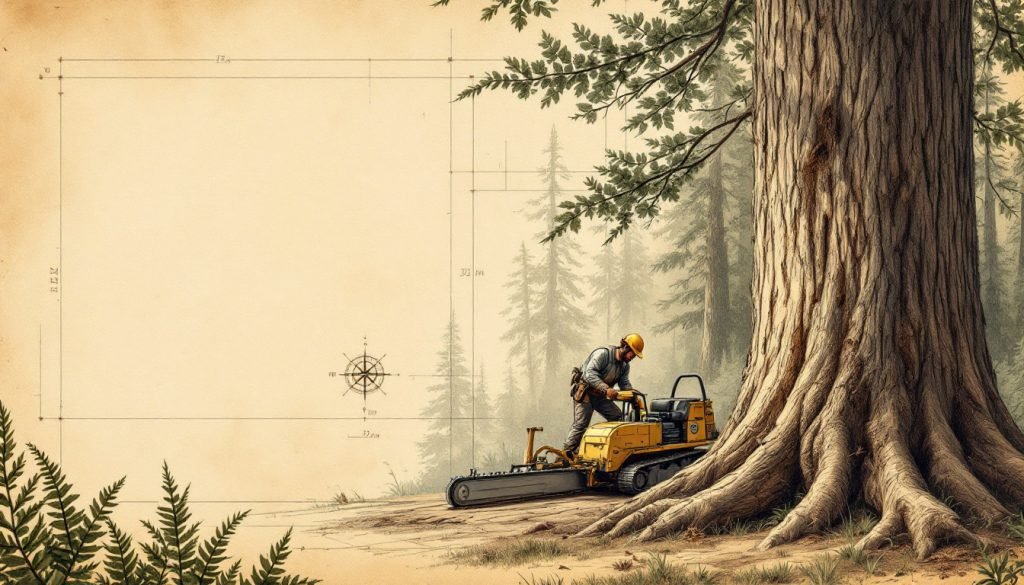
- Hot saw bunchers use high-speed rotating discs that can eject carbide teeth at over 200 feet per second. Disc cracking from thermal fatigue is invisible without a stationary, clean inspection before each shift. Exclusion zones around operating bunchers must be enforced for all personnel, not just posted as signage. Fire risk from accumulated sawdust is highest in drought conditions when cutting resinous or dense hardwood species. Arborists coordinating with logging crews should conduct pre-harvest assessments to flag high-risk stems before the buncher encounters them.
If you have spent time on a commercial timber harvest or large-scale land clearing operation, you already know that feller-bunchers are among the most productive machines on the job site. The hot saw variant — equipped with a circular disc or drum cutting head rather than a shear — can fell and accumulate trees at a pace that no chainsaw crew can match. That productivity, however, comes with a set of hazards that are distinct from conventional chainsaw felling and that catch operators off guard precisely because the machine feels so controlled from inside the cab. The speed, the torque, and the mechanical complexity of the hot saw system create injury and fatality risks that deserve serious, systematic attention.
Michael Hartman, ISA Board Certified Master Arborist (TX-0198B), has worked alongside logging and land-clearing crews for decades and has seen firsthand how quickly a misunderstood hazard on a hot saw buncher can turn a productive day into a tragedy. This article breaks down the specific mechanical, environmental, and operational risks associated with hot saw feller-bunchers so that operators, supervisors, and tree care professionals who coordinate with logging equipment can make informed decisions about training, site preparation, and machine maintenance.
By the end, you will understand why hot saw bunchers present unique dangers compared to shear-head machines, what the most common injury mechanisms are, how environmental conditions amplify those risks, and what pre-shift and operational protocols reduce exposure to serious harm.
What Makes a Hot Saw Buncher Different from Other Feller-Bunchers
The term “hot saw” refers to the high-speed rotating cutting disc or drum mounted on the feller-buncher’s boom. Unlike a shear head, which uses hydraulic pressure to squeeze and snap a stem, the hot saw uses a spinning steel disc — often 28 to 36 inches in diameter — studded with carbide-tipped teeth that spin at several hundred RPM to slice through wood. This design handles larger-diameter trees and harder species that would stall or damage a shear head, making it the preferred choice for hardwood stands and mature timber operations.
Hot Saw Feller-Buncher: A self-propelled harvesting machine equipped with a rotating disc or drum cutting head that saws through tree stems at the base, then accumulates multiple stems in a grapple before depositing them as a bunch for skidder retrieval.
The mechanical difference has direct safety implications. A shear head stores energy hydraulically and releases it in a controlled squeeze. A hot saw stores kinetic energy in a spinning mass. When that spinning disc contacts a hard object — a buried rock, a metal fence post, a previously cut stump with embedded hardware — it does not simply stall. It can throw fragments at velocities exceeding 200 feet per second. The cab’s polycarbonate windows and FOPS-rated guarding exist specifically to intercept those projectiles, but they are not infallible, and anything outside the cab is fully exposed.
Hot saw heads also generate significant heat through friction, which is where the colloquial name originates. That heat creates fire risk, particularly in dry conditions or when cutting resinous species such as loblolly pine, slash pine, or Douglas-fir. Sawdust and wood fiber accumulate on the cutting head, on the boom, and in the engine compartment, and in drought conditions that material can ignite from the cutting friction alone.
The Mechanical Hazards of the Cutting Head
The cutting disc itself is the primary mechanical hazard on a hot saw buncher. Carbide-tipped teeth are brazed or mechanically fastened to the disc body, and those attachment points fatigue over time. A tooth that separates from a disc spinning at 400 to 600 RPM becomes a ballistic projectile. Tooth ejection events have caused fatalities at distances exceeding 100 feet from the machine, which is why exclusion zones around operating feller-bunchers are not a suggestion — they are a hard safety requirement. OSHA’s logging standard at 29 CFR 1910.266 and 29 CFR 1926.955 both address machine guarding and exclusion zones, though specific distance requirements are often set by company safety plans rather than a single federal number.
Disc cracking is a related hazard. Repeated thermal cycling — the disc heats during cutting and cools during travel — creates stress fractures that are invisible to a visual inspection unless the operator is specifically looking for them with the disc stationary and clean. A cracked disc that fails catastrophically during operation can send large steel fragments through the cab guarding. Manufacturers specify disc replacement intervals based on hours of operation and number of stems cut, and those intervals exist because metallurgical fatigue is real and predictable. Skipping scheduled disc inspections is one of the most dangerous maintenance shortcuts in the industry.
The grapple arms that hold accumulated stems also present pinch and crush hazards during maintenance. Hydraulic pressure in the grapple circuit can hold arms in a partially open position even when the machine is shut down, and a technician reaching into the grapple area to clear debris can be caught if a hydraulic valve shifts. Lockout/tagout procedures that bleed hydraulic pressure before any hands-on maintenance are non-negotiable on these machines.
Ejection and Projectile Risks During Tree Felling
Wood ejection during felling is a hazard that surprises operators who transition from chainsaw work to machine felling. When the hot saw disc contacts a tree stem, the cutting action can cause the stem to kick, split, or eject wood chips and larger fragments in unpredictable directions. Leaning trees — those with significant crown weight offset from the stem centerline — are particularly dangerous because the stored energy in the lean is released suddenly when the cut is nearly complete, and the stem can move in a direction the operator did not anticipate even from inside the cab.
Pro Tip: Before making any cut on a leaning tree with a hot saw buncher, assess the lean direction from two perpendicular angles on the ground before you enter the cab. A lean that looks minor from the operator’s seat can represent 15 to 20 degrees of offset when viewed from the side — enough to send a 24-inch stem moving hard in the wrong direction the moment the cut completes. Experienced operators position the boom to pre-load against the lean before the disc contacts the wood.
Hung trees — stems that are cut but caught in the crowns of adjacent standing trees — are another ejection risk specific to buncher operations. When the operator attempts to free a hung tree by pushing or shaking it with the boom, the sudden release can send the hung stem swinging or falling in an uncontrolled arc. The cab provides some protection, but the machine’s tracks or wheels can be struck by the falling stem, destabilizing the machine on slopes. On grades exceeding 15 degrees, a destabilized feller-buncher can tip, which is among the leading causes of operator fatalities in tracked harvester operations.
Fire Risk: A Hazard Unique to Hot Saw Operations
Chainsaw operators understand fire risk from bar and chain friction, but the hot saw buncher generates heat at a scale that chainsaw work does not approach. The cutting disc produces a continuous stream of fine wood fiber and sawdust that coats every surface of the cutting head assembly. In conditions with relative humidity below 25 percent — common in Texas, the Southeast, and the Pacific Northwest during summer drought — that accumulated material can ignite from cutting friction alone, particularly when the operator is cutting dense hardwoods like post oak or water oak where the disc dwells longer in the cut.
Engine compartment fires are a separate but related concern. Feller-bunchers run hard, and hydraulic lines, fuel lines, and turbocharger components operate at high temperatures. Wood debris that accumulates in the engine compartment provides fuel for a fire that can start from a hydraulic leak contacting a hot surface. Pre-shift cleaning of the engine compartment and cutting head assembly is not just a maintenance task — it is a fire prevention protocol. Many logging operations in fire-prone regions require operators to carry a pressurized water extinguisher rated for Class A fires and to perform a mid-shift cleaning stop during high fire danger days.
Pre-Shift Hot Saw Buncher Safety Checklist
- Inspect cutting disc for cracks, missing teeth, and loose tooth fasteners with disc stationary and clean
- Check all cab guarding — FOPS panels, polycarbonate windows, and door latches — for integrity before starting
- Clear accumulated wood debris from engine compartment, cutting head, and boom pivot points
- Verify hydraulic fluid level and inspect visible hydraulic lines for abrasion or weeping fittings
- Confirm fire extinguisher is charged, accessible, and within operator reach from the seat
- Walk the intended work area for buried debris, old fence lines, and slope hazards before the first cut
Environmental and Site Conditions That Amplify Risk
Slope is the single most consequential site variable for hot saw buncher safety. Tracked machines are more stable than wheeled bunchers on grades, but both types have manufacturer-rated maximum operating slopes that are frequently exceeded in production pressure situations. On slopes above 20 degrees, the center of gravity shifts as the boom extends and loads a heavy stem, and the combination of boom extension and stem weight can tip a machine that would be perfectly stable on flat ground. Side slopes are more dangerous than uphill or downhill grades because the machine’s stability envelope is narrowest in the lateral direction.
Soft or saturated soils create a different category of risk. A machine that breaks through a frozen or crusted soil surface can drop suddenly, shifting the cab angle and potentially trapping the operator if the machine rolls. Wet conditions also reduce the effectiveness of the tracks’ grip, making controlled movement on slopes unreliable. Experienced operators probe soft areas with the boom before committing the machine’s full weight, and they avoid cutting on slopes where the soil has been saturated by recent heavy rain.
Underground utilities and buried infrastructure are a hazard that is easy to overlook on land-clearing operations adjacent to developed areas. A hot saw disc that contacts a buried gas line does not simply cut it — the friction and heat can ignite the escaping gas immediately. Pre-operation utility locates are required by law in most jurisdictions, but the locate process does not always capture private lines, irrigation systems, or abandoned infrastructure that is not in the utility database.
Operator Training and Certification Gaps
Hot saw feller-bunchers are not intuitive machines. The controls are complex, the machine’s response to boom extension changes the stability envelope in real time, and the cutting head behavior varies significantly between species, stem diameters, and wood moisture conditions. Despite this complexity, there is no federally mandated certification program specifically for feller-buncher operators in the United States. OSHA’s logging standard requires that operators be trained and that training be documented, but the content and depth of that training is left to employers.
The practical result is that operators are frequently trained by more experienced co-workers in an informal apprenticeship model, which transmits good habits when the mentor is skilled but also transmits bad habits and normalized risk-taking when the mentor has developed shortcuts over years of production pressure. Formal training programs offered by equipment manufacturers — John Deere, Tigercat, Ponsse, and others all offer operator training — provide a structured baseline that informal mentorship often skips, particularly around disc inspection protocols and exclusion zone enforcement.
Common Mistakes to Avoid
- Skipping disc inspection between shifts: Operators under production pressure often skip the stationary disc inspection, missing developing cracks or loose teeth that will fail during the next cutting cycle.
- Allowing ground personnel inside the exclusion zone: On busy sites, ground workers sometimes enter the machine’s operating radius to move brush or set chokers, assuming the operator sees them. The operator’s sightlines from the cab do not cover all angles, and a tooth ejection event does not wait for a clear zone.
- Cutting on slopes beyond the machine’s rated grade: Manufacturers publish maximum operating slopes in the operator’s manual. Exceeding those grades, even briefly, is a leading factor in tip-over incidents.
- Neglecting mid-shift debris cleaning in fire conditions: Accumulated sawdust on the cutting head and engine compartment is treated as a cosmetic issue until a fire starts. In dry conditions, cleaning every two to three hours of operation is a minimum standard.
What Supervisors and Arborists Coordinating with Logging Crews Need to Know
Tree care professionals and arborists who work on projects that involve feller-buncher operations — whether coordinating a timber harvest before a development project or managing a large-scale storm debris clearing effort — need to understand that the safety rules governing these machines apply to everyone on the site, not just the equipment operators. An ISA-certified arborist walking a site to assess residual trees has no business being within 200 feet of an operating hot saw buncher without explicit communication with the operator and a confirmed machine stop.
Arborists can add value to logging operations by identifying high-risk trees before the buncher operator encounters them — trees with significant lean, hollow stems, co-dominant leaders with included bark, or root systems compromised by disease. A pre-harvest tree assessment that flags these stems allows the operator to plan cuts differently or defer specific trees to chainsaw crews who can use conventional felling techniques with better directional control. That kind of interdisciplinary coordination reduces risk for everyone on the site and often improves the quality of the residual stand when selective harvest is the goal.
Building a Safer Hot Saw Operation: Action Steps
The risks associated with hot saw feller-bunchers are real, but they are manageable with the right protocols. Mechanical hazards are addressed through rigorous pre-shift inspection and adherence to manufacturer maintenance intervals — particularly disc replacement schedules. Ejection and projectile risks are controlled through exclusion zones that are enforced without exception, not just posted on a sign. Fire risk is managed through debris cleaning protocols tied to weather conditions, not just the calendar. Operator error is reduced through formal training that goes beyond the informal apprenticeship model.
For site supervisors, the most important single action is establishing and enforcing a written exclusion zone policy that specifies the minimum distance from an operating buncher for all non-operator personnel, the communication protocol for entering that zone, and the consequence for violations. For operators, the most important habit is the pre-shift disc inspection — five minutes with a clean disc and a flashlight that can prevent a catastrophic failure during the first hour of cutting. For arborists and tree care professionals coordinating with logging equipment, the key is understanding that the cab does not make the operator invincible, and that the machine’s speed and power amplify every hazard that exists in conventional tree felling work.
If you are responsible for a site where hot saw bunchers are operating, treat the safety planning for those machines with the same rigor you would apply to any other high-consequence work environment. The productivity gains these machines deliver are real — and so are the consequences when their specific hazards are not taken seriously. Arborists and supervisors should also ensure operators use personal protective equipment as required, and consult the equipment catalog for additional safety resources.