A Field Guide to Excavator Feller Buncher Attachment
Master arborist Michael Hartman breaks down excavator feller buncher attachments—how they work, when to use them, and what operators must know.
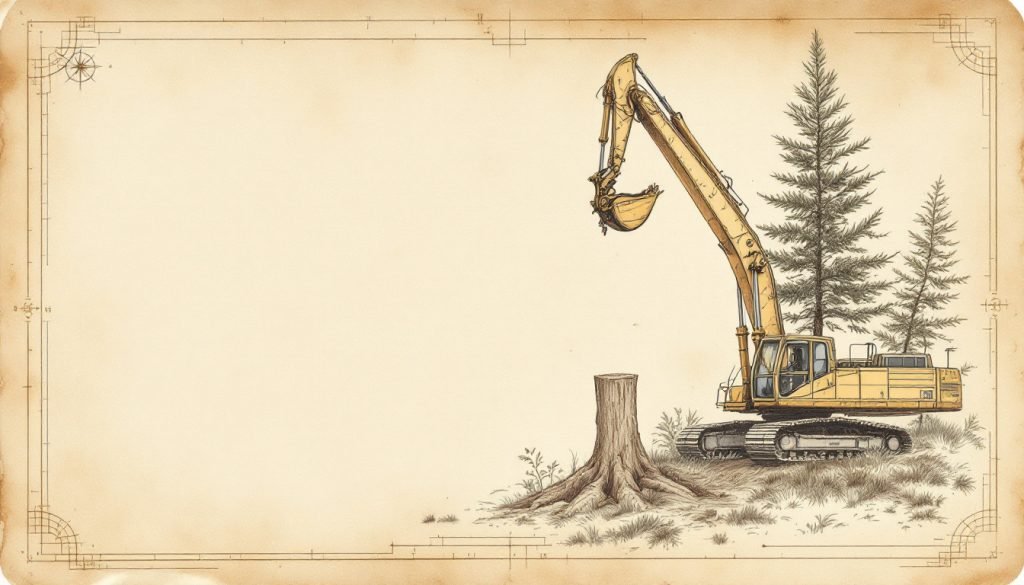
- Excavator feller buncher attachments fell, accumulate, and place trees in one hydraulic motion, keeping ground crews clear of the cutting zone.
When a land clearing project moves beyond what a chainsaw crew can safely handle—dense second-growth timber, steep terrain, or tight production deadlines—contractors and forestry professionals reach for an excavator feller buncher attachment. These hydraulic cutting heads transform a standard excavator into a purpose-built harvesting machine capable of felling, accumulating, and placing trees in a single fluid motion. If you have arrived here because you are evaluating attachments for a right-of-way job, a timber harvest, or a large-scale site prep contract, you are in the right place.
The excavator feller buncher attachment occupies a specific niche in the forestry equipment world. It is not a mulcher, not a grapple saw, and not a traditional tracked feller buncher. Understanding exactly what it is—and what it is not—determines whether it is the right tool for your operation. Michael Hartman, ISA Board Certified Master Arborist (TX-0198B), has evaluated these systems on commercial timber sites, utility corridors, and large residential land clearing projects across the southern United States, and the guidance in this article reflects that hands-on experience alongside manufacturer specifications and forestry engineering principles.
By the end of this guide, you will understand the mechanical principles behind these attachments, how to match head type to carrier and timber conditions, what pre-operation checks protect both the machine and the operator, and where this technology fits—and does not fit—within a broader tree care or land management operation.
What an Excavator Feller Buncher Attachment Actually Does
At its core, an excavator feller buncher attachment is a hydraulic cutting head mounted to the stick of a standard or purpose-modified excavator. The head clamps around the base of a standing tree, severs it at the stump using either a disc saw or a bar saw, and then holds the felled stem while the excavator boom swings it to a designated bunching area. This accumulation function—holding multiple stems before placing them—is what separates a feller buncher head from a simple grapple saw, which cuts and drops without controlled placement.
Feller Buncher Attachment: A hydraulic forestry head mounted to an excavator that combines tree clamping, cutting, and stem accumulation into a single attachment, allowing one machine and one operator to fell and sort timber without ground personnel near the cutting zone.
The hydraulic circuit of the host excavator drives both the cutting element and the accumulator arms. Disc saw heads—the most common type in North American forestry—spin a carbide-tipped circular blade at speeds typically between 1,000 and 1,400 RPM, driven by a dedicated hydraulic motor. The accumulator arms, usually two to four padded steel clamps, grip the stem before the cut is completed, preventing the tree from falling uncontrolled. Once the cut is clean, the operator swings the boom and deposits the stem, then returns for the next tree. A skilled operator on suitable terrain can process 60 to 120 stems per hour depending on tree size and spacing.
Bar saw heads use a chain-driven cutting bar rather than a disc, which allows them to handle larger-diameter trees that exceed the cutting capacity of a disc saw. However, bar saws are slower per cut and require more frequent maintenance. For most site prep and right-of-way applications involving trees under 24 inches DBH (diameter at breast height), a disc saw head is the production choice.
Carrier Compatibility and Hydraulic Requirements
Matching the attachment to the carrier excavator is the single most important specification decision in this equipment category. An undersized excavator cannot supply the hydraulic flow and pressure a large feller buncher head demands, resulting in slow cycle times, overheated hydraulic fluid, and premature component wear. An oversized head on a light carrier creates dangerous instability during the swing cycle, particularly on slopes.
Most mid-range feller buncher heads in the 20- to 36-inch cutting capacity range require auxiliary hydraulic flow between 45 and 80 gallons per minute (170 to 300 liters per minute) at operating pressures of 3,500 to 5,000 PSI. Excavators in the 20- to 35-metric-ton class typically meet these requirements, though the host machine must be configured with a high-flow auxiliary circuit—not all excavators of this size class come standard with adequate auxiliary capacity. Always verify the attachment manufacturer’s flow and pressure specifications against the excavator’s auxiliary circuit data sheet before purchase or rental.
Pro Tip: Before committing to an attachment, run the excavator’s auxiliary circuit through a flow meter under load. Rated flow figures in the operator’s manual are often measured at low back pressure. Real-world flow to a feller buncher head—with all the hydraulic line losses factored in—can be 10 to 15 percent lower than the spec sheet suggests. That gap matters when you are trying to spin a disc saw at full RPM in dense hardwood.
Counterweight configuration also matters. Feller buncher heads are heavy—commercial disc saw heads typically weigh between 2,200 and 4,400 pounds (1,000 to 2,000 kg)—and the leverage arm created by a fully extended boom holding a large stem can push an excavator past its rated lift capacity. Operators should consult the excavator’s load chart for the specific working radius and confirm that the combined weight of the attachment plus the largest anticipated stem does not exceed 75 percent of the rated lift capacity at that radius. This margin accounts for dynamic loading during the swing cycle.
Disc Saw vs. Bar Saw Heads: Choosing the Right Cutting System
The choice between a disc saw head and a bar saw head shapes every aspect of production—cycle time, maintenance schedule, cutting diameter limit, and stump quality. Neither system is universally superior; the right choice depends on the timber profile of the specific job.
| Characteristic | Disc Saw Head | Bar Saw Head |
|---|---|---|
| Maximum cutting diameter | Typically 18–30 inches | Typically 24–48 inches |
| Cycle time per stem | Faster (2–5 seconds per cut) | Slower (5–15 seconds per cut) |
| Maintenance frequency | Carbide tip replacement every 4–8 hours in abrasive soil | Chain sharpening every 1–3 hours |
| Best application | Site prep, right-of-way, small to medium timber | Large-diameter hardwood, selective harvest |
| Stump quality | Clean, flat cut | Clean cut, slight chain kerf |
In right-of-way clearing for utility corridors—one of the most common applications for excavator-mounted feller buncher heads—the timber profile is typically mixed species in the 6- to 18-inch DBH range, which plays directly to the disc saw’s strengths. The speed advantage compounds over a full shift: a disc saw head processing 80 stems per hour versus a bar saw at 50 stems per hour represents a 37 percent production difference on a 10-hour day. On a multi-week corridor project, that gap translates directly to contract profitability.
Bar saw heads earn their place in selective timber harvest operations where individual trees may exceed 30 inches DBH, or in regions with large-diameter hardwood species like white oak or pecan that a disc saw simply cannot cut. Some contractors run both head types on the same project, switching based on the timber encountered in different sections of the site.
Pre-Operation Inspection Protocol
An excavator feller buncher attachment operates under extreme mechanical stress. The disc saw motor accelerates a heavy steel blade to full RPM hundreds of times per shift. The accumulator arms clamp and release against stems that may be green, frozen, or loaded with embedded rock and wire. A missed inspection item is not a minor inconvenience—it is a potential catastrophic failure in a zone where falling timber and rotating steel are already present.
Pre-Shift Inspection Checklist
- Inspect all carbide saw tips for cracking, missing segments, or excessive wear—replace any tip showing more than 30 percent wear before starting
- Check hydraulic hose connections at the head for weeping seals, chafed outer jackets, or loose fittings; torque to manufacturer spec
- Verify accumulator arm pivot pins and retaining hardware are fully seated and cotter-pinned
- Confirm disc saw blade mounting bolts are torqued to specification and that the blade runs true with no visible wobble at idle speed
- Inspect the head-to-stick mounting bracket for cracks, elongated bolt holes, or weld failures at high-stress corners
- Test accumulator arm open/close function through full range of motion before entering the cutting area
Hydraulic oil temperature is a critical operational parameter that many operators overlook during pre-operation. Feller buncher heads generate significant heat in the hydraulic circuit, particularly during high-production disc saw operation. Allow the excavator’s hydraulic system to reach operating temperature—typically 120 to 140 degrees Fahrenheit—before demanding full flow to the cutting head. Cold hydraulic oil is more viscous, flows less freely through the motor, and can cause cavitation damage to the saw motor during the first few minutes of operation.
Terrain and Site Conditions That Affect Performance
The excavator platform gives the feller buncher head a significant terrain advantage over tracked feller bunchers. A conventional tracked feller buncher is a purpose-built machine with a fixed undercarriage designed for relatively level ground. An excavator, by contrast, can work on slopes up to approximately 30 degrees with appropriate counterweight configuration, reach over obstacles, and reposition its undercarriage without moving the entire machine out of the cutting zone.
Wet, soft ground is the primary terrain limitation. Excavators in the 25- to 35-ton class exert ground pressures between 5 and 8 PSI on standard track shoes—acceptable on firm ground but problematic on saturated clay or peat soils common in bottomland hardwood sites. Wide track shoe extensions can reduce ground pressure to the 4 to 5 PSI range, extending the working season on marginal soils. Operators should probe soft areas with the bucket before committing the machine to a new section of the site.
Rocky terrain presents a different challenge. Subsurface rock encountered during the cut can deflect the disc saw blade, causing tip loss or, in severe cases, blade fracture. On sites with known rock outcrops or shallow bedrock, bar saw heads are more forgiving because the chain can flex slightly around a rock contact point rather than taking the full impact on a rigid carbide tip. Operators working rocky terrain should reduce swing speed and approach each stem more slowly to allow the accumulator arms to stabilize the tree before the cut begins.
Common Mistakes That Cost Production and Equipment Life
Experienced operators develop an intuition for the attachment that prevents most errors, but certain mistakes appear repeatedly across job sites and equipment classes. Recognizing them before they occur is worth the time investment.
Common Mistakes to Avoid
- Cutting outside the rated diameter: Attempting to fell a tree larger than the head’s rated cutting capacity forces the accumulator arms to their mechanical stop before the stem is fully gripped, resulting in uncontrolled falls and potential arm damage. Know the head’s rated capacity and walk away from oversized stems.
- Neglecting saw tip rotation: Disc saw blades have multiple carbide tip positions around the circumference. Operators who run the blade until one section of tips fails completely rather than rotating the blade to distribute wear shorten blade life significantly and risk an unbalanced blade at operating speed.
- Swinging too fast with a loaded head: The temptation to maximize cycle time by swinging quickly with a full accumulator load is understandable but dangerous. Dynamic loading during a fast swing with a heavy stem can exceed the excavator’s rated lift capacity at the working radius, tipping the machine or damaging the stick and boom.
- Skipping hydraulic warm-up in cold weather: Cold hydraulic oil causes cavitation in the disc saw motor during the first minutes of operation. This damage is cumulative and eventually destroys the motor’s internal components. A five-minute warm-up cycle at idle protects a component that costs several thousand dollars to replace.
Where Excavator Feller Buncher Attachments Fit in Tree Care Operations
For ISA-certified arborists and tree care companies, the excavator feller buncher attachment represents a capability that sits at the boundary between traditional arboriculture and commercial forestry. Most residential and commercial tree removal work—single trees in confined spaces, trees near structures, specimen removals requiring precise directional felling—is better served by climbing crews and cranes. The feller buncher attachment is a production tool, not a precision tool.
The attachment earns its place in tree care operations when the project scale shifts: large-scale land clearing for development, storm damage cleanup across multiple acres, utility line clearing contracts, or timber stand improvement on rural properties. On these projects, the speed and safety advantages of keeping ground workers away from the active felling zone are substantial. OSHA’s logging standards require specific separation distances between felling operations and other workers, and an excavator-mounted head satisfies those requirements more easily than a chainsaw crew working in close proximity.
Tree care companies entering the land clearing market should evaluate whether the attachment purchase or rental makes economic sense against their projected project volume. A quality disc saw head in the 24-inch cutting capacity range costs between $35,000 and $75,000 new, depending on manufacturer and features. Rental rates in active markets run $2,500 to $5,000 per month. For companies with a compatible excavator already in the fleet, the rental model allows market entry without capital commitment while the company builds the project pipeline to justify ownership.
What to Do Next: Putting This Knowledge to Work
If you are evaluating an excavator feller buncher attachment for an upcoming project, start with the hydraulic compatibility question—it is the specification that most often derails attachment purchases made on price alone. Pull the auxiliary circuit data from your excavator’s service manual, compare it against the attachment manufacturer’s minimum requirements, and confirm the match before anything else.
For tree care professionals expanding into land clearing, the pre-operation inspection protocol and terrain assessment sections of this guide translate directly into field practice. Build the inspection checklist into your crew’s daily startup routine from day one. Equipment that is inspected consistently lasts longer, produces more, and fails less often at the worst possible moment.
If you are a property owner or project manager evaluating bids for a clearing project that will use this equipment, ask the contractor to confirm the carrier-to-attachment match, verify that the operator has documented experience with the specific head type, and request a site walk to identify terrain conditions that might affect production or safety. A contractor who can answer those questions confidently is a contractor who understands the equipment. One who cannot is a risk you do not need to take on.
Understanding the subtle differences between dangle vs fixed head designs can further refine your selection, while comparing processor vs feller buncher capabilities helps clarify which tool best serves your specific project demands.