Measuring Tree Setback Distance: A Practical Guide
Learn why tree topping creates hazardous trees, triggers rapid decay, and ultimately kills 25-40% of topped trees within 5 years.
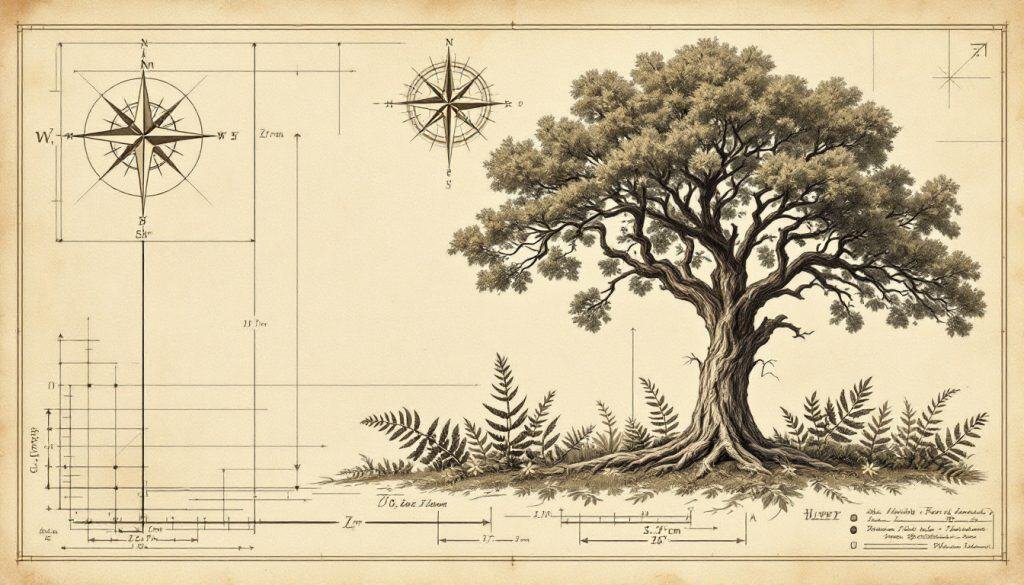
- Topping removes 50-100% of leaf area, forcing trees to burn stored reserves. Decay fungi colonize stubs within weeks, hollowing trunks while sprouts regrow. Epicormic sprouts attach weakly and tear out in storms, creating 4,000 lb hazards. Proper drop-crotch pruning reduces height safely over 2-3 seasons without killing the tree. If topping cuts exist, hire a TRAQ-certified arborist for decay assessment immediately.
You have a tall tree near the house, branches scraping the roof, maybe a limb over the power line. The tree service flyer in your mailbox offers a quick fix: “topping”—just lop off the top and shorten every limb. It sounds cheap, it sounds fast, and neighbors keep telling you to do it. Before you climb the ladder or hire the lowest bid, understand what topping actually does to a tree. Research from Purdue University shows 25-40% of topped urban trees die within five years; the survivors become structurally dangerous and costlier to remove later. By the end of this article you will know exactly why topping kills, how to spot the practice, and which proven alternatives keep both trees and property safe.
Michael J. Hartman, ISA Board Certified Master Arborist, has spent three decades cleaning up after failed topping cuts across Texas. The pattern never changes: flush cuts through the crown, epicormic sprouts shooting up like brush bristles, and internal columns of decay hidden from view. The biology is unforgiving—trees cannot “heal” the way animals do, and the wounds topping creates overwhelm their defense systems. Read on to see why the cheapest pruning bid is usually the most expensive mistake you can make.
What Tree Topping Actually Is—and Is Not
Topping is the indiscriminate cutting of mature stems or branches to stubs, removing 50-100% of a tree’s leaf-bearing crown. It is not the same as crown reduction, pollarding, or directional pruning; those techniques retain branch architecture and cut back to suitable laterals. Topping ignores branch collar location, leaf-to-wood ratios, and compartmentalization boundaries. The result is a flat-topped stump field that invites decay organisms and breaks the tree’s carbohydrate factory overnight.
Drive through older neighborhoods and you will recognize topped trees immediately: bare poles in winter, witch’s broom of thin sprouts in summer, bark seams cracked around stub ends. These sprouts grow 4-6 feet in a single season, but they attach to the outermost xylem rings, not the heartwood, making them prone to tear out in wind or ice. A topped silver maple can regrow 200-400 pounds of sprouts in three years—weight the original branch was never engineered to carry.
Term: Compartmentalization of Decay in Trees (CODIT) is the tree’s walling-off process that isolates wounded tissue by creating four chemical walls. Topping breaches all four walls at once.
The Biological Shock: How Topping Overwhelms Tree Defense
Trees store carbohydrates in twigs, branches, and trunk wood. When you remove the entire crown, you strip those reserves and eliminate photosynthetic surface overnight. The tree responds with emergency budding—epicormic shoots that originate from dormant buds under the bark. These shoots lack the branch collar protection of normal limbs, so the attachment zone is inherently weak. CODIT walls, normally laid down in concentric rings, cannot seal a flat stub because the vascular tissues are severed across the grain, exposing open vessels to air- and water-borne fungi.
Within weeks, wood-decay fungi such as Ganoderma and Schizophyllum colonize the pith. University studies show decay columns extending 18-24 inches downward from a 4-inch diameter stub within two growing seasons. Because the stub interior is already dead heartwood, the fungus advances unchecked, hollowing the trunk while the crown re-sprouts. Five to seven years later the sprouts look leafy but the main stem is a shell. When wind loading increases on the larger, heavier sprouts, the hollow trunk snaps precisely at the old topping line.
Pro Tip: If you must reduce height, never remove more than 25% of live foliage in one year. Cut back to lateral branches at least one-third the diameter of the parent stem; these laterals can form proper branch collars and continue CODIT wall formation.
Decay Timeline: What Happens Inside a Topped Trunk
Year 1: Cambium dies back 4-6 inches from the cut surface; bark cracks open; airborne basidiospores germinate. Year 2-3: Soft rot advances into heartwood; sprouts elongate 6-10 feet, adding leverage. Year 4-5: Decay column reaches 40-60% of trunk cross-section; compression and tension wood zones fail. Year 6-10: Sprouts develop included bark where they meet the trunk; entire top collapses during routine storms. Insurance claims often exceed the original pruning savings by 5-10×.
The process accelerates in fast-growing species: willow, poplar, silver maple, and Bradford pear. Oaks and pines react more slowly but ultimately succumb to the same internal rot. Once decay exceeds 30% of trunk diameter at the wound, removal becomes the only safe option; cabling or bracing cannot restore lost wall strength.
Warning Signs to Watch For
- Conks or shelf fungi: Mushroom bodies indicate advanced internal decay, often 2-3 feet below the old topping cut.
- Radial bark cracks: Vertical seams opening on the trunk show internal expansion from decay pressure.
- Epicormic sprout clusters: Dense whips growing straight up signal past topping and weak attachment points.
Safety Hazard: How Topped Trees Fail and Damage Property
When sprouts fail, they tear downward in long strips, peeling bark like a banana. Because the failure plane is already hollow, the break is sudden and unpredictable. A 6-inch diameter water sprout on a topped ash can weigh 300 pounds; falling 30 feet it impacts with over 4,000 pounds of force—enough to punch through a roof deck. After major storms, tree removal companies routinely find topped trees split in half while nearby untopped trees lost only small limbs.
Liability shifts to the property owner once topping damage is documented. Certified arborists photograph and record topping cuts during routine inspections; insurance adjusters use these photos to deny claims, citing improper maintenance. In some municipalities, topped trees are declared hazardous, forcing emergency removal at the owner’s expense.
Alternatives That Work: Crown Reduction, Thinning, and Drop-Crotch Cuts
Height reduction is possible without topping by using drop-crotch pruning: cut the stem back to a lateral branch at least one-third its diameter, angling the cut just outside the branch collar. This preserves the natural leader system and allows CODIT walls to form completely. A mature red oak can be lowered 8-10 feet over three years using progressive drop-crotch cuts, maintaining 60-70% of its foliage each season.
Crown thinning—removing up to 15% of selective branches—reduces wind sail effect without changing height. Directional pruning steers limbs away from buildings and wires while retaining natural taper. When clearance is critical, consider cable-bracing systems installed after proper pruning; high-strength steel cables reduce limb movement by 30-40% and are rated for 20-year service life.
Proper Height Reduction Steps
- Inspect entire crown for laterals at least 1/3 parent diameter
- Make reduction cuts at 45-60° angles outside the branch collar
- Remove no more than 25% live foliage per season
- Re-inspect annually for sprout response; thin epicormics if dense
- Document pruning with photos for insurance and future care plans
Regulations, Ordinances, and Tree Preservation Codes
Many Texas cities (Austin, Dallas, San Antonio) prohibit topping on heritage and protected trees. Violations carry fines of $500-$2,000 per tree plus mandatory replacement at 2:1 ratios. Homeowners associations increasingly amend CC&Rs to ban topping outright, requiring ISA-certified arborists for pruning permits. Before any work, check local codes; a free phone call to the city arborist can prevent costly penalties.
Professional vs DIY: When to Call a Certified Arborist
Small ornamental cherries or crape myrtles under 15 feet can sometimes be reduced by knowledgeable homeowners using hand pruners and pole saws, provided cuts stay under 2 inches diameter. Anything larger requires aerial access, chainsaw work, and knowledge of drop-crotch locations—tasks that demand certified training. A Certified Arborist carries liability insurance, follows ANSI A300 pruning standards, and provides written specifications before work begins.
Cost comparison: topping a 40-inch oak might cost $400; proper crown reduction runs $800-$1,200. However, when the topped tree dies and must be removed, the bill climbs to $3,000-$5,000, not counting roof repairs. Over a ten-year span, proper pruning is the cheaper option by a factor of three.
What to Do Next: Evaluate, Document, and Act
Walk your property and photograph any flat-top cuts, epicormic clusters, or conks. Measure trunk diameter at 4.5 feet; if decay indicators are present and DBH exceeds 20 inches, schedule an ISA-certified arborist inspection. Ask for a written risk assessment using ISA’s Tree Risk Assessment Qualification (TRAQ) format. If your tree has been topped but is still sound, a multi-year restoration pruning plan can stabilize structure and extend life by decades.
Reject any bid that uses terms like “topping,” “rounding over,” or “heading back to stubs.” Insist on pruning specifications that cite ANSI A300 Part 1 and require cuts to lateral branches. Keep copies of all reports; they protect you legally and guide future care. The bottom line: topping does kill trees—slowly, expensively, and dangerously. Choose science-based pruning and your shade canopy will outlive the next storm, the next roof, and maybe even the next owner.
When planning new plantings, always consider tree planting property line setbacks to avoid future conflicts and the temptation to top mature trees.