Splitting Wood with Maul From the Ground Up
Understand the cellular structure that causes wood to split along the grain and how this knowledge protects trees during pruning, cabling, and storms.
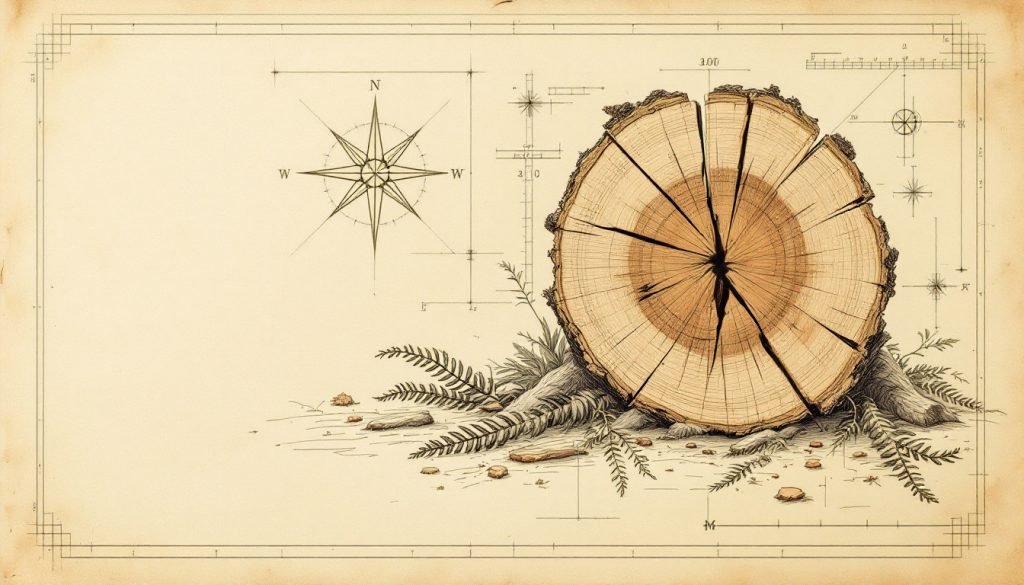
- Wood splits along grain lines because lignin bonds between longitudinal cells are weaker than the cells themselves. Diagonal bark fissures reveal spiral grain that redirects splits and lowers structural strength. Ring-porous species fail in earlywood vessels; diffuse-porous in late summerwood. ANSI A300 pruning cuts parallel to grain minimize vertical split risk. Any seam over 12 inches or 20 % trunk radius demands professional resistograph testing.
You have probably watched a wedge-driven splitting maul pop a seasoned oak round clean in half, or seen a wind-whipped pine split from crown to base along a straight, lightning-like seam. That predictable line is no coincidence. Every tree species splits along its grain because the wood’s cellular architecture is literally built to come apart that way. By the end of this article you will understand why the grain dictates the split, how to read that grain before you make a cut, and how the same principle protects—or endangers—living trees during storms, cabling, or pruning. I am Michael Hartman, ISA Board Certified Master Arborist, and I have spent 30 years predicting and managing wood splitting in both standing and harvested timber.
The Cellular Blueprint That Guides the Split
Wood splits along the grain because 90–95 % of the longitudinal cells—tracheids in conifers, fibers in hardwoods—are oriented vertically and glued together mainly by lignin in the middle lamella. When weight, impact, or internal stress exceeds the lignin bond, the fracture follows the path of least resistance: straight down the long hollow tubes. Cross-sectionally, those tubes are 25–40 µm wide and up to 3 mm long, so a single split can travel several feet in milliseconds, skipping across entire growth rings without changing direction.
Ray cells, the horizontal ribbons that transport nutrients, act as tiny rebar, but they are spaced 0.2–1.0 mm apart and constitute less than 15 % of the wood volume. A powerful enough force—think ice load or a mis-placed cable bolt—simply snaps those rays and keeps traveling vertically. That is why you rarely see a split jump diagonally across rings unless decay or spiral grain has weakened the lignin glue line.
Reading the Grain to Predict Wood Failure
Before you sink a pruning cut or install a structural support, look for grain deviation. Straight grain follows the pith without spiraling more than one in twelve radial inches; any tighter spiral or interlocked grain concentrates stress at the deviation points. In live oaks, a 15° grain spiral can reduce bending strength by 25 %. On the trunk surface, look for diagonal fissures in the bark or ridges that run against the vertical flow—those are external clues to internal spiral grain.
Warning Signs to Watch For
- Diagonal bark fissures: Indicates spiral grain that will redirect splits off-vertical.
- Cat-face seams: Old wound edges aligned with grain become natural fault lines during wind load.
- Compression wrinkles: Small bark ridges on the underside of leaning trunks signal grain buckling and imminent splitting.
Use a small increment borer to extract a 5 mm core. If the growth rings twist more than 45° over 12 inches of length, plan cabling hardware at least 18 inches above or below the twist to avoid splitting through the attachment point.
How Wind and Ice Convert Grain Lines into Catastrophic Splits
When wind pushes a sail-like crown, the trunk acts as a cantilever beam. The highest tensile stresses appear on the leeward side, directly in line with the wood grain. A 60 mph gust on a 24-inch-diameter red maple generates roughly 1 800 psi tension on the leeward fibers—close to the 2 200 psi average fiber stress limit for the species. If earlywood vessels are large and latewood is thin, as in fast-grown maple, the split runs straight through the weak earlywood of several rings, creating a radial shake.
Ice adds weight and stiffness. A half-inch radial glaze adds 4–5 lb per linear foot of branch. Combine that load with a 30 mph wind and the bending moment doubles. Grain lines become fracture highways, and multiple vertical splits can propagate simultaneously, producing the classic “lightning crack” signature that arborists see after winter storms.
Pro Tip: After ice storms, inspect the leeward side of trunks for fresh radial cracks that may not yet gape open. Press a flathead screwdriver into suspect seams; if the blade sinks more than 3 mm, the split has started and the tree is now structurally compromised.
Splitting Behavior of Different Tree Species
Ring-porous hardwoods—oak, ash, elm—split readily in the springwood because the large earlywood vessels offer little resistance. Diffuse-porous species—maple, birch, beech—fail later during summerwood, creating cleaner but less predictable fracture lines. Conifers, lacking vessels, split between tracheids where lignin concentration is lowest, usually at the latewood-earlywood boundary.
| Species Group | Splitting Tendency | Typical Failure Mode |
|---|---|---|
| Ring-porous oak | High along earlywood | Straight longitudinal shake |
| Diffuse-porous maple | Moderate, summerwood | Irregular radial crack |
| Soft pine | Low except at knots | Spiral around branch collars |
| Brittle cedar | Very high in decay | Shatter into narrow strips |
Coopers prize white oak for barrel staves precisely because its tyloses plug vessels and resist splitting across the grain, while carpenters split black ash along the grain to make basket splints because the species has wide, clean earlywood lines.
Using Grain Knowledge for Safer Pruning and Cabling
Every pruning cut is a controlled split waiting to happen. The ANSI A300 pruning standard specifies a final cut just outside the branch collar to keep the wound small and parallel to grain lines, reducing the chance that decay will travel down the trunk. When you undercut first and then finish from above, the falling branch weight cannot lever a vertical split into the parent stem because the grain is already severed cleanly.
For cabling, lag-thread rods inserted perpendicular to grain can act like wedges and trigger longitudinal splits. Instead, use through-bolts with load-bearing washers perpendicular to the grain and position them at least 12 inches from any existing seam. In spiral-grained trunks, orient the hardware so the grain angle intersects the bolt at 90°, distributing load across multiple rings rather than one weak glue line.
Hardware Placement Checklist
- Measure grain angle with a protractor; avoid any deviation zone.
- Center bolt at least 1.5× diameter from nearest branch union.
- Use 1-inch minimum washers to spread load across annual rings.
- Seal bore holes with neoprene grommets to prevent water intrusion and fiber swelling.
Preventing Storm Splits in Mature Trees
You cannot change a tree’s grain angle, but you can manage crown sail and decay. Reduce end-weight on long horizontal limbs by removing secondary branches at the 2- and 3-year-old nodes. That lowers bending moment at the limb base where grain lines run straight and splits start. Install dynamic cabling ⅔ of the way from branch tip to trunk; static steel rods should be reserved for co-dominant stems with included bark where the grain lines diverge at a sharp V.
After any major wind or ice event, perform a sounding test: strike the trunk with a 3-pound mallet and listen for hollow or dull thuds that indicate internal shakes. Map external seams with chalk; any seam longer than 12 inches or deeper than 20 % of trunk radius warrants resistograph testing or removal.
What to Do Next
Walk your property this week and examine the trunks for diagonal bark fissures, seams, or fresh cracks after the last storm. For any split longer than your boot sole or deeper than your thumb width, contact a certified arborist for a resistograph or tomographic assessment. If you are cabling or pruning large specimens yourself, verify grain orientation with a simple bore sample before placing hardware; a 5-minute check can prevent catastrophic trunk failure. Finally, remember that wood will always prefer to break along the grain—your job is to ensure that break happens on your terms, not the tree’s. And if you need to cut wood without saw, understanding these grain principles remains essential.