Speeding up Wood Drying: Explained by Arborists
Stump grinding leaves 90% of root mass underground. Learn decay timeline, surface impacts, and when to intervene.
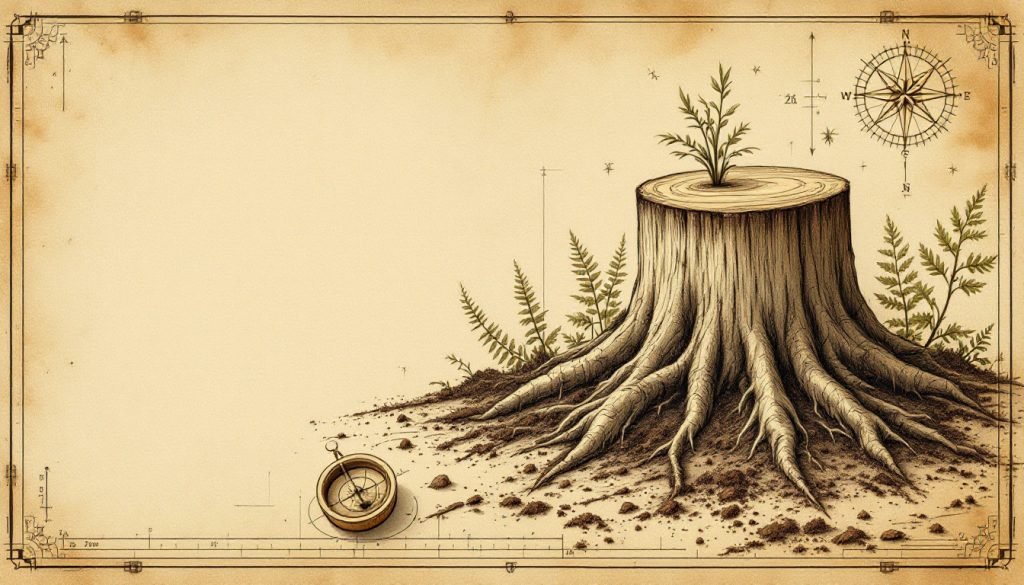
- Stump grinding removes only 10% of total root mass. Remaining roots decay over 2–10 years depending on species density. Surface sinkholes, cracked pavement, and fungal conks are normal signs. Wait 12 months before replanting directly over former roots. Consult an arborist if settling occurs within 5 feet of structures.
You just paid to have an old silver maple stump ground down below grade, and the crew left behind a neat pile of chips. A week later, the once-level lawn is now a rolling topography of humps and soft spots, and you wonder what exactly is happening beneath the surface. As an ISA Board Certified Master Arborist who has overseen thousands of removals, I can tell you the underground story is far from finished when the air drying lumber drives away.
The stump grinder only removed the visible heartwood and the first 8–12 inches of lateral roots. Below that point, the remaining root system—often weighing 20–30 times what you saw above ground—begins a slow, biological deconstruction that can last from two to ten years depending on species, soil, and climate. By the end of this article you will know exactly how long dry wood will continue, what surface changes to expect, when the process becomes a hazard, and the few interventions that actually speed things up without damaging nearby plants or structures.
The Biological Breakdown Process
When the trunk is severed, the roots lose their carbohydrate supply from photosynthesis. Within days, cambial cells starve and die, triggering a cascade of fungal colonization starting with non-decay yeasts that feed on residual sugars. Within weeks, white-rot fungi such as Trametes versicolor and brown-rot fungi like Serpula lacrymans move in, secreting enzymes that break lignin and cellulose into digestible compounds.
Roots decompose from the outside in. The first tissue to disappear is the bark and outer sapwood, which can vanish in 12–18 months under favorable moisture and temperature conditions. Heartwood within larger structural roots may persist five to seven times longer because its extractives resist microbial attack. The process accelerates dramatically once roots drop below woodworking ready moisture, creating air pockets that allow aerobic bacteria to finish the job.
Term: Lignin is the complex polymer that binds cellulose fibers together, giving wood its rigidity. White-rot fungi digest lignin; brown-rot fungi leave it behind as a brittle, reddish residue.
Species matters. Fast-growing poplar and willow roots lose half their dry mass in as little as 18 months, while dense live oak or black locust may retain structural integrity for a decade. Soil texture and pH influence decay rate almost as much as species. Sandy loam with pH 5.5–6.5 supports the most rapid fungal activity; heavy clay or alkaline soils can slow decomposition by half.
Surface Symptoms You Will See
Within the first six months, expect depressions to form directly above major lateral roots as outer tissues collapse. These troughs are usually 4–8 inches wide and follow the root’s original path. Turf often grows poorly in these zones because the sinking soil shears grass roots and creates water-collecting hollows.
Next, fungal fruiting bodies—conks, brackets, or mushrooms—appear at the soil line or on exposed root flares. Their presence is normal and indicates active decay, not a new pathogen threatening other trees. However, Armillaria honey-colored clusters can spread to nearby woody plants via root grafts, so identification matters.
Warning Signs to Watch For
- Sinkholes >4 inches deep: Indicate large voids forming where structural roots once supported soil.
- Crack patterns in pavement: Straight lines following former root paths suggest soil volume loss.
- Water pooling after rain: Hollowed-out root channels act like buried gutters, directing runoff unpredictably.
After the third year, fine feeder roots have largely decomposed, and the soil re-compacts under its own weight. At this point, minor surface irregularities can be top-dressed with compost and reseeded. Large depressions may need structural fill containing angular gravel to prevent future settling.
How Long Different Species Take to Decay
Decay rate correlates strongly with wood density. A study using standardized wood blocks found that eastern cottonwood lost 50% of its mass in 0.9 years, red maple in 2.1 years, white oak in 4.6 years, and black locust in 8.3 years. These numbers translate closely to root behavior because soil contact maintains moisture levels ideal for fungal growth.
However, root diameter changes the timeline. Roots under 1 inch decay almost as fast as branch wood of the same species. Roots over 6 inches behave more like trunk wood and can persist for 50–80% longer than the figures above. In practical terms, expect the thickest structural roots of a mature white oak to remain solid for 7–10 years even after the stump grinder has finished.
Temperature and moisture also shift the curve. In northern zones with mean annual soil temperatures below 50 °F, add 30–50% to the timeline. In subtropical regions with year-round soil moisture above 25%, subtract up to 20%. Urban heat islands with warmed soils can accelerate decay by 10–15% regardless of latitude.
Risks to Nearby Structures
Surface settlement poses the greatest risk to patios, driveways, and shallow utility lines. A 24-inch diameter stump typically has four to six major lateral roots extending 15–20 feet. As these void, the soil above can drop 2–6 inches, more than enough to crack 4-inch concrete slabs lacking reinforcement.
Underground utilities are generally safe because most are buried below 18 inches, below the zone of major root collapse. The exception is sewer laterals in older neighborhoods laid only 12 inches deep. Root channels collapsing around a clay or Orangeburg pipe can cause differential settling that fractures the line.
Pro Tip: If the removed tree was within 10 feet of a slab-on-grade structure, install a soil density probe (1/2-inch steel rod) every 12 inches along the former drip line. If it sinks more than 3 inches with hand pressure, schedule a compaction grouting consultation before cracks appear.
Retaining walls and fences can also be affected. Decaying roots near retaining walls create voids that allow water to infiltrate and undermine the footing. Wooden fence posts set along former root paths may tilt as the soil settles. Replacing the post without addressing the root void simply repeats the problem.
Accelerating Decomposition Safely
Many homeowners drill holes and pour nitrogen fertilizer or Epsom salt into the stump cavity, hoping to speed decay. These remedies have minimal effect because roots extend far beyond the treated zone. Instead, focus on creating conditions that favor native fungi already adapted to the wood species.
The most effective method is to maintain soil moisture at 35–50% field capacity during the first two growing seasons. A soaker hose laid in concentric rings 3–5 feet from the stump delivers consistent moisture without waterlogging. Add 2–3 inches of hardwood mulch over the root zone to buffer temperature swings and feed fungal mycelium.
Introducing a commercial fungal inoculant containing Pleurotus ostreatus or Laetiporus sulphureus can cut decay time by 20–30% for dense species. Drill 1-inch diameter holes 12 inches deep every 8 inches along major root traces, fill with spawn, and cover with moist peat moss. Results are visible as white mycelial fans within 6–8 weeks. For more technical background, consult Purdue Extension or review the fundamentals of wood drying.
Mechanical removal is only justified when rapid soil stabilization is required. A tracked mini-excavator with a 12-inch trenching bucket can pull surface roots in a single day, but costs $400–$600 and leaves large bare areas that need regrading and seeding. Reserve this option for commercial construction zones or critical infrastructure protection.
Replanting and Landscape Recovery
Do not plant a replacement tree in the exact former stump footprint. Root channels remain as preferential flow paths for water and air, creating a perched water table that can drown new roots. Instead, offset the new planting 3–5 feet from the old trunk center to avoid both root voids and potential allelopathic residue from the previous species.
Soil testing is essential. Decaying roots release large amounts of carbon dioxide that acidify surrounding soil, especially in clay. A pH drop of 0.5–1.0 units is common. Collect samples at 6-inch and 18-inch depths, add lime if pH falls below 6.0, and incorporate 2–3 pounds of 10-10-10 fertilizer per 100 square feet to balance carbon-nitrogen ratios.
Preparing for New Plantings
- Wait a minimum of 12 months before installing shrubs or perennials directly above former roots.
- Remove wood chips to 2–3 inches depth and mix remaining chips into soil at 10:1 ratio with native soil.
- Compact loose soil lightly with water roller or foot pressure to prevent future settling.
- Select species tolerant of fluctuating soil moisture, such as river birch or serviceberry.
Lawn recovery can begin immediately. Spread 1/4-inch of screened compost over depressions, overseed with turf-type tall fescue, and keep moist for three weeks. Avoid heavy foot traffic for six weeks to allow grass to anchor in the settling substrate.
When to Call a Professional
Homeowners can manage most root decay scenarios with patience and basic landscape care. However, three situations warrant immediate arborist consultation. First, if sinkholes appear within 5 feet of a building foundation, differential settlement may compromise structural integrity. Second, if honey-colored Armillaria mushrooms appear on nearby trees, root graft transmission could threaten the entire stand. Third, if surface settling exposes gas lines or electrical conduits, stop all work and notify utility locators.
Certified arborists can use ground-penetrating radar to map remaining root architecture and predict settlement patterns. In cases where utilities are at risk, air-spade excavation can expose roots without mechanical damage, allowing targeted removal and engineered fill placement. The cost typically ranges from $500 for basic consultation to $2,500 for full mapping and mitigation—far less than repairing a cracked foundation.
Conclusion: A Measured Approach to Underground Change
Root decay after stump grinding is not a problem to solve but a natural process to manage. Monitor surface changes yearly, adjust irrigation to keep fungal communities active, and intervene only when structures or safety are at risk. Most landscapes stabilize within 3–5 years, leaving behind richer soil and a clean slate for new plantings. By understanding the biology and timeline, you can turn the end of one tree’s life into the fertile beginning for the next generation of your landscape.