Warning Wood Chip Pile Overheating Signs to Watch For
Learn the critical wood chip pile overheating signs every property owner and arborist should recognize before a smoldering pile becomes a serious hazard.
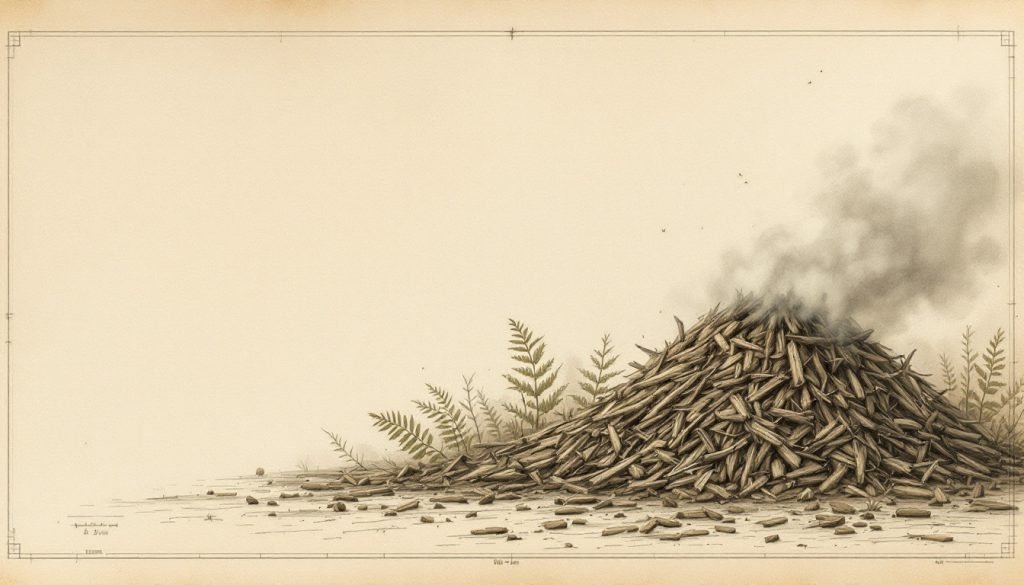
- Fresh wood chip piles can reach 130–160°F internally within 24–72 hours due to thermophilic microbial activity. Steam rising on warm days and a sour or chemical odor are the earliest and most reliable warning signs. Piles exceeding four to five feet in any dimension carry significantly higher spontaneous combustion risk. Visible smoke from a chip pile means pyrolysis is active — call the fire department before disturbing it. Keep piles under three feet tall, turn them every 48–72 hours, and monitor core temperature with a probe thermometer.
You ran the chipper all morning, built up a respectable pile of fresh wood chips, and now you are wondering what to do with them. Maybe you plan to use them as mulch, compost them, or let a landscaping crew haul them away next week. What most property owners and even some tree crews do not realize is that a large pile of fresh wood chips is not an inert material sitting quietly in the corner of your yard. It is a biologically active mass capable of generating enough internal heat to ignite spontaneously, release toxic gases, and create a genuine fire hazard — sometimes within 48 to 72 hours of being piled.
The phenomenon is called thermophilic decomposition, and it is driven by microbial activity that accelerates dramatically when fresh, moist organic material is piled in volume. I am Michael Hartman, ISA Board Certified Master Arborist (TX-0198B), and over three decades of fieldwork I have seen smoldering chip piles on residential properties, municipal composting yards, and tree service staging areas. The warning signs are consistent and recognizable once you know what to look for. By the end of this article, you will understand exactly why chip piles overheat, what the early and late warning signs look like, and what actions to take before a manageable situation becomes a dangerous one.
This is not a theoretical risk. Spontaneous combustion in wood chip piles has caused structure fires, injured workers, and resulted in significant liability for tree service companies. The good news is that the signs appear well before ignition, and they are visible, measurable, and actionable.
Why Wood Chip Piles Generate Heat in the First Place
Fresh wood chips are an ideal growth medium for thermophilic bacteria and fungi — microorganisms that thrive at elevated temperatures and consume organic carbon at a rapid rate. When chips are piled in volume, the outer layers act as insulation, trapping the heat generated by microbial respiration in the core. The larger the pile, the more effective that insulation becomes, and the higher the internal temperature climbs. A pile as small as four feet in diameter can reach internal temperatures of 130 to 160 degrees Fahrenheit within 24 to 48 hours under the right conditions.
Thermophilic Decomposition: A stage of biological breakdown driven by heat-tolerant microorganisms that operate most efficiently between 104°F and 160°F (40°C–71°C), generating additional heat as a byproduct of metabolizing organic material.
The moisture content of fresh chips is a critical accelerant. Green wood from recently felled trees contains significant free water in the sapwood and bark, which creates the humid microenvironment that bacteria and fungi need to reproduce rapidly. Chips from diseased trees, particularly those infected with fungal pathogens like Armillaria or Ganoderma species, may decompose even faster because the wood structure is already partially broken down. Chips from nitrogen-rich species — think black locust, mimosa, or any leguminous tree — also tend to heat more aggressively than chips from dry-wood conifers.
Once internal temperatures exceed approximately 160°F (71°C), the microbial population begins to die off, but the heat does not stop there. Above that threshold, purely chemical oxidation takes over. Pyrolysis — the thermal decomposition of wood in the absence of sufficient oxygen — can begin around 250°F (121°C), producing combustible gases. If those gases find an oxygen source, ignition becomes possible. This is why a pile that looks stable on the outside can be actively smoldering in its core.
The First Signs: What You Will Notice Within 24 to 72 Hours
The earliest warning signs of overheating are easy to miss because they look benign. Steam rising from a chip pile on a cool morning is the most common early indicator. Many people assume this is simply morning dew evaporating. It is not — it is water vapor being driven off by internal heat. If you see steam rising from a pile when ambient temperatures are above 60°F and there has been no recent rain, the pile is generating significant internal heat.
A second early sign is a noticeable sweet, fermented, or mushroom-like odor. Fresh chips naturally smell like cut wood, which is pleasant and expected. When that smell shifts toward something sour, yeasty, or earthy-fungal, microbial activity has ramped up substantially. Some people describe the smell as similar to a compost bin that has gone anaerobic — slightly ammonia-like or sulfurous. That shift in odor profile is a reliable early indicator that internal temperatures are climbing.
Warning Signs to Watch For
- Steam rising from the pile: Visible vapor on warm days indicates internal temperatures well above ambient — a primary early warning sign.
- Sour or fermented odor: A shift from fresh wood smell to yeasty, ammonia-like, or sulfurous odor signals aggressive microbial activity and rising heat.
- Exterior surface feels warm to the touch: If the outer layer of chips is noticeably warm, interior temperatures may already exceed 140°F.
- Discoloration or white mycelial growth: White fungal threads visible when you open the pile indicate active thermophilic fungal decomposition.
- Smoke with no visible flame: Any smoke — white, gray, or brown — means the pile has crossed into pyrolysis territory and requires immediate action.
The third early sign is tactile. Press your hand firmly against the side of the pile. A pile in early thermophilic decomposition will feel noticeably warm — not just from sun exposure, but from within. If the exterior surface feels hot rather than warm, or if you cannot hold your hand against it comfortably, the interior is likely above 150°F. At that point, you are past the early warning stage.
Mid-Stage Signs: When the Situation Is Escalating
If early signs go unaddressed, the pile moves into a more dangerous phase. The most reliable mid-stage indicator is a persistent, acrid smell that is distinct from normal decomposition odor. This smell has a chemical edge — sometimes described as similar to burning plastic or hot metal — and it indicates that pyrolysis gases are beginning to form in the pile’s core. You may not see smoke yet, but the chemistry is already moving toward combustion.
Visible collapse or subsidence in the pile’s center is another mid-stage sign. As the core material breaks down and loses structural integrity, the top of the pile may sink or develop a depression. This is not just settling — it indicates that a significant volume of material has been consumed by heat and microbial activity. A pile that was four feet tall and now shows a six-inch depression in the center has been actively decomposing at high temperature for an extended period.
Pro Tip: Carry a long-stem dial thermometer — the kind used for compost monitoring, with a 20-inch probe — whenever you are staging chip piles on a job site. Push it into the pile’s core at a 45-degree angle. Anything above 160°F (71°C) means you need to turn the pile immediately. Above 180°F (82°C), spread the pile out and keep people away from the downwind side until it cools. This two-minute check has prevented more than a few close calls in my career.
Discoloration of the chips themselves is also telling. Chips that have turned gray, brown, or black in the interior — rather than the tan or cream color of fresh-cut wood — have been subjected to sustained high heat. If you open the pile and find a dark, dry, almost charcoal-like zone surrounded by otherwise normal-looking chips, that dark zone is where pyrolysis has already occurred. Treat this as an urgent situation.
Late-Stage Warning Signs: Smoke, Odor, and Structural Collapse
By the time a chip pile is producing visible smoke, you are dealing with an active fire risk, not a potential one. Smoke from a chip pile is almost always white or light gray initially, produced by the combustion of water vapor and volatile organic compounds. It may not look dramatic, but it means the pile has an active heat source capable of sustaining combustion if oxygen becomes available. Do not attempt to extinguish a smoking pile by covering it — that can concentrate gases and create an explosive condition when the pile is later disturbed.
A strong, persistent chemical odor that you can detect from 20 to 30 feet away is a late-stage sign. At this point, the pile is off-gassing carbon monoxide and other combustion byproducts. This is a genuine health hazard. Workers should not stand downwind of a pile showing these signs without respiratory protection, and no one should attempt to manually turn a pile that is actively smoking without first contacting the local fire department for guidance.
Structural collapse — where a section of the pile suddenly drops or a void opens — is the most dangerous late-stage sign. This indicates that the core material has been largely consumed and the outer shell is no longer supported. Voids in a hot pile can act as chimneys, suddenly introducing oxygen to a smoldering core and triggering rapid ignition. If you observe any sudden structural change in a pile that has been showing other warning signs, treat it as an active fire situation.
How Pile Size and Chip Composition Affect Overheating Risk
Not all chip piles carry equal risk. Volume is the single most important factor. Piles under three feet in height and diameter rarely reach dangerous temperatures because heat dissipates through the surface faster than it accumulates. Once a pile exceeds four to five feet in any dimension, the surface-to-volume ratio drops enough that internal heat can build faster than it escapes. Municipal-scale chip piles — those 10 to 20 feet tall — can reach ignition temperatures in their cores within a week under warm, humid conditions.
Chip composition matters significantly. Chips from green, freshly felled hardwoods — oak, elm, hackberry, pecan — carry more moisture and more fermentable sugars than chips from seasoned or coniferous wood. Chips that include a high proportion of leaves, bark, and cambium tissue decompose faster than clean wood chips. If your chipper is processing whole brush with leaves attached, the resulting chip pile will heat more aggressively than one made from clean trunk wood. Mixing chip types — say, adding fresh green chips to an existing pile — can restart the thermophilic cycle in a pile that had already begun to cool.
Common Mistakes to Avoid
- Piling chips directly against structures: A smoldering pile against a fence, shed, or home exterior can ignite the structure before anyone notices smoke. Maintain at least 10 feet of clearance.
- Covering a hot pile with tarps: Tarps trap heat and gases, accelerating pyrolysis and creating an oxygen-starved environment that can ignite explosively when disturbed.
- Ignoring early odor changes: The shift from fresh wood smell to sour or chemical odor is the most reliable early warning, and it is consistently dismissed as normal decomposition.
- Turning a smoking pile without water available: Introducing oxygen to a smoldering core without immediate suppression capability can trigger rapid ignition. Have a charged hose on site before turning any pile showing late-stage signs.
Seasonal and Environmental Factors That Increase Risk
Ambient temperature and humidity play a significant role in how quickly a chip pile reaches dangerous temperatures. Hot, humid summer conditions — common across the southern United States from May through September — create the ideal environment for rapid thermophilic decomposition. Ambient temperatures above 80°F (27°C) combined with relative humidity above 60% can cut the time to dangerous internal temperatures from 72 hours down to 24 hours or less for large piles.
Conversely, cold winter conditions slow microbial activity significantly. A chip pile built in January in a northern climate may not show meaningful heat generation for several weeks. This creates a false sense of security — when temperatures warm in spring, the pile can transition from dormant to dangerously hot within a few days as microbial populations rebound. Spring is actually a high-risk period for chip pile fires precisely because property owners have forgotten about piles that sat quietly all winter.
Wind is a double-edged factor. Moderate airflow through a pile helps dissipate heat and reduces overheating risk. But strong wind against a pile that is already in late-stage overheating can introduce enough oxygen to trigger ignition. If you have a large chip and a significant wind event is forecast, check the pile’s internal temperature before the wind arrives and spread it out if temperatures are elevated.
What to Do When You Spot Overheating Signs
The response depends on which stage of overheating you are observing. For early signs — steam, mild odor change, warm exterior — the correct response is to turn and spread the pile. Use a skid steer, tractor bucket, or pitchfork to break the pile apart, spread it to a depth of no more than 18 inches, and allow it to cool over 24 to 48 hours before re-piling. Turning the pile introduces oxygen uniformly, which paradoxically helps cool it by allowing heat to escape and disrupting the insulating structure that allowed temperatures to build.
Immediate Response Steps for an Overheating Chip Pile
- Check internal temperature with a long-stem thermometer before touching the pile
- If below 160°F, turn and spread the pile to 18 inches depth and allow 24 hours to cool
- If above 160°F or if smoke is visible, call your local fire department before disturbing the pile
- Keep all personnel upwind and at least 30 feet away from a smoking pile
- Do not cover the pile with tarps or soil — this concentrates combustible gases
- Once cooled, use chips within 48 hours or store in shallow, turned windrows no deeper than 18 inches
For mid-stage signs — acrid odor, pile subsidence, interior discoloration — have a charged garden hose or water source ready before you turn the pile. Wet the material as you spread it, working from the outside in. Do not attempt to dig into the core of a pile showing these signs without water immediately available. For late-stage signs involving visible smoke or structural collapse, do not attempt self-remediation. Contact your local fire department. Many jurisdictions have protocols specifically for chip pile fires, and fire crews have the equipment to safely suppress smoldering organic material without triggering explosive ignition.
Preventing Overheating Before It Starts
Prevention is straightforward once you understand the mechanics. The single most effective prevention strategy is pile size management. Keep chip piles to a maximum of three feet in height and four feet in diameter if they will sit for more than 24 hours. If you are staging larger volumes, build them in long, low windrows — no more than four feet wide and three feet tall — rather than compact mounds. The increased surface area relative to volume allows heat to escape faster than it accumulates.
Turn piles proactively every 48 to 72 hours during warm weather. This is standard practice at commercial composting operations and it works equally well for tree service chip piles. If you are a tree service operator staging chips at a client’s property for more than two days, build turning into your workflow. A five-minute check with a compost thermometer each morning is a reasonable minimum for any pile larger than a pickup truck load. Chips that will be used as landscape mulch within 24 hours of chipping carry minimal risk — the danger is in storage, not in fresh application. For additional background, spontaneous combustion is well documented in organic stockpiles.