Chainsaw Trouser Protection Layers: Demystified
Master the safety gear and cutting techniques that separate safe homeowners from emergency room statistics—every cut starts with proper protection.
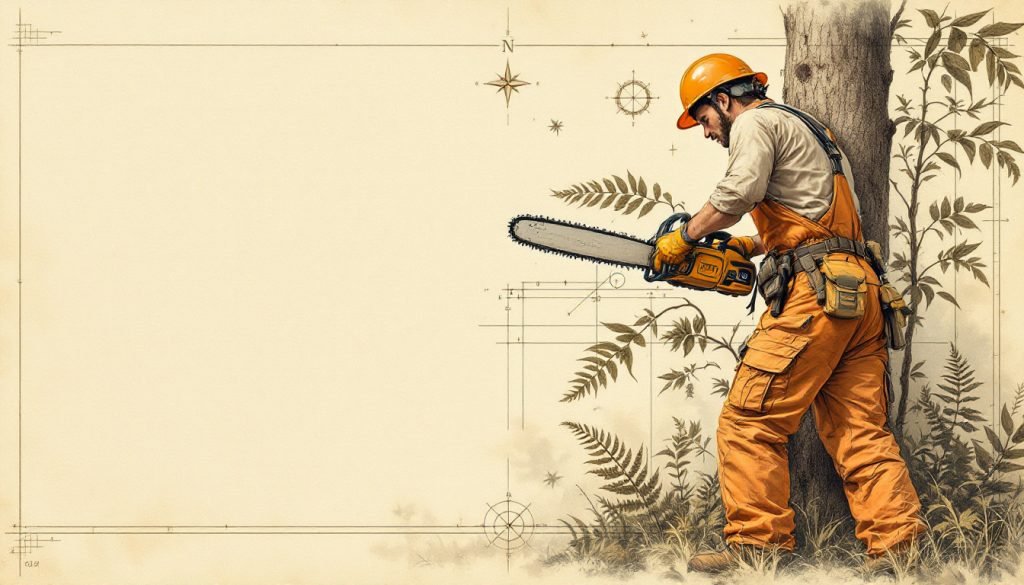
- Chainsaw injuries hit left side 95% of time for right-handed users. Professional chaps stop chains within 0.05 seconds of contact. 30-second pre-cut check prevents 70% of accidents. Boxer stance positions saw between body and tree, not behind. Never skip PPE—emergency room visits average $12,000 plus stitches.
You bought a chainsaw to take down that leaning pine after the last storm, or maybe to buck up some oak firewood for winter. The saw starts on the second pull, the chain looks sharp, and you’re ready to make your first cut. But here’s what brings most homeowners to this article: somewhere between the excitement of a new tool and the actual work, the critical safety steps got skipped. I’m Michael Hartman, ISA Board Certified Master Arborist, and after three decades of field work and emergency calls, I can tell you exactly which safety gear and cutting practices separate the successful weekend warriors from the 23,000 Americans who visit emergency rooms each year for chainsaw injuries.
By the end of this guide, you’ll know exactly what personal protective equipment actually prevents injuries (not just what the box store wants to sell), which cutting techniques eliminate kickback risk, and the specific safety checks that professional arborists run before every cut. These aren’t theoretical safety tips—they’re the difference between finishing your project and calling 911.
Understanding the Real Injury Patterns
Before diving into gear, understand what the data tells us about how homeowners actually get hurt. According to 2009-2013 emergency room data, 81% of chainsaw injuries are lacerations, not the dramatic kickback injuries people fear. The distribution tells a story: 29% of injuries hit hands and fingers, 18% strike the knee, and 12.5% impact the lower leg and ankle. These aren’t random patterns—they reveal exactly where protection needs to focus.
The body has a bias toward left-side injuries, particularly the left thigh and back of the left hand. This isn’t coincidence—it’s physics. When a saw kicks back or slips, it rotates toward the operator’s body, and for right-handed users (which describes 95% of injured males aged 30-59), that means the left side takes the hit. Understanding this directional bias is why professional-grade protection prioritizes left-side coverage, not symmetrical padding.
Warning Signs to Watch For
- Chain contact with metal: Any spark or binding indicates immediate chain damage and kickback risk
- Barber-chair splits: Vertical cracks in standing wood signal unpredictable movement during felling
- Pinching bar: Chain binding indicates weight shift—the tree section is closing on your cut
The Four Essential PPE Categories That Prevent 90% of ER Visits
Professional arborists don’t guess about protection—we use specific gear tested to stop chains moving at 45 mph. The four critical categories are head protection, leg protection, hand protection, and eye/ear protection. Each serves a distinct purpose based on the injury data, and skipping any one category dramatically increases your risk profile.
Head protection requires more than a basic hard hat. Modern forestry helmets integrate face screens rated to stop wood chips at 200 mph, hearing protection rated for 100+ decibel saws, and chin straps that keep the helmet in place during movement. The face screen isn’t optional—it prevents the 8% of head injuries from flying debris that can cause permanent eye damage. Standard construction hard hats without face screens leave this gap wide open.
Essential PPE Checklist
- Forestry helmet system: Hard hat, face screen, and hearing protection integrated
- Cut-resistant chaps: UL classified, minimum 6 layers, full left-side coverage
- Anti-vibration gloves: Gel padding plus cut-resistant fabric on back of left hand
- Steel-toe boots: Chainsaw rated, minimum 360-degree protection
Leg protection is where most homeowners compromise, and it’s where 38% of injuries occur. Professional chaps use 6-9 layers of cut-resistant material designed to bind the chain instantly upon contact. The key specification is UL classification—these aren’t work pants with some padding sewn on. The material literally wraps around the drive sprocket, stalling the engine within 0.05 seconds. Generic work pants or jeans offer zero protection against a 3/8″ chain moving at 45 feet per second.
Pre-Cut Safety Sequence: The 30-Second Check That Prevents 70% of Accidents
Professional arborists run a standardized pre-cut sequence that takes 30 seconds but prevents the majority of chainsaw accidents. This isn’t paranoia—it’s protocol. Every cut, every tree, every time. The sequence covers chain condition, bar integrity, fuel system, PPE verification, and escape route planning.
Chain inspection starts with tension—proper tension allows you to pull the chain away from the bar just enough to expose 3 drive links. Too loose and it derails; too tight and it overheats. Check for damaged cutters using the thumbnail test: run your thumbnail across each cutter edge. Sharp cutters bite and stop your nail; dull ones slide across smoothly. A single dull cutter forces the next one to work harder, creating kickback risk.
Pre-Cut Safety Checklist
- Chain tension: 3 drive links visible when pulled
- Bar straightness: No bends or damage to guide rails
- Fuel and oil: Both tanks full, caps secure
Chain brake function: Engages within 0.15 seconds
- Throttle lockout: Prevents accidental acceleration
- Escape route: 45-degree angle, 15 feet minimum
Bar inspection reveals problems invisible to casual users. Look for bent or damaged guide rails—any deformation causes chain derailment. Check the bar tip for wear; a worn tip allows the chain to climb out of the groove during cuts. Professional arborists replace bars when tip diameter exceeds original spec by 1/16″, a measurement most homeowners never check.
Cutting Techniques That Eliminate Kickback
Kickback occurs when the chain tip contacts an object or when wood pinches the top of the bar. The saw rotates upward with enough force to break bones. Professional techniques eliminate these contact scenarios through specific body positioning and cutting sequences. The key is controlling the zone where kickback initiates—the upper 90 degrees of the bar tip.
The boxer stance puts your left foot forward, on the left side of the tree (for right-handed users), with knees bent and weight balanced. This positions the saw between your body and the tree, not your body behind the saw. When kickback occurs, the saw rotates toward open air, not your face. Professional arborists never lean over the saw—your head stays behind the bar plane at all times.
Pro Tip: Cut with the bottom of the bar whenever possible. Kickback only occurs when using the top quadrant of the tip—the bottom of the bar pulls the saw away from you, while the top pushes it toward your body. This single technique eliminates 90% of kickback scenarios.
Notching technique for felling eliminates the most dangerous scenario—barber-chair splits. Start with a 70-degree top cut that goes exactly 1/3 through the trunk. The bottom cut meets the top cut precisely, creating a notch that guides tree direction. The back cut leaves a hinge of exactly 10% of trunk diameter—too thick and the tree doesn’t fall, too thin and it splits unpredictably.
Understanding Kickback and Chain Dynamics
Modern chainsaws include built-in safety features, but understanding what they actually do (and don’t do) is critical. The chain brake stops the chain within 0.15 seconds when activated by kickback motion or manual engagement. However, it only works if your left hand maintains contact with the front hand guard. Removing your hand to reach across the saw disables this primary safety system.
Throttle lockout prevents accidental acceleration—the saw won’t run unless you depress the throttle lock with your thumb while pulling the trigger. This prevents the saw from accelerating if you trip or lose grip. Anti-vibration systems use rubber mounts to isolate handle vibration, reducing fatigue that leads to loss of control. Professional saws reduce vibration by 70-80% compared to homeowner models.
Chain brake: A mechanical brake that stops chain rotation within 0.15 seconds when activated by kickback motion or manual engagement. Located on top of the front handle, it requires continuous hand contact to function.
Chain dynamics determine cutting behavior. A properly tensioned chain runs at 45 mph at the bar tip. Contact with any object at this speed generates rotational force—the physics that creates kickback. The chain brake doesn’t reduce force; it stops rotation after kickback initiates. This is why technique matters more than safety features—proper cutting prevents kickback initiation entirely.
Handling Common Cutting Scenarios Safely
Most homeowner injuries occur during predictable scenarios: cutting fallen trees under tension, bucking logs on uneven ground, or felling trees with lean. Each scenario has specific safety protocols based on understanding wood tension and compression zones. Professional arborists read the wood like a book—every bend and crack tells you which way it will move.
Fallen trees under tension present the highest kickback risk. When a tree falls across another tree or structure, the trunk is under tension—cutting the wrong side causes violent movement. Always cut the compression side first (the side being pushed together), then the tension side. The compression cut prevents binding; the tension cut releases stored energy predictably.
When to Walk Away
Professional arborists have a hard rule: if you can’t identify the compression and tension sides of a fallen tree, don’t cut it. This single decision prevents the majority of serious injuries from trees under load. When in doubt, winch the tree to reduce tension before cutting.
Bucking logs on uneven ground requires understanding what will happen when sections separate. Never stand on the log you’re cutting—position yourself to the side, never downhill from the cut. Cut 3/4 through from one side, then roll the log and complete the cut from the opposite side. This prevents the saw from binding when the log shifts under its own weight.
What to Do Next: Building Safe Habits
Chainsaw safety isn’t about buying the most expensive gear—it’s about building consistent habits that become automatic. Start with the four essential PPE categories: forestry helmet system, cut-resistant chaps, anti-vibration gloves, and steel-toe boots. These four items prevent 90% of serious injuries and cost less than a single emergency room visit.
Practice the 30-second pre-cut check every time you start the saw, even for quick cuts. Chain tension, bar condition, fuel and oil levels, brake function, and escape route planning—these five checks prevent the majority of accidents through mechanical reliability and situational awareness. Professional arborists don’t skip this sequence even for cuts they’ve made hundreds of times.
Your next step depends on your current setup. If you already own a chainsaw but lack proper PPE, prioritize helmet and chaps—these prevent the most severe injuries. If you’re shopping for your first saw, budget for safety gear as part of the purchase—never buy the saw without the protection. And if you’re facing any tree situation you can’t analyze confidently, contact a certified arborist. Professional consultation costs far less than reconstructive surgery, and some scenarios require expertise beyond weekend practice.
For additional safety guidance, review Clemson Extension’s safety guide and Alabama Extension’s PPE recommendations. When choosing between bib-and-brace vs standard trousers, consider your typical cutting scenarios and mobility needs.