A Field Guide to Testing Stihl Safety Features
Learn to identify, diagnose, and resolve tree root damage to foundations before costly structural repairs become necessary.
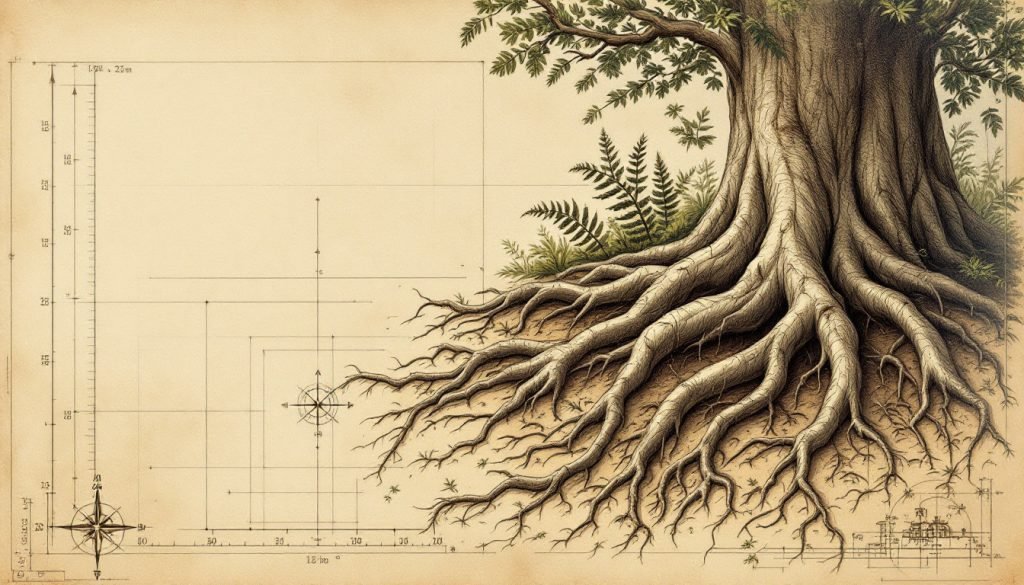
- Tree roots cause foundation damage through moisture extraction, not aggressive growth. Expansive clay soils create the highest risk for root-related settlement issues. Root barriers 30-36 inches deep can prevent further damage while preserving trees. Early intervention costs 10-20% of major foundation repairs. Professional assessment by certified arborist and structural engineer prevents unnecessary tree removal.
You noticed new cracks in the basement wall, or maybe the back door suddenly sticks. Your neighbor mentions the mature maple 15 feet from your house. Now you’re wondering if tree roots are silently undermining your foundation—and whether the tree needs to go or if there’s another solution.
As a Board-Certified Master Arborist who’s spent three decades investigating foundation claims, I’ve seen this scenario play out hundreds of times. The reality is both simpler and more complex than most homeowners realize. By the end of this guide, you’ll know exactly how to distinguish between normal foundation movement and legitimate root damage, understand the mechanics of how roots actually affect foundations, and have a clear action plan for your specific situation.
The Biology Behind Root-Related Foundation Damage
Tree roots don’t “attack” foundations—they respond to environmental conditions. The primary mechanism involves moisture extraction. A mature silver maple or white oak can transpire 50-100 gallons of water per day during summer growth periods. When roots extend under a foundation slab or basement wall, they create localized soil desiccation zones where clay soil shrinks away from the concrete.
This process is most pronounced in expansive clay soils common across Texas, Colorado, and parts of the Midwest. As moisture content drops from 25% to 15%, clay soil volume can decrease by 20-30%, creating void spaces under foundations. The foundation settles into these voids, typically producing diagonal cracks starting from building corners nearest the tree.
Physical pressure from roots is actually rare. Most foundation damage attributed to “root pressure” is actually secondary—roots exploit existing cracks or construction joints, then expand as they grow. The exception occurs with improperly poured foundations where roots can exert 150-300 psi of pressure against weak concrete sections.
Root Zone: The three-dimensional area around a tree containing its roots and associated soil organisms. For foundation assessment purposes, the critical zone extends 1.5 times the tree’s height in radius.
Early Warning Signs of Root-Related Foundation Problems
Foundation movement creates predictable patterns. Look for diagonal cracks in basement walls that widen at the top and narrow at the bottom—these indicate settlement on the tree side of the foundation. Interior warning signs include doors that stick primarily during summer months, cracks in drywall above doorways, and sloping floors with the low point toward the tree.
Window issues provide particularly good early indicators. When roots cause differential settlement, you’ll notice windows that become difficult to open in summer but work fine in winter. This seasonal pattern distinguishes root-related movement from other foundation problems that remain constant year-round.
Exterior inspection reveals subtle clues. Check for gaps between the foundation and soil on the tree side, especially during drought conditions. Look for foundation vents that appear tilted or basement windows that have shifted out of square. Hairline cracks in brick mortar that widen toward the tree’s location often appear 5-7 years before serious structural issues develop.
Warning Signs to Watch For
- Seasonal door sticking: Difficulty opening doors primarily during summer months indicates root-related soil shrinkage
- Diagonal foundation cracks: Cracks wider at top than bottom, extending from corners nearest mature trees
- Gaps between soil and foundation: Visible separation during dry periods shows active soil moisture extraction
- Tilted basement windows: Windows out of square indicate differential settlement patterns
How to Diagnose the Severity of Root Damage
Professional assessment involves three components: tree evaluation, soil analysis, and foundation measurement. Start by measuring the tree’s diameter at breast height (DBH) and distance from the foundation. A 24-inch DBH tree within 20 feet of a foundation represents high risk, while the same tree 40 feet away poses minimal threat.
Soil testing reveals the true risk factor. Collect soil samples at 12-inch intervals from the foundation outward to the tree’s drip line. Expansive clay soils with plasticity index above 15% create the highest risk for root-related damage. Sandy or well-draining soils rarely experience root-induced settlement issues.
Foundation elevation surveys provide objective measurement. Place a water level at the foundation corner nearest the tree and measure every 4 feet along affected walls. Differential settlement exceeding 1 inch over 20 feet indicates active structural movement requiring immediate attention. Less than 1/2 inch over the same distance suggests monitoring rather than intervention.
Foundation Assessment Checklist
- Measure tree DBH and distance from foundation
- Document crack patterns with photos and measurements
- Conduct soil plasticity test at 12-inch intervals
- Check seasonal moisture content variations
- Perform elevation survey every 4 feet along walls
Root Barrier Installation: When and How
Root barriers can prevent further damage while preserving valuable trees. The barrier must extend 30-36 inches deep for most species, positioned between the tree and foundation. Use either 80-mil HDPE plastic barriers or 24-gauge galvanized steel. Install barriers 5-10 feet from the trunk minimum to avoid major structural roots.
Excavation requires careful planning. Use hydro-excavation or air spading to expose roots without damage. Cut roots cleanly with sharp tools—never rip or tear. Install barrier panels overlapping by 6 inches, ensuring a continuous seal. Backfill with native soil compacted in 6-inch lifts to prevent future settling.
Barrier effectiveness depends on proper installation. Poorly installed barriers can redirect roots downward, potentially causing future problems. Professional installation typically costs $2,500-4,000 for a 20-foot barrier, but prevents $10,000+ foundation repairs in high-risk situations.
Pro Tip: Install root barriers during late fall or winter when tree growth is minimal and soil moisture is stable. This timing reduces stress on the tree and allows for proper settling before spring growth begins.
Foundation Repair Options and Tree Preservation
Foundation repair methods vary based on damage severity and tree preservation goals. For minor settlement (under 1 inch), installing root barriers and implementing proper watering programs often stabilizes the situation. Install soaker hoses around the foundation perimeter, maintaining consistent soil moisture between 20-25%.
Moderate damage (1-3 inches settlement) may require underpinning with push piers or helical piles. These systems transfer foundation loads to stable soil below the active root zone. Modern pier systems can be installed without tree damage, though equipment access may require strategic pruning of lower branches.
Severe cases (over 3 inches settlement) often necessitate tree removal combined with foundation repair. However, consider partial solutions first. Sometimes removing 30-40% of the root system on the foundation side provides sufficient stabilization while preserving the tree. This approach requires careful root pruning following ISA guidelines to minimize tree stress.
| Damage Level | Tree Preservation | Foundation Solution |
|---|---|---|
| Minor (<1 inch) | Full preservation | Root barrier + moisture management |
| Moderate (1-3 inches) | Partial root pruning | Underpinning with piers |
| Severe (>3 inches) | Tree removal likely | Foundation reconstruction |
Proactive Prevention Strategies
Preventing root-related foundation damage starts during site planning. Maintain minimum distances of 20 feet for large trees (50+ feet mature height), 15 feet for medium trees (30-50 feet), and 10 feet for small trees (under 30 feet). These distances account for typical root spread patterns while providing safety margins.
Soil modification during construction dramatically reduces future issues. Install 4-inch perforated drain tile around foundations at footer level, connected to daylight or storm drainage. Add 6-8 inches of compacted granular fill (ASTM C33 sand) against foundations to create a root-resistant zone. These measures cost $1,500-2,500 during construction but prevent $15,000+ future repairs.
Regular monitoring prevents minor issues from becoming major problems. Conduct annual foundation inspections during late summer when soil shrinkage is maximal. Look for new cracks, measure existing ones, and photograph problem areas for comparison. Early intervention costs 10-20% of major foundation repairs.
When to Act
Best window: Early fall before winter rains. Foundation movement accelerates during summer drought and winter freeze-thaw cycles. Acting in September-October allows repairs to settle before the next stress period.
What to Do Next
Start with immediate documentation. Photograph all foundation cracks with a ruler for scale, noting exact locations and widths. Measure door frame gaps and window squareness. This baseline prevents disputes with insurance companies or future buyers.
Contact a certified arborist for tree risk assessment. We use resistograph testing to evaluate root condition and calculate remaining safe life expectancy. This $300-500 assessment provides the data needed for informed decision-making. Request a written report with recommendations and timeline.
Schedule foundation evaluation with a structural engineer specializing in residential foundations. They’ll assess repair needs without tree bias. Many engineers can recommend tree-friendly solutions you won’t hear from foundation contractors who prefer removal for simplicity.
Remember: most tree-related foundation issues are manageable with proper assessment and targeted solutions. The key is acting before minor settlement becomes structural failure. Your mature tree and stable foundation can coexist with the right intervention strategy. For additional guidance on chain catcher function and other safety features, consult our detailed resources.