Bar Saw Feller Buncher: What Property Owners Should Know
A bar saw feller buncher can clear acres of timber in hours. Here's what property owners need to understand before hiring one.
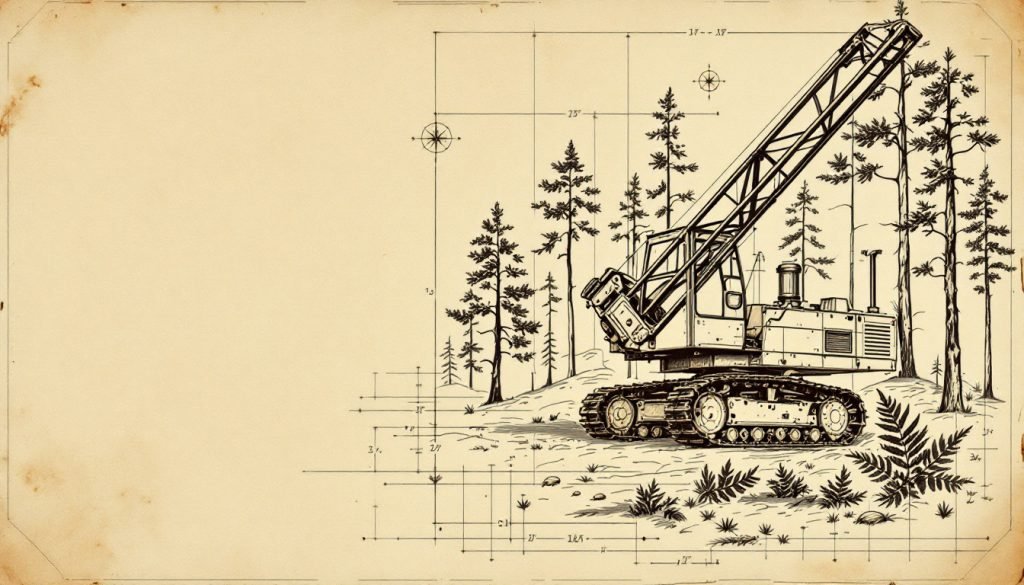
- A bar saw feller buncher uses a chainsaw-style cutting bar to fell and bundle multiple trees per cycle. Bar saw heads handle stems up to 28 inches diameter and outperform disc saws on large hardwoods. Cleaner stump cuts reduce fungal entry risk but can increase coppice sprouting on hardwood species. Soil compaction in machine corridors is a lasting consequence — specify designated skid trails in your contract. For trees over 24 inches DBH, steep slopes, or sites near structures, consult a Master Arborist before scheduling mechanized felling.
If you’ve been quoted a land-clearing job and the contractor mentioned bringing in a feller buncher, you’re probably wondering what exactly that machine does and whether it’s the right tool for your property. Maybe you’re clearing a woodlot, managing a timber stand, or opening up acreage for a new build. Whatever the scenario, the equipment your contractor chooses will determine how fast the work gets done, how much soil disturbance you’re left with, and what your land looks like when the dust settles. The specific type of cutting head on that machine matters more than most property owners realize.
The bar saw feller buncher is one of the most capable and widely used configurations in commercial tree felling. It uses a long, chainsaw-style cutting bar to sever tree stems at the base, then holds the cut tree upright while the machine accumulates additional stems into a bundle before laying them down together. That sequence — cut, hold, accumulate, place — is where the name comes from. Understanding how this machine works, where it excels, and where it has real limitations will help you have a more informed conversation with your logging or land-clearing contractor. I’m Michael Hartman, ISA Board Certified Master Arborist, and I’ve worked alongside feller buncher crews on dozens of timber and land-management projects. What follows is what I wish every property owner knew before the machines rolled in.
What a Bar Saw Feller Buncher Actually Is
A feller buncher is a self-propelled machine designed to cut standing trees and accumulate them into bunches for subsequent processing or skidding. The machine consists of a carrier — either a tracked or wheeled base — and a boom-mounted cutting head. The cutting head is the critical variable, and the bar saw configuration is one of the two dominant designs you’ll encounter in North American forestry operations.
Bar Saw Feller Buncher: A mechanized tree-harvesting machine that uses a reciprocating or rotating chainsaw-style bar to sever tree stems at the base, while hydraulic accumulator arms hold and bundle multiple cut stems before placement on the ground.
The bar saw head uses a drive sprocket and a guide bar — functionally similar in principle to a large chainsaw bar — to make a horizontal or angled cut through the stem. The bar lengths on commercial feller buncher heads commonly range from 24 to 36 inches, allowing them to handle stems up to roughly 28 inches in diameter depending on the specific head model and manufacturer. Tigercat, John Deere, and Caterpillar are among the major manufacturers producing bar saw heads for their feller buncher platforms. The cutting action is fast, typically completing a full stem cut in under three seconds on softwood species, which is why these machines can process remarkable volumes of timber in a single shift.
How the Bar Saw Cutting Mechanism Works
The mechanics behind a bar saw feller buncher head are worth understanding because they directly affect cut quality, stem damage, and the condition of your residual stand. When the head is positioned against a stem, hydraulic accumulator arms close around the tree to grip it. The bar then drives through the stem in a single sweeping motion. Unlike a disc saw head — which uses a large circular blade spinning at high RPM — the bar saw cuts with a chain moving along a guide bar, much like a horizontal chainsaw.
This cutting geometry has important consequences. The bar saw produces a relatively clean, low-splintering cut at the stump face, which matters when you’re managing a timber stand where stump sprouting species like oak, sweetgum, or red maple will regenerate from the cut base. A cleaner cut reduces the surface area exposed to fungal entry, which is a real concern in stands where Armillaria root rot or Ganoderma species are present. The bar saw also performs well in frozen ground conditions and handles leaning trees more predictably than a disc saw because the operator can control the cutting angle more precisely.
Pro Tip: When reviewing a land-clearing bid, ask your contractor specifically whether they’re running a bar saw head or a disc saw head. On mixed hardwood stands with stems under 20 inches DBH, a bar saw feller buncher typically leaves cleaner stumps and causes less bark shatter on adjacent residual trees — both of which matter if you’re doing a selective harvest rather than a clear-cut.
The accumulator arms on a bar saw head can typically hold three to five stems simultaneously before the operator swings the boom and lays the bundle down. This bunching function is what separates a feller buncher from a simple harvester head — the machine doesn’t just cut, it organizes the felled material into neat rows or piles that make subsequent skidding and processing far more efficient.
Bar Saw vs. Disc Saw Feller Buncher: Key Differences
Property owners often hear both terms and assume they’re interchangeable. They’re not. The disc saw feller buncher uses a large circular steel blade, typically 24 to 36 inches in diameter, spinning at high speed to shear through a stem in a fraction of a second. It’s extremely fast on softwood plantations and smaller-diameter stems, but it has real limitations on large hardwoods and produces more stem splintering at the cut face.
| Bar Saw Feller Buncher | Disc Saw Feller Buncher |
|---|---|
| Handles stems up to ~28″ diameter effectively | Best suited for stems under 18″ diameter |
| Cleaner cut face, less splintering on hardwoods | Faster cycle time on softwood plantations |
| Better control on leaning or irregular stems | Higher blade replacement cost on rocky soils |
| Performs well in frozen or wet ground conditions | Blade contact with rocks causes rapid wear |
| Slightly slower per-stem cycle time | Excellent for high-volume softwood clear-cuts |
For most mixed hardwood land-clearing projects in the eastern United States — the kind of work a property owner in Texas, Georgia, or the Carolinas is likely to commission — a bar saw feller buncher is the more versatile choice. It handles the diameter variation you find in a natural stand far better than a disc saw, and it’s less vulnerable to the rock strikes that are common in piedmont and hill-country terrain.
What Tree Sizes and Species Are Realistic
One of the most common misconceptions property owners have is that a feller buncher can handle any tree on their land. Bar saw feller bunchers have real capacity limits, and exceeding them creates safety hazards and equipment damage. Most commercial bar saw heads are rated for stems up to 24 to 28 inches in diameter at the cut point. Trees larger than that — mature white oaks, old-growth pecans, large-diameter loblolly pines — typically require a chainsaw operator to fell them conventionally before the feller buncher processes the remaining stand.
Species density also matters. Green hardwoods like hickory, black locust, and Osage orange are significantly harder on bar and chain than softwoods or lighter hardwoods. Contractors running bar saw heads in dense hickory stands will sharpen or replace chains more frequently, and that cost typically gets passed to the property owner through higher hourly rates or a higher per-acre bid. If your land has a significant component of large-diameter hardwoods, discuss this explicitly with your contractor before signing a contract.
Vine-laden trees present a separate challenge. Heavy muscadine, wisteria, or kudzu infestations can bind stems together and cause unexpected movement when a tree is cut. A skilled feller buncher operator will identify these situations and slow down, but vine-covered stands genuinely increase the complexity and time required for a bar saw operation.
Ground Disturbance and Soil Impact
Tracked feller bunchers exert ground pressure in the range of 5 to 8 psi depending on machine weight and track configuration — comparable to a person walking, which is why they’re often described as low ground-pressure machines relative to wheeled equipment. However, repeated passes over the same corridors during a harvesting operation concentrate that pressure, and compaction in skid trails is a real and lasting consequence of any mechanized harvest.
For property owners who plan to replant, establish pasture, or manage the site for wildlife after clearing, soil compaction in machine corridors deserves serious attention. Compacted soils in harvest trails can take five to ten years to recover adequate macroporosity for healthy root development without intervention. Specifying in your contract that the operator use designated skid trails — rather than random passes across the entire site — is one of the most effective ways to limit compaction to a predictable footprint. Best management practices from state forestry agencies in Texas, Georgia, and the Southeast generally recommend limiting mechanized equipment to no more than 15 percent of the total harvest area as compacted trail surface.
Before the Feller Buncher Arrives: Property Owner Checklist
- Walk the site with your contractor and identify all trees over 24″ DBH that will need conventional felling first
- Mark any trees to be retained — residual trees, specimen trees, or buffer zones — with high-visibility flagging tape
- Confirm in writing whether the contract includes stump grinding, brush piling, or slash removal
- Specify designated machine corridors to limit soil compaction to defined skid trails
- Ask whether the contractor carries liability insurance covering property damage and confirm coverage limits
- Identify any underground utilities, septic systems, or buried irrigation lines within the clearing zone
Stump Height and What It Means for Your Land
Bar saw feller bunchers cut stumps close to the ground — typically 6 to 12 inches above grade depending on terrain and operator technique. This is lower than many conventional chainsaw operations, which is an advantage if you’re preparing a site for construction or agriculture. However, stump height has biological implications that property owners managing for timber or wildlife should understand.
For sprouting hardwood species — and this includes most oaks, maples, sweetgum, and tulip poplar — a lower stump cut actually encourages more vigorous coppice sprouting from the root collar. If your goal is to suppress hardwood regeneration after clearing, a low stump cut followed by an herbicide application to the freshly cut stump face within 60 seconds is far more effective than a high cut. The window matters: studies on cut-stump herbicide treatments consistently show that applications made more than 60 to 90 seconds after cutting have significantly reduced efficacy because the vascular tissue begins to seal. Coordinate with your contractor if you want cut-stump treatment applied during the felling operation.
When a Bar Saw Feller Buncher Is Not the Right Tool
Mechanized felling is not appropriate for every property or every tree removal scenario. In urban and suburban settings, the machine’s footprint, turning radius, and boom reach make it impractical for most residential lots. A tracked feller buncher typically requires a minimum working width of 10 to 12 feet and cannot operate safely within the structural root zones of trees you intend to keep. If you’re removing select trees in a developed landscape, a conventional climbing arborist or a small crane operation is almost always the correct approach.
Steep terrain is another limiting factor. Most bar saw feller bunchers are rated for slopes up to 30 to 35 degrees, and operating beyond those limits creates tipping hazards that no production pressure justifies. Properties with significant grade changes, creek drainages, or unstable soils may require purpose-built steep-slope harvesters or hand-felling crews. Always ask your contractor about their equipment’s slope rating relative to your specific site conditions.
What to Ask Your Contractor Before Signing
The most important thing a property owner can do before a bar saw feller buncher operation begins is establish clear, written expectations. Verbal agreements about what gets cut, what gets left, and what the finished site will look like are the source of most post-harvest disputes. A reputable logging or land-clearing contractor will welcome specific questions and put the answers in writing.
Ask for the operator’s experience with your specific tree species and terrain type. Ask whether the machine is owned or subcontracted — subcontracted equipment sometimes means less accountability when problems arise. Confirm who is responsible for obtaining any required timber harvest permits or land-clearing notifications required by your county or state forestry agency. In Texas, for example, certain commercial timber operations require notification to the Texas A&M Forest Service, and the property owner bears responsibility for compliance regardless of who operates the equipment.
Finally, walk the site after the operation before releasing final payment. Check that retained trees show no visible bark damage from machine contact, that stump heights are consistent with what was agreed, and that slash and brush have been handled according to your contract. Documenting the site condition with photographs before and after the operation protects both you and your contractor if questions arise later. Alicensed operators can reference felling heads specifications when selecting the proper equipment. A bar saw feller buncher is a powerful and efficient tool in the right hands and the right context — your job as a property owner is to make sure both conditions are met before the first tree falls.