The Ultimate Guide to Harvester Delimbing Log Measuring
Master Arborist breaks down the sophisticated machinery that fells, delimbs, bucks, and moves trees in modern timber operations.
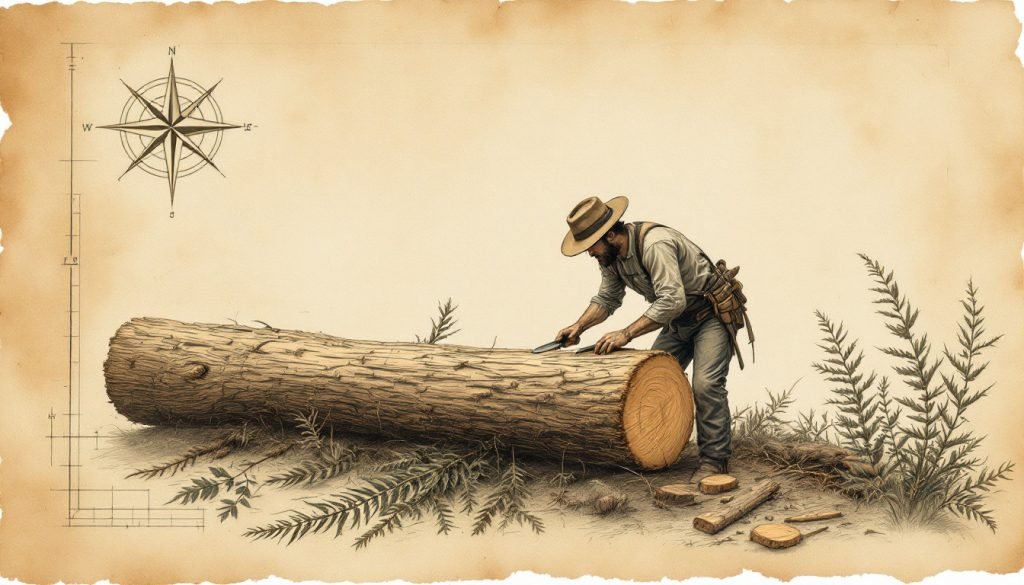
- Modern tree harvesters combine felling, delimbing, and bucking in one machine. Rubber-tired carriers excel on flat Coastal Plain soils; tracks handle Upstate slopes. A harvester can process a 75-foot pine into four sorted products in under a minute. Choose mechanized harvesting for stands >30 tons/acre and DBH >8 inches. Always verify soil conditions and residual stand clauses before mobilizing machines.
You have probably seen them from the highway—those bright orange machines with long mechanical arms that can grab a 24-inch pine, sever it at the base, strip the limbs, and cut it to mill length in under a minute. What looks like a single fluid motion is actually a carefully orchestrated sequence performed by a tree harvester, the Swiss-army-knife of modern mechanized logging. Whether you are a private landowner preparing for a first commercial thinning or simply curious about how timber reaches the mill, understanding what these machines do, how they do it, and when they are the right choice will change the way you view any logging show.
By the end of this article you will know exactly how a harvester converts a standing tree into a sorted stack of logs, why rubber-tired feller-bunchers dominate the southern Coastal Plain while tracked machines rule the Upstate, and the critical questions to ask any contractor before the first tree hits the ground. Ilemson extension data shows distinct equipment preferences across South Carolina. I am Michael J. Hartman, ISA Board Certified Master Arborist TX-0198B, and my crews have supervised mechanized harvests on everything from 40-acre loblolly plantations to riparian hardwood buffers—let us walk through the iron and the engineering that makes it possible.
What a Harvester Actually Is
A tree harvester is a purpose-built forestry machine that combines three traditionally separate jobs: felling the tree, delimbing it, and bucking it into predetermined log lengths. Unlike a simple feller-buncher that only cuts and lays trees in piles for later pickup, a true harvester processes the entire stem in one continuous motion and can sort the logs into different product decks on the landing. Think of it as a mobile sawmill head mounted on an excavator-style carrier.
Harvester head: The multi-function attachment that grips the tree, makes the cut, strips the limbs, measures the stem, and saws it to length—all hydraulically controlled from the cab.
The carrier can be a six-wheeled machine for fast travel on flat ground, a four-wheeled unit for smaller timber, or a tracked undercarriage for steep or soft terrain. Rubber-tired versions dominate the Coastal Plain because they move quickly between widely spaced rows in plantation settings and cause less soil compaction on sandy soils. In the Upstate, where slopes exceed 15 degrees and soils are heavier clay, tracked machines provide the stability and flotation required to work safely and protect site productivity.
The Biological and Mechanical “Why” Behind Each Step
To understand why the harvester head performs every action in a strict sequence, start with tree physiology. A living pine stores roughly 45 % of its biomass in the first 16 feet of stem. Commercial mills pay premium for logs that are straight, knot-free, and precisely 16.5 to 32.5 feet long, depending on product class. Any limb left on the log becomes a knot that reduces grade, and any over-length log wastes fiber and transport weight.
Mechanically, the harvester head must first secure the tree to prevent barber-chair splits that can endanger the operator and waste wood. The accumulating arms grip the stem 8–12 inches above the cut, then a 30-inch hot-saw blade or a ¾-inch diameter hydraulic shear severs the trunk in one to two seconds. Immediate delimbing occurs as the head pulls the stem through four to six hydraulically driven knives that remove branches flush to the bark. Optical sensors and measuring wheels travel with the head, feeding real-time stem diameter data to the on-board computer so the bucking decisions maximize mill-grade recovery. Each cut is made in approximately half a second using a 24-inch bar chainsaw integrated into the head.
Felling Phase: Drive-to-Tree vs. Boom Reach
During felling, the operator has two primary maneuvers: drive-to-tree and boom reach. In a drive-to-tree operation, typical in evenly spaced loblolly rows, the machine drives directly to each stem, cuts, and lays it in the direction of travel. Ground disturbance is minimal because the tires follow the same track for every row. Clemson research shows soil bulk density increases of only 6 % on sandy Coastal Plain soils when moisture content is below 18 %.
In contrast, boom-reach felling is used where residual stems must be protected or where the terrain is too rough to drive directly to the tree. The operator extends the boom up to 32 feet, grips the tree, cuts, and then swings it to a designated corridor without moving the carrier. This method reduces residual stand damage to less than 3 % on mixed hardwood stands but increases cycle time by roughly 18 % compared to drive-to-tree.
Pro Tip: If your stand has scattered legacy oaks you want to retain, insist on boom-reach harvesting. The extra 30 seconds per tree saves decades of growth on the crop trees you leave behind.
Processing: Delimbing, Bucking, and Log Sorting
Once the tree is on the ground, the harvester head processes it in one continuous pull. The knives operate at 1,200–1,600 RPM, removing limbs at a rate of 0.8 seconds per foot of 10-inch diameter stem. The head’s measuring wheel rolls along the bark, recording length and diameter every 2 inches. The on-board computer references a pre-loaded price list from the mill and instantly decides where to buck the stem to maximize value.
For example, a 75-foot loblolly pine with 14-inch DBH might yield one 32-foot sawlog, one 20-foot chip-n-saw log, and two 8-foot pulpwood sticks. The harvester head makes four cuts in under six seconds and drops each log into a separate pile. By contrast, manual felling and bucking the same tree would take four to six minutes and yield less accurate log lengths.
Quality Checks During Processing
- Confirm limb-free zone extends 1 inch past bucking cut
- Verify each log length matches mill specs within ±½ inch
- Reject any log with sweep exceeding 1 inch per 10 feet
- Separate pine beetle-stained sections to avoid downgrading the entire log
Extraction: From Stump to Landing
After processing, the logs need to reach the landing. In fully mechanized operations, a separate forwarder follows the harvester. The forwarder is essentially a purpose-built off-road forklift with a 12- to 20-ton payload capacity. It drives along the same machine corridors, picks up the sorted logs with a hydraulic crane, and bunkers them in a grapple-saw bunk that keeps each product class separate. Rubber-tired forwarders can travel up to 9 mph on level ground, clearing a 20-acre block in a single day.
On steeper terrain or where soil moisture is high, tracked forwarders or purpose-built skidders may perform the extraction. Tracked units reduce ground pressure to under 6 psi—about half the pressure of a human foot—allowing work in wet conditions that would bog wheeled machines. The trade-off is speed; tracked forwarders average 3–4 mph on flat ground.
Regional Equipment Variation: South Carolina Example
Clemson extension data shows distinct equipment preferences across South Carolina. In the Coastal Plain, 78 % of operations use rubber-tired feller-bunchers followed by wheeled skidders and delimbers at the landing. The sandy soils and flat topography allow high-speed, low-impact harvesting. In contrast, the Upstate’s steeper slopes and heavier Piedmont clay see 65 % adoption of tracked harvesters that both fell and process in one step, eliminating the need for a separate delimbing deck.
| Region | Preferred Carrier | Typical Cycle Time (16” Pine) | Soil Impact (bulk density increase) |
|---|---|---|---|
| Coastal Plain | 6-wheel rubber-tired | 45 seconds | 6 % |
| Upstate | Tracked undercarriage | 52 seconds | 4 % |
| Ridge tops (>20° slope) | Tracked with winch assist | 65 seconds | 3 % |
When to Choose Mechanized Harvesting vs. Manual Methods
Mechanized harvesting makes economic sense when the average tree diameter exceeds 8 inches DBH and the stand contains at least 30 tons per acre of merchantable timber. Below those thresholds, the daily machine rate—roughly $2,200 for a full harvester-forwarder team—cannot be amortized over enough volume to beat manual felling at $300 per day per cutter.
However, mechanized systems shine in quality control. A harvester can produce sawlogs meeting mill grade rules 94 % of the time, compared to 78 % for hand felling and bucking. For landowners selling high-value sawtimber, the premium price often offsets the higher machine rate within the first 500 tons harvested.
Common Mistakes to Avoid
- Ignoring residual stand damage clauses: Many timber deeds specify <3 % residual stem scarring. A careless operator can exceed that in a single day; insist on GPS tracking and daily audits.
- Accepting lump-sum pricing without volume verification: Always scale a few loads at the mill to confirm tonnage matches contractor estimates before final payment.
- Scheduling during wet conditions: Soil compaction on clay soils can reduce long-term productivity by 15 %. Wait until soil moisture drops below field capacity or insist on tracked machines.
What to Do Next
If you are preparing for a harvest, start with a pre-harvest inventory that records DBH, height, and species for every 10th tree on a systematic grid. Bring those numbers to at least two reputable contractors and ask for machine-specific quotes—rubber-tired harvester, tracked harvester, or manual crew. Verify insurance coverage and request references from recent jobs on similar soil types. Finally, walk the stand with the winning operator the day before cutting begins to flag reserve trees and sensitive areas. A 30-minute walk-through prevents weeks of regret after the machines leave the site.
Understanding cutting head types can further refine your equipment choice and ensure optimal performance for your specific stand conditions.