A Field Guide to Logging Equipment for Terrain
Learn the key differences between feller bunchers and skidders—how each machine works, when to use them, and what tree removal jobs they handle best.
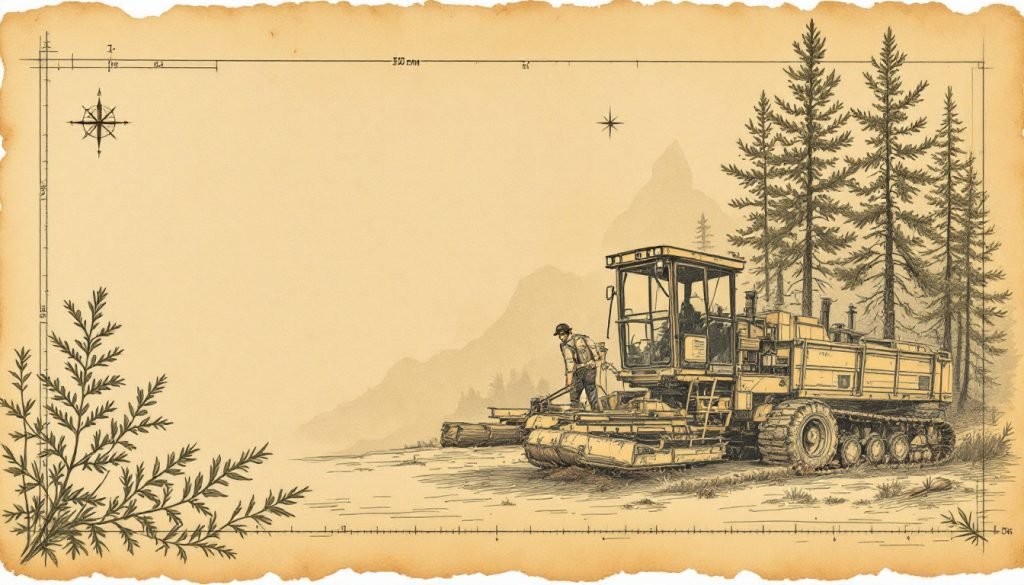
- Feller bunchers cut and pile; skidders drag to landing—complementary, not interchangeable.
If you’re facing a large-scale tree removal project—whether clearing for development, managing a timber harvest, or restoring a fire-damaged forest—you’re likely weighing the pros and cons of heavy equipment. Two machines dominate the conversation: the feller buncher and the skidder. They often work as a team, but they serve entirely different functions. One cuts and gathers; the other moves. Understanding which does what, and when each is the right call, can save you thousands in operating costs and days of downtime.
As an ISA Board Certified Master Arborist with three decades in both residential and commercial tree work, I’ve seen the costly confusion that comes from mixing up these machines. This guide breaks down the mechanics, costs, and use-cases so you can make an informed decision—whether you’re hiring a crew or planning your own harvest.
What a Feller Buncher Actually Does
A feller buncher is a purpose-built cutting machine. It mounts a heavy-duty saw head or shear on a tracked or wheeled chassis and is designed to cut multiple trees in a single pass, then “bunch” them into tight piles for later extraction. The head can rotate 360 degrees and tilt, allowing it to reach trees on slopes or in tight spacing without repositioning the entire machine.
Most cutting heads use a disc saw with carbide teeth capable of slicing through 20- to 30-inch diameter hardwoods in under two seconds. The operator grabs the trunk with hydraulically powered arms, makes the cut, and then stacks the tree neatly with others. This keeps slash off the ground and reduces soil compaction impacts compared to dragging whole trees behind a dozer.
Term: Slash refers to the treetops, limbs, and other debris left on the ground after harvesting. Reducing slash protects soil and makes later processing easier.
Feller bunchers shine in uniform stands—think pine plantations or dense regrowth—where the operator can make dozens of cuts per hour. A single operator can clear two to four acres per day depending on tree size, terrain, and spacing.
The Skidder’s Role After Cutting
Once the feller buncher has done its job, the skidder arrives. A skidder is essentially a high-powered tractor with either a cable winch or a grapple claw mounted on the back. Its sole purpose is to drag or carry the bunched logs to a landing area—usually a cleared flat spot near a road—where a loader sorts and loads trucks.
There are two main types: cable skidders and grapple skidders. Cable skidders use a long winch line to reach trees the machine can’t drive to, making them ideal for steep or wet ground. Grapple skidders have a hydraulic claw that grabs entire bunches and lifts them off the ground, minimizing soil disturbance and increasing speed.
Pro Tip: On slopes greater than 25%, a tracked skidder with a grapple is faster and safer than a wheeled cable machine. Always match undercarriage type to ground conditions.
A skidder can move 20–40 tons of logs per hour over distances up to half a mile. Beyond that, it becomes more economical to use a forwarder or build a temporary road.
Key Differences in Machine Design and Operation
At first glance, both machines are large, yellow, and loud—but their engineering philosophies diverge quickly. A feller buncher prioritizes precision cutting and minimal movement. It’s built low and wide for stability, with wide tracks to reduce ground pressure. Travel speed tops out around 4 mph because it rarely needs to move far between cuts.
Skidders, by contrast, are built for torque and traction. They carry heavier engines—often 200–350 hp—and oversized tires or tracks to claw through mud and over stumps. Travel speeds of 8–10 mph let them shuttle logs quickly from stump to landing. Because they don’t cut, they lack the complex hydraulic arms and saw assemblies that make feller bunchers expensive to maintain.
| Feature | Feller Buncher | Skidder |
|---|---|---|
| Primary Function | Cut and pile trees | Drag logs to landing |
| Typical Weight | 30,000–50,000 lbs | 25,000–45,000 lbs |
| Engine Power | 140–250 hp | 200–350 hp |
| Ground Pressure | 4–6 psi | 6–9 psi |
| Hourly Cost (w/ operator) | $250–$350 | $200–$300 |
These differences matter when estimating your project budget. Running a feller buncher for an extra day because the skidder wasn’t scheduled right can inflate costs by thousands.
When to Use a Feller Buncher Alone
There are limited scenarios where a feller buncher operates without a skidder. The most common is urban or suburban lot clearing where logs can be loaded directly onto trucks via a self-loading log truck or crane. In these cases, the buncher makes its piles at the curb, and trucks haul them away—no need for a skidder trail.
Another use is pre-commercial thinning in young forests where stems are too small to justify skidding. Here the goal is spacing, not lumber, so the bunches are left on-site to decompose. This practice reduces wildfire risk and improves stand health without the added cost of extraction.
Finally, some biomass operations use a feller buncher to cut small-diameter material that’s immediately chipped on-site. A tracked chipper follows the buncher, eliminating the need for a skidder entirely.
When a Skidder Works Without a Feller Buncher
Older, selective harvests often rely on chainsaw crews for cutting. Once trees are felled and delimbed by hand, a skidder drags them out. This approach is still common on small private woodlots where landowners want to remove only high-value trees while preserving understory.
Skidders also handle windthrow cleanup after storms. Fallen trees are already on the ground, so no cutting machine is needed—just a way to drag them to a landing. In these emergency situations, a grapple skidder can clear a 10-acre blowdown in a single day.
In areas with steep terrain or sensitive soils, helicopters sometimes place logs at landings, but skidders still move them the final few hundred feet. This hybrid approach reduces trail density and limits erosion.
Cost Implications and Efficiency Metrics
Real-world costs hinge on more than hourly rates. A feller buncher may command $300 per hour, but it can cut and pile 100 stems per hour in a 15-year-old pine stand. That’s $3 per tree. A skidder at $250 per hour can drag 25 tons in the same time—roughly $10 per ton. Which is cheaper depends on the average weight per tree.
For example, a 12-inch diameter pine weighs about 1,000 lbs. Cutting and bunching costs $3, skidding adds $5, totaling $8 per tree. A 24-inch oak weighs closer to 6,000 lbs. Cutting costs remain $3, but skidding drops to $1.67 per tree because the same skidder load now contains far fewer individual stems. Larger trees favor the skidder; smaller trees favor the buncher.
When to Act
Best window: late fall through early spring when soils are frozen or dry. Winter logging reduces soil compaction and allows heavier machines to work on sites that would be off-limits in spring mud season.
Weather windows matter. A single rainy week can double skidding costs by forcing the crew to repair rutted trails. Planning harvests during frozen ground periods can save 15–20% in total project cost.
Environmental and Site Considerations
Soil type, slope, and water proximity often dictate which machine—or combination—is allowed. Wetlands require low-ground-pressure tracks or even temporary mats. A tracked feller buncher exerts less pressure than a wheeled skidder, making it the first choice on soft soils.
Steep slopes above 35% may prohibit wheeled equipment entirely. Here, a small tracked feller buncher can still work, cutting trees that are then cable-yarded by a skidder stationed on firmer ground. This staged approach minimizes both erosion risk and operator danger.
Leave-tree retention plans also influence choices. If you’re required to leave every fifth tree as wildlife habitat, a feller buncher’s precision allows selective cutting around residuals. Skidders, especially grapple models, are less accurate and may damage retained trees during extraction.
Common Mistakes to Avoid
- Using a skidder for initial cutting: Grapple skidders are not designed to cut. Attempting to push trees over with the blade crushes root flares and increases stump damage.
- Neglecting landing layout: A poorly positioned landing forces the skidder to travel uphill with a full load, doubling fuel use and tearing up trails.
What to Do Next: Matching the Machine to Your Project
Start by defining your end goal. If you need to clear a 40-acre pine plantation for development, hire a tracked feller buncher first to cut and pile, then bring in a grapple skidder for extraction. Expect 3–4 days total, weather permitting. If you’re selectively harvesting mature oaks from a 5-acre woodlot, a chainsaw crew plus a cable skidder may suffice—no feller buncher required.
Get multiple quotes, but insist each contractor specifies both machines and hourly rates. Ask about trail layout, landing size, and soil protection measures. A reputable operator will walk the site with you and mark trails before the first tree falls. If your project borders wetlands or steep slopes, bring in a consulting arborist early to ensure permits and best practices are in place. The right pairing of feller buncher and skidder doesn’t just save money—it protects your land for decades.
For more on how different timber harvesting systems compare, and to see how three logging systems match equipment to the job, consult these field-tested guides.