How Feller Bunchers Work: Explained by Arborists
A Master Arborist breaks down exactly how feller bunchers work, from cutting heads to hydraulic systems, and when this equipment belongs on your site.
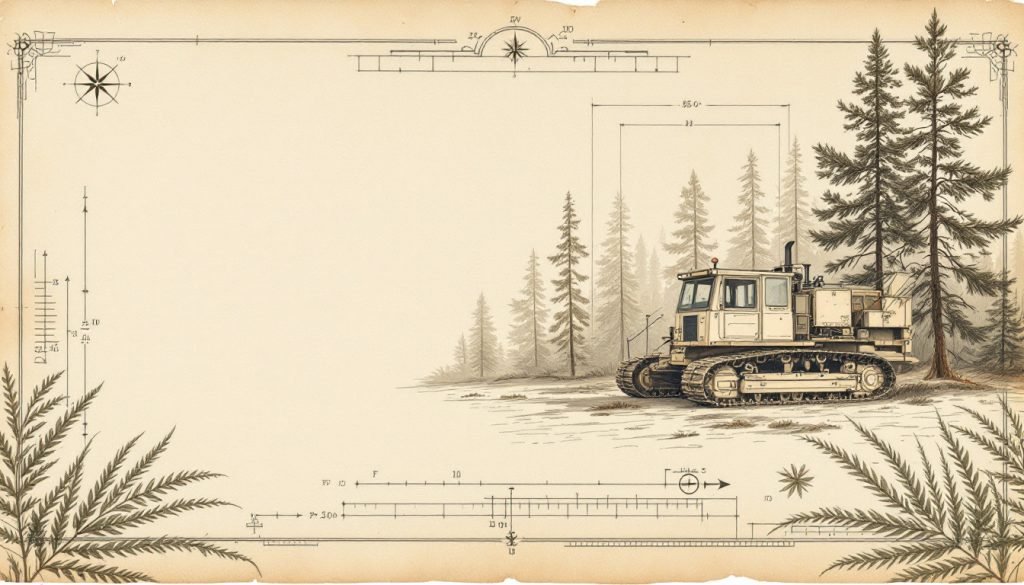
- Feller bunchers grip, sever, and accumulate multiple stems in a single 15-45 second cycle. Cutting head type — disc, bar, or shear — must match the diameter and species of your timber. Tracked carriers typically produce 6-8 PSI ground pressure versus 30+ PSI for wheeled machines on soft soils. Designated skid trails and mapped root protection zones prevent the majority of residual tree damage. Consult a Master Arborist before operations begin to match equipment specs to your specific site conditions.
If you have ever watched a logging crew clear a stand of timber in what seems like minutes, you have probably seen a feller buncher in action. The machine moves through a forest with a kind of mechanical efficiency that looks almost surgical — gripping a tree, severing it at the base, and setting it aside without ever letting it hit the ground. For property owners managing large acreage, timber harvests, or land clearing projects, understanding how this equipment works is not just interesting — it directly affects how you plan your project, protect your remaining trees, and evaluate contractor bids. As an ISA Board Certified Master Arborist, I have spent decades working alongside logging crews and land-clearing operations, and I can tell you that the difference between a well-executed feller buncher job and a damaging one comes down to understanding the machine’s capabilities and limitations before the first tree is cut.
Feller bunchers are purpose-built forestry machines that combine two operations — felling and accumulating — into a single pass. They are not chainsaws on wheels. The engineering behind them is sophisticated, and the way they interact with standing timber has real consequences for soil compaction, residual tree damage, and site recovery. By the end of this article, you will understand the mechanical systems that make feller bunchers work, the different cutting head types and when each is appropriate, how operators control the process, and what arborists look for when evaluating whether this equipment is the right choice for a given site.
The Core Concept: What a Feller Buncher Actually Does
The name tells you the job. A feller buncher fells trees — cuts them at the base — and then bunches them, meaning it holds multiple stems together and deposits them in an organized pile for a skidder or forwarder to retrieve. This two-step function in a single machine is what makes it so efficient compared to manual chainsaw felling, where each tree must be cut and then separately gathered. On a commercial timber harvest, a single feller buncher operator can process hundreds of trees per shift, a rate no hand-felling crew can match.
The machine itself sits on either a tracked undercarriage or a wheeled chassis. Tracked models handle steep slopes and soft ground better, while wheeled models move faster on firm terrain and cause less soil disturbance under the right conditions. The boom arm extends from the cab and carries the cutting head, which is the business end of the machine. The cutting head grips the tree, severs it, and holds it while the boom swings to deposit the stem in a bunch. The operator never leaves the cab. The entire sequence — approach, grip, cut, swing, deposit — takes between 15 and 45 seconds depending on tree size and terrain.
Feller Buncher: A self-propelled forestry machine equipped with a boom-mounted cutting head that simultaneously severs a tree at the base and holds the stem upright for accumulation into organized bunches, eliminating the need for separate felling and gathering operations.
What makes this relevant to arborists is the accumulation function. Because the machine holds the tree rather than dropping it, the operator has meaningful control over where the stem lands. This matters enormously on sites with residual trees to protect, where an uncontrolled fall could strip bark, break crowns, or damage root systems of trees that are staying. A skilled operator using a feller buncher can place stems with precision that rivals careful hand felling — but only if the cutting head type and machine size are matched to the trees being harvested.
Cutting Head Types: Disc, Bar, and Stroke
The cutting head is where the mechanical action happens, and there are three primary types used in modern feller bunchers. Each has a distinct cutting mechanism, a different speed and force profile, and a different suitability range based on tree diameter and species. Choosing the wrong head for the job is one of the most common errors I see in contractor specifications, and it leads to either inefficiency or outright tree damage.
Disc saw heads use a large circular saw blade — typically 24 to 36 inches in diameter — spinning at high RPM to cut through the stem in a fraction of a second. The cut is clean and fast, and disc heads handle hardwoods and softwoods equally well. They are the dominant choice in North American timber harvesting because of their speed and versatility. The trade-off is that a spinning disc saw generates significant momentum, and if the operator misjudges the approach angle, the blade can kick or the stem can split rather than sever cleanly. Disc heads also require more frequent maintenance — blade teeth must be inspected and replaced regularly to maintain cutting efficiency.
Bar saw heads use a chainsaw-style bar and chain rather than a rotating disc. They cut more slowly but apply less lateral force to the stem during the cut, which reduces the risk of stem splitting in large-diameter or heavily buttressed trees. Bar heads are common in operations targeting trees over 24 inches DBH (diameter at breast height) where a disc saw would be undersized or where the cutting geometry is awkward. The chain requires more maintenance attention than a disc blade, and bar heads are generally slower per tree, but the quality of cut on large stems is often superior.
Pro Tip: When reviewing a contractor’s equipment list for a land-clearing project, ask specifically which cutting head type they plan to use and what the rated cutting diameter is. A disc head rated for 20-inch stems being pushed through 28-inch oaks will produce ragged cuts, increased stem splitting, and slower cycle times — all of which cost you money and leave a messier site. Match the head to the timber, not the other way around.
Stroke boom delimbers and shear-style heads represent a third category, more common in specialized applications like right-of-way clearing or biomass operations. Shear heads use scissor-action blades to cut through smaller-diameter stems very quickly and are well-suited to brush and small tree clearing but are not appropriate for commercial timber. Understanding which head type a contractor is deploying tells you a great deal about whether they have matched their equipment to your specific timber profile.
The Hydraulic System: How Force Becomes Motion
Every function on a feller buncher — boom extension, head rotation, grip pressure, cutting action — is driven by hydraulic power. The engine, typically a diesel unit in the 200 to 350 horsepower range on a mid-size machine, drives hydraulic pumps that pressurize fluid routed through a network of hoses and control valves to actuators throughout the machine. The operator controls these systems through joysticks and foot pedals in the cab, translating small hand movements into precise, powerful motion at the cutting head.
Grip pressure is one of the most critical hydraulic functions. The accumulator arms — the clamp-like structures that hold the tree after it is cut — must apply enough force to support the weight of multiple stems without crushing the wood or causing bark slippage. On a machine accumulating four or five 12-inch softwood stems, the grip load can exceed several thousand pounds. Hydraulic pressure sensors in modern machines help operators maintain consistent grip force, but experienced operators develop a feel for how different species and moisture conditions affect the required pressure. Green hardwoods, for example, are significantly heavier per linear foot than dry softwoods, and an operator who does not adjust grip pressure accordingly will drop stems or damage them during the swing to the bunch.
Hydraulic system health directly affects cutting precision. A machine with worn pump seals or low fluid pressure will respond sluggishly, making it harder for the operator to control boom placement and cutting angle. From an arborist’s standpoint, this matters because imprecise boom control increases the risk of incidental contact with residual trees during the swing phase. Before any feller buncher begins work near trees you intend to keep, it is worth asking the contractor about their last hydraulic service interval.
Tracked vs. Wheeled Carriers: Soil and Root Implications
The carrier — the undercarriage that moves the machine through the site — has a direct impact on soil compaction and root damage, which are primary concerns for any arborist evaluating a harvesting operation. Tracked machines distribute their weight over a larger ground contact area, typically producing lower ground pressure per square inch than wheeled machines of equivalent weight. A mid-size tracked feller buncher might exert 6 to 8 PSI of ground pressure, while a comparable wheeled machine on standard tires can exceed 30 PSI. On saturated soils or sites with shallow root systems, that difference is significant.
However, tracked machines are not automatically the better choice for root protection. The track itself, particularly on machines making repeated passes along the same corridor, creates a compaction lane that can be just as damaging as a single high-pressure wheeled pass. Arborists working with logging crews on selective harvest operations often recommend establishing designated skid trails and holding machines to those corridors rather than allowing free-ranging movement through the stand. This concentrates compaction damage in predictable locations and protects the root zones of residual trees.
Wheeled feller bunchers with flotation tires or bogie axles can perform well on firm, dry soils and offer faster travel speeds between cutting areas. On sites where soil conditions are favorable and the harvest area is relatively open, a wheeled machine may actually produce less cumulative compaction than a tracked machine making multiple slow passes. The decision should be made based on a soil assessment and a mapped travel plan, not simply on the assumption that tracks are always gentler.
The Operator’s Role: Precision Inside the Cab
The machine is only as precise as the person running it. Feller buncher operators work in a highly dynamic environment — reading tree lean, assessing stem defects, managing boom reach relative to machine stability, and planning each bunch deposit to set up the skidder efficiently. A skilled operator is simultaneously a machine technician, a timber assessor, and a site planner. The best operators I have worked with can tell you the approximate board-foot yield of a stem before they cut it and can place that stem within a foot of their intended landing spot.
From an arborist’s perspective, the operator’s ability to read tree lean and root plate condition is particularly important. A tree with significant lean toward a residual stand, or one with a compromised root plate from disease or previous soil disturbance, presents a different cutting challenge than a straight, well-anchored stem. Experienced operators recognize these conditions and adjust their approach — sometimes using the accumulator arms to support the stem against its lean before completing the cut, effectively controlling the fall direction mechanically rather than relying on a conventional notch-and-back-cut technique.
Site Suitability: When a Feller Buncher Is and Is Not the Right Tool
Feller bunchers are not appropriate for every tree removal situation, and part of my job as a consulting arborist is helping property owners understand where this equipment adds value and where it creates problems. On large, relatively flat sites with uniform timber and no significant residual tree concerns, a feller buncher is almost always the most efficient and cost-effective choice. The speed advantage over hand felling is substantial, and the ability to bunch stems for mechanical extraction reduces overall site disturbance compared to dragging individual logs across the ground.
The calculus changes on sites with significant slope, irregular terrain, or a high density of trees to be retained. Steep slopes increase the risk of machine instability during the swing phase, and most manufacturers specify maximum operating slopes in their equipment documentation — typically 30 to 35 degrees for tracked machines. Beyond those limits, the machine becomes a liability rather than an asset. On sites with scattered retention trees, the boom reach and swing arc of the feller buncher must be carefully mapped against the root protection zones of those trees. A standard boom reach of 18 to 22 feet means the machine must approach within that distance of each target tree, and on a site with 15-foot root protection zones around retention trees, the working geometry can become very tight.
Site Assessment Checklist Before Feller Buncher Operations
- Map all retention trees and mark root protection zones at a minimum of 1.5 times the dripline radius
- Assess soil moisture and bearing capacity along proposed machine travel corridors
- Identify trees with significant lean, root plate damage, or stem defects that require modified cutting approach
- Confirm cutting head diameter rating matches the largest stems on site
- Establish designated skid trails and communicate corridor boundaries to the operator before work begins
What Arborists Watch for During and After Operations
When I am on-site during a feller buncher operation, I am watching for several specific indicators that the work is proceeding within acceptable parameters for residual tree health. The first is stem contact — any situation where the boom, cutting head, or accumulated stems make contact with a retention tree’s trunk or crown. Even a glancing blow from a loaded boom can strip cambium or break scaffold branches, and repeated minor contacts accumulate into significant damage over the course of a day’s work.
Soil disturbance patterns are the second thing I track. I want to see machine travel confined to the established corridors and no evidence of the operator cutting corners — literally — by swinging through areas outside the designated travel lanes. After operations conclude, I walk the site looking for soil heaving near retention tree root zones, which can indicate root shearing from track or tire passage, and for any evidence of bark inclusion or wound formation on residual stems that might have been contacted during the operation.
Post-harvest soil compaction testing using a penetrometer along travel corridors helps quantify the impact and informs any remediation work needed before site replanting or natural regeneration. Compaction readings above 300 PSI in the top 12 inches of soil indicate conditions that will impede root growth and should be addressed through aeration or subsoiling before the site is considered recovered.
Understanding Feller Bunchers Helps You Manage Your Land Better
Whether you are planning a commercial timber harvest, a selective thinning for forest health, or a large-scale land clearing project, understanding how feller bunchers work puts you in a much stronger position as a property owner. You can ask better questions of contractors, evaluate equipment specifications against your site conditions, and set realistic expectations for what the machine can and cannot do without damaging the trees and soil you want to protect.
The key takeaway from an arborist’s perspective is that a feller buncher is a precision instrument when operated correctly and matched to the right site — but it is not a universal solution. The cutting head type, carrier configuration, operator skill level, and site preparation all determine whether the machine leaves your land in better or worse condition than it found it. Before any feller buncher rolls onto your property, walk the site with a qualified arborist, establish your retention tree boundaries, and confirm that the contractor’s equipment is genuinely suited to your timber profile. That conversation, held before the first tree is cut, is worth more than any amount of remediation work afterward.
For a deeper dive into the main components of these machines, consult technical resources that outline hydraulic systems, cutting heads, and carrier options. Additional guidance on equipment selection and operational best practices can be found in the USDA Forest Service equipment catalog.